4

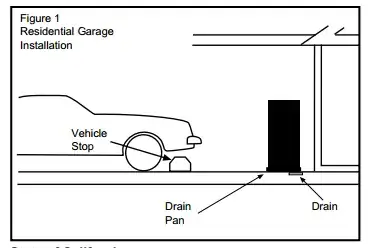
So, builders have this thing, for some reason, of installing cement parking blocks a few feet in front of the hot water heater in the garage. I've lived at plenty of places without those and managed to not drive through the water heater into the wall. Maybe I'm just abnormal like that.. (I did check the code [USA - Florida] and didn't see any requirements for this block)

Anyway, this thing is in the garage. The garage is an enclosed, attached garage with a door that goes into the house. This parking block is in the way of a project I'd like to do.

I shined a light down the holes in the parking block and did not see any rebar stakes. I poured water down the holes where the rebar should be but it didn't drain out from under the block, so I imagine the thing is cemented or sealed to the floor.

The floor is concrete as well. How would I go about trying to remove this thing without damaging the garage floor under it? I thought maybe a sledge hammer and a hammer drill, but I don't know if this is a good idea. Maybe a saw? Maybe the attaching material can be dealt with another way? I don't know, but I figured I'd ask..

Tester101
  • 133,087
  • 80
  • 327
  • 617
Raystafarian
  • 317
  • 1
  • 5
  • 16

2 Answers2

5

In the installation instructions for water heaters that I could find, they all say that this "parking block" is required.

In fact, this is also mentioned in the IRC.

International Residential Code 2012

Chapter 13 General Mechanical System Requirements

Section M1307 Appliance Installation

M1307.3.1 Protection from impact. Appliances shall not be installed in a location subject to vehicle damage except where protected by approved barriers.

As well as the IPC

International Plumbing Code 2012

Chapter 3 General Regulations

Section 305 Protection of Pipes and Plumbing System Components

305.7 Protection of components of plumbing system. Components of a plumbing system installed along alleyways, driveways, parking garages or other locations exposed to damage shall be recessed into the wall or otherwise protected in an approved manner.

If it's not specifically mentioned in your local codes, most codes stipulate that the manufacturers installation instructions should be followed. So if the instructions for your heater have this; or similar text, you might be stuck with the curb.

Tester101
  • 133,087
  • 80
  • 327
  • 617
4

You can take a 2x4 lay it next to the stop, with the 2" side facing the ceiling. Take a sledge hammer and hit the 2x4 gently, to see if it will separate from the ground. You might have to try all sides of the stop to dislodge it. The possible reason the water isn't seeping out is it is going through the concrete slab to ground. Once the stop comes out you can fill any holes with patch.

HasH_BrowN
  • 276
  • 1
  • 6