17

I was reading about lock "bumping" where burglars buy 'bump' keys and can open locks very quickly. I was also reading that some locks are bump proof (double chamber perhaps?). My question is: how can I tell, by looking at the locks currently on my door, if they are bump proof or not?

I don't see any brand or manufacturer name on the locks but they were replaced 3 months ago when we bought the house.

If you are not familiar with bump keys or locks take a look at this video: http://www.youtube.com/watch?v=hr23tpWX8lM

themerlinproject
  • 453
  • 2
  • 4
  • 8

7 Answers7

23

If your lock is a just a simple pin tumbler then its vulnerable to bumping.

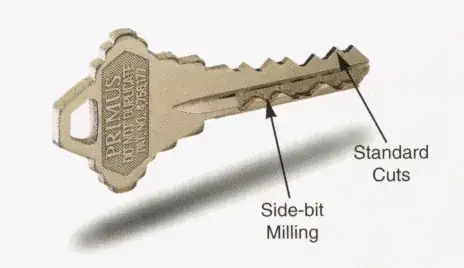
enter image description here

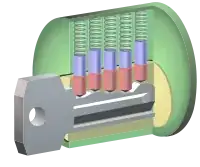
There are some pin tumbler locks that say they protect against bumping, but in practice it might be a little more difficult, but still very vulnerable. In fact the only deadbolt lock that I know of that isn't vulnerable to bumping, rakeing or other simple attacks. Is the Shalge Primus or another Hybrid key type. The pin tumbler on the primus is 100% vulnerable to bumping, however, the "side-bit milling" isn't vulnerable. Defense in depth security in layers.

enter image description here

Rook
  • 331
  • 1
  • 5
17

I ordered a set of bump-keys and tried my doors. It was $15 (with shipping).

What's particularly interesting (at least to me) is that the method of 'bumping' open a lock has been around since the 1930s. It just wasn't well known by the general population until it was picked up by some TV shows/News stations in the 2000s.

Anyway - read the countermeasures section here: http://en.wikipedia.org/wiki/Lock_bumping

Jimmy
  • 236
  • 2
  • 4
6

First look at your key, then your windows and finally your door frame. If your windows are made of glass or door frame of wood, then don't bother with extravagant locks. As a locksmith, I do appreciate selling high priced locks, but always inform my customers that forced entry is primary means of entry. (A chain is as strong as it's weakest link.) Most burglars are not picking locks. Yes, lock bumping has been around for a long time....my suspicion is that locksmiths brought it to light to sell more expensive locks.

A burglar doesn't have the knowledge to look at locks and say it's not pickable(generally).(they're more worried about it being kickable)

If a thief is looking at your place and has that knowledge of locks....then you have some fantastic and expensive stuff. They aren't coming after your flat screen tv.

High security locks are used more widely in Europe than US, either European criminals are more sophisticated, or Americans are more practical. There are steps that can be taken to strengthen a wood door and wood frame....but windows still need bars if you want any level of security.

We sell high security locks primarily as a means of key control, with pick resistance as a secondary concern.

FreeMan
  • 48,261
  • 26
  • 101
  • 206
3

Basically, if your key looks regular (=standard) then it is likely that it is not a bump proof key. The cheap advice if you want a "bump proof door", is to couple a security (=hard to bump) mechanic key with a magnetic lock (with a RFID card for instance).

However, you can find some really resistant keys. I guess the most well known in North America is the second generation Bilock key. Another star key is the anker magnetic key, almost impossible to copy, very difficult to lock pick.

To tell the truth, if you have an anker key, an armored door and a 12 points lock, most thieves will prefer destroy the wall next to the door to enter your house (I actually saw that at the office).

2

Test to see if your lock is bump-proof by putting your key in, give it turning pressure and push it all the way in. If the key jams, it's bump proof. If the key turns you need new locks. I am a former thief, but I'm now a lock smith. Look out for lock snapping on the useless PVC doors -- it's much more common than bumping. Lock snapping is what you need to protect yourself from.

Niall C.
  • 20,909
  • 19
  • 95
  • 135
paul
  • 21
  • 1
0

Assume all types of pin tumbler cylinder lock (including dimple, cruciform, tubular) are bumpable, more or less easily. Withing the last few years, some bump-resistant cylinders have appeared, at higher prices. They are not bump-PROOF.

Lever key mechanisms, and disk detainer mechanisms, for example, are BUMP-PROOF. In the USA, burglars are unlikely to know either how to pick or drill lever locks. A lever lock bought from Britain conforming to British Standard BS3621, or a double-bit lever lock bought from eg Italy, (there are Internet suppliers) would be reliable security.

-3

The simplest solution to bump-proof a door lock is to replace it with one that is bump-proof. Bump keys should be far less of a problem with these devices than they would be with a standard door lock. They aren't always 100 percent effective, but they are still your best bet.