The previous home owners used a perforating tool to remove wallpaper, and just painted over all the holes and lines. I am in desperate need of some texture with no budget. I need to put a new baby in the room. I don't want to buy a hopper, and the cans of texture are way too expensive. I don't think I have a steady enough hand to do skip trowel. Is there another inexpensive way to texture my walls?
Asked
Active
Viewed 1.2e+01k times

10 Answers
5
Since you should paint over any texture you apply, combine the two into one step and use a texture paint such as popcorn or sand, both available from Home Depot (similar products are available at other stores).
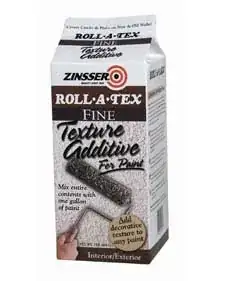
Alternatively, if you already have some paint, mix your own using a texture additive:

Niall C.
- 20,909
- 19
- 95
- 135
3
Here is a good article that sounds easy and fairly cheap (you can get a 5 gal bucket of compound for about $15).
Method One: The Roller Sheetrock Texturing Method
This is the easiest of the two wall and ceiling texturing methods outlined in this tutorial. You’ll need:
- Paint roller handle with cover and
- extension pole Paint roller pan
- Electric drill
- Ribbon mixer (found in drywall taping tool area of the home improvement store)
- Drop cloths
- 5 gallon bucket(s) of sheetrock mud (drywall compound)or powder
Begin by thinning out the mud with water. Transfer half the mud to a sturdy plastic bucket. Add a cup of water to the remaining mud and mix it in well using the ribbon mixer with your electric drill. You might have to add some more water or mud. Ideally, it should have a consistency of a milk shake.
Apply the Texture
First, spread out the drop cloths in the work zone. Pour some thinned mud in the roller pan. There are two factors that determine how pronounced the finished texture will be — the nap of the roller used and the speed with which you roll the wall.
Play around with this with the first area before it dries until you get it where you like it.
As you roll the nap will lift the mud off the wall in peaks. The slower you go, the higher the peaks will be.
Start rolling up and down in one corner and work your way around the room. For a more erratic pattern, roll back over it at random angles. Set your internal artist free!

Tester101
- 133,087
- 80
- 327
- 617
2
Mix a cup of sand in a gallon bucket of thin mix joint compound...about the consistency of thick pancake batter... trowel on with a large blade and "sand mix" will "skip" occasionally at sticking to wall... do entire wall and when 90% dry take a moist...not wet... sponge and rub wall to soften peaks and smooth wall to uniform thickness... wait 24 hrs and paint as usual

jeff vidal
- 21
- 1
1
I had the exact same problem, and went with a couple cans of spray knockdown texture and a foam knockdown knife. Pretty good results, and the stuff is water-soluble and doesn't adhere strongly, so if you get it where you don't want it, just let it dry as-is and give it a light touch with a scraping knife or a pink Scotch-Brite sponge.


0
Wallpaper is available in various textures, plus printed patterns that may be busy enough to fool the eye.
Alternatively, if your budget is super-tight you might consider using raw fabric (from a craft/hobby store) as a wallpaper or as a simple hanging.

aghast
- 1,826
- 9
- 11
0
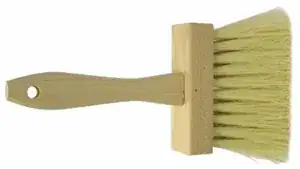
A masonry brush
10" wide joint knife
and water thinned joint compound.
You can do leaf patterns, spatter, your artistic capability is the limit as to what you get. Use the brush to apply the compound, let it set and knock it down with the joint knife.
It's also not as messy as the shootz gun which can be nasty for overspray. It's come to be my preferred method as you are in direct control on how light or heavy the texture is.

Fiasco Labs
- 11,431
- 1
- 29
- 44
0
Thin taping mud "thrown" at the wall with a stiff bristled brush. After that you can paint over. The thinner the mud, the softer the texture.
Full disclosure: I've never done this myself, but have seen my dad (a drywall finisher by trade) do this. It's similar to the way that some stucco work is done.

menns
- 101
- 1
0
Mix paint primer with ready made drywall mud. Spread on wall randomly with fingers. Knockdown with trowel and dry. Paint. Easy, Easy, Easy. On my crappy pressboard painted walls for 2 years now and holding

michele
- 1
-1
The easiest quickest way is to use tissue paper . I did this in a plywood walled bathroom in my old home. You can look it up on-line. First paint a layer of paint about the size of the tissue paper, then ball up a thin sheet of tissue paper, straighten it out and flatten it onto the wall. Then paint another coat of paint over it. This leaves a decent texture and covers up uneven walls very quickly and easily.

-2
I once had the challenge of matching an existing knockdown texture for a customer and made this knockdown tool for about $15. The only other things you will need are a wide taping knife and a 5 gallon bucket of drywall mud. Read the details at

