4

We just rented a condo and our A/C cannot keep up so it will run almost constantly. It can't even keep the temperature constant, it will creep up into the 80s even while running.

I measured the temperature coming out of the registers and it's between 55 and 60 degrees so I think its doing a good enough job cooling. I verified that the blower motor is on its highest speed but without taking the unit apart I can't find out what the horsepower is on the motor.

So my question is, should I ask my landlord to try to put in a bigger blower motor? Or what is the right solution? Also, is there any temporary fix I can do like adding fans on the return air vents to force air in?

Edit: Outdoor temperature was 92 with 50% humidity. The filter was just replaced and the coils were just cleaned. We have a big west facing arched window that I feel might be part of the problem. We also have lofted ceilings in all the rooms (2br2ba)

DanielSThompson
  • 43
  • 1
  • 2
  • 6

7 Answers7

7

It does sound like the biggest opponent the AC is facing is the large picture window. I'm guessing it's just not a well insulated and/or not high-e glass and just letting too much heat in.

For starters, close the internal blinds. If that isn't enough, consider some exterior blinds. These aren't terribly expensive and shouldn't be something that the landlord would be against.

There's different options for this. One is roll blinds:

enter image description here

This is likely the most practical commercial solution.

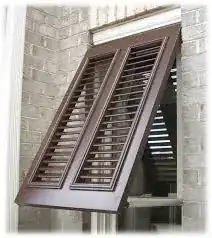
But you can get fancier as well with things such as shutters:

enter image description here

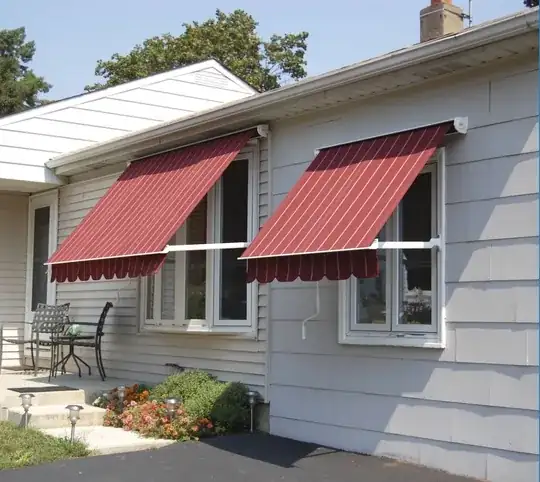
Possibly more expensive (more complicated to install) would be an awning:

enter image description here

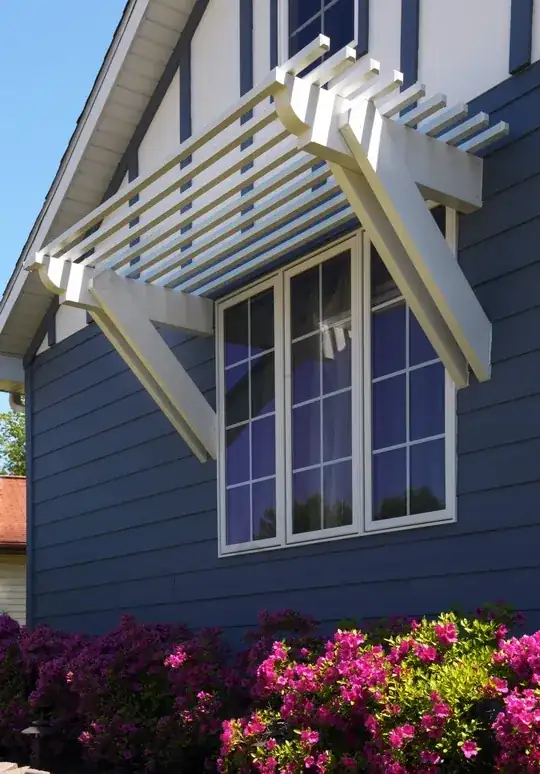
Or a window trellis/arbor/pergola:

enter image description here

Before you invest in ANY of those, however, I'd do an experiment and cover the outside of the window for a few days with butcher paper or other large opaque material.

If the AC can keep up just fine with that window covered, then one of the above options is likely the easiest way to solve this problem.

Other things to consider would be:

  • install ceiling fans. This does two things: one, creates a breeze to lower the perceived temperature and two, helps even out all the air circulation in the house.
  • check that there are proper returns throughout the house. If there's only one main return, that can make it really hard for the hot air to get recirculated through the AC. Ceiling fans can help with that.
  • make sure it's been checked out by an AC professional. It could be that it just needs recharging.
DA01
  • 24,586
  • 30
  • 82
  • 153
5

The apartment is gaining more heat throughout the day than the AC is able to remove. Unfortunately, as a renter, there isn't much you can do about this. The real solution is to improve the building's insulation, plant shade trees, replace old windows with Low-E ones, add radiant barriers, etc. But all of those options would lie with the landlord, not you, and if you're paying the electricity bill and it's a competitive rental market, they have no incentive to do any of that.

You could get a window AC unit or two, which would help. But that'll wind up being really expensive.

iLikeDirt
  • 12,685
  • 18
  • 57
  • 98
4

In addition to DA01's excellent answer, here are a few more suggestions that may give you enough minor improvements to prevent having to upgrade your A/C system.

  • Be sure that the output vents in all rooms are all the way open, and open the interior doors of every room with an output vent (though opening doors may be less important if each room has its own return vent). Part of the efficiency of the system comes from its ability to move a large volume of air. If one room is closed off, the total air movement of the system is reduced, which could have as much impact as a dirty filter.
  • Search out any thermal leaks in your walls. One way to do this is with an optical thermometer - scan the inside of every exterior wall with it and look for any warm spots. They could be signs of a small crack or hole through which air enters/escapes, or just gaps in your insulation. One place I've found an air leak was around an electrical outlet - solved with a tiny bit of expanding foam around the box. Air leaks around windows are also not uncommon.
  • If you have a basement and/or crawlspace, look for holes or larger cracks in those walls too. You may be able to find them just by seeing sunlight penetrate through. If you find any, plug them, or for a crawlspace you can simply block its entrance more tightly.
  • Blackout curtains are a good investment for your west-facing window. They're quite a bit more expensive than standard curtains, but they're designed specifically to minimize the amount of sunlight entering the home. Many report a 99.9% reduction of light. (A quick aside: I once bought two supposedly identical panels, but while one worked as expected, the other only provided about an 80% light reduction, and after two return trips to the store, I concluded that I must have bought the only good one on the first day. Bring a small flashlight with you to the store and shine it upward through one layer; you should see nothing from the flashlight (unless it's an extremely bright one!) when under the bright fluorescent overhead lighting in most stores.)
  • If you have any incandescent light bulbs, replace all of them with low-energy bulbs immediately! Light bulbs are the one energy efficiency improvement that you can make without any advance budgetary planning. (It's hard to justify spending $2,000 to replace your TV on the basis of energy usage alone, but $50 for a couple dozen bulbs? No question.)
    EDIT: CFL bulbs currently receive government subsidy in the US, so it shouldn't be hard to find them for a price very close to that of incandescents, but use less than 25% as much energy and typically last 7-10 years, as opposed to the 6-24 months of an incandescent. LED bulbs are even more energy efficient, and last even longer (10-20 years!), but are not yet subsidized, so they'll cost quite a bit more. While it will take longer to see a return, there are some other advantages to LED bulbs, the biggest of which is probably their durability - they are not as sensitive to temperature, humidity, and warm-up/cool-down as CFLs. Also, most CFLs cannot be used in an "enclosed, recessed" fixture. I believe this is because, while the bulb's radiation is almost entirely light (unlike the much larger heat to light ratio of an incandescent bulb), the built-in ballast (the base of the CFL) generates enough heat to degrade the bulb if the heat is trapped within the fixture.
    Sorry for going on so long about bulbs! /EDIT
4

This problem can be multi-faceted. Someone could guess all day long as to what the problem(s) is / are and not even come close. Air conditioning isn't something to guess at. It's like having a rattle on a car and taking the approach of replacing one part at a time to find the rattle. It would be cheaper to just buy a new car. ( I give that as an example you can easily understand. You probably won't like it but the truth is always hard to swallow when it involves money.)

This is why air conditioning is a billion dollar plus industry. It's unlikely you will solve this kind of problem on your own as a "do it yourself" solution.

Sure you can do the things suggested like window coverings but if the problem is a "system performance" problem it's unlikely to make much difference.

With all of this said... if the problem isn't found and corrected it is quite possible to spend all kinds of money wastefully. The air conditioning business isn't known for being "easy". Certainly some repairs can be but issues such as these can be quite difficult.

It's quite possible it's just too hot. If out door temps are up over 110 degrees and you're hitting 76 inside... well if you think the AC is not working go outside for 15 minutes or so and walk back in. That dial on the wall is to turn the unit on and attempt to hit the desired temperature that you set. But there is no guarantee that it will. Air conditioning (depending on climate, location and design of the system) is mostly designed to lower the temperature 20 degrees from that of outside. (again this depends upon design of the system.)

Air conditioning loses noticeable capacity at 105 degree outdoor temp. again depending on climate and design of the system. Air conditioning isn't a cookie cutter appliance. One size does not fit all.

If out door temps hit 110 or more, be happy with what you get and reduce indoor loads. Plasma TV's, specialize computer equipment, excessive incandescent lighting, halogen lighting, excessive people loads (more than two per room), etc. will only add to your discomfort.

I am a licensed HVAC contractor with over 20 years experience in Residential HVAC systems. Serving the Katy & Cypress Texas area (suburb of Houston)
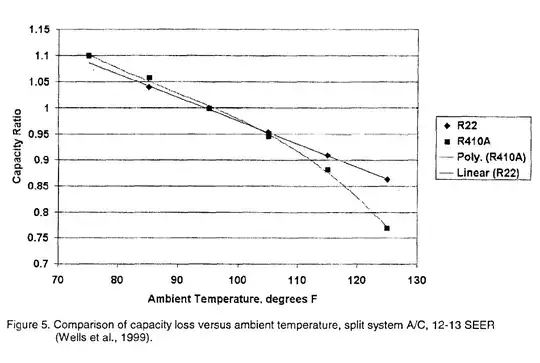
Effects of HIGH out door temperature on AC system capacity

BMitch
  • 43,263
  • 15
  • 98
  • 204
Ray Austin
  • 56
  • 2
3

You may be moving too much air with your blower fan. A ton of AC should have 400 cfm blowing, so the fan speed depends on the size of the cooling unit. It seems counter intuitive, but think of the dwell/contact time of the air on the cooling coils. More contact means better heat exchange, better dehumidified air. Drier air feels cooler.

ThreePhaseEel
  • 87,685
  • 36
  • 144
  • 243
Andrew
  • 31
  • 1
2

In a quick perusal of answers I didn't see this covered: About ten years ago it got to 118° here, and our A/C couldn't keep the inside temperature below 85°. A few days later while replacing the return air filter I noticed a lot of gaps between the filter and the return air duct. I taped them up with plenty of metal tape and never had that problem again. It seems I was blowing a lot of cool air into the attic.

BillDOe
  • 1,473
  • 1
  • 14
  • 24
1

find out where the heat exit is and place a really fast fan there to help getting the hot air out. Some ACs accumulate water and need to be emptied, not sure which ones.

I also remember my driving instructor who always opened the car windows and then complained the AC is not working properly. That's not how it works. Make sure all windows are closed, and external light is shut out like the other answers suggest.

Then no cooking, use LED light bulbs, get a low power PC, kick out all unneccessary persons .. each of those could save you a few hundred watt which the AC doesn't need to transport out.

It's normal tht the AC runs all the time, cause all the time heat is coming in or produced. When it runs on full power all the time it's the question if it is designed too weak or breaking. Have you tried googling your model, what the common problems are?

guest
  • 111
  • 2