31

I recently bought some nice inexepensive LED bulbs but I noticed the warning states: (see image below)

not for use in totally enclosed luminaires

I am guessing that it gets too hot but I find it interesting that it doesn't add that part to the warning text. I was wondering if it has something to do with it not performing well if it doesn't have air or something.

Also, I wonder if that means I can't use it in overhead lighting like the following: (Again I'm assuming you should not. It's totally enclosed, but I wasn't sure if it just meant small enclosed luminaires). small luminaire

sylvania LED bulb

jlevis
  • 113
  • 2
raddevus
  • 495
  • 1
  • 4
  • 15

9 Answers9

35

Yes, it is because of the heat buildup in enclosed fixtures, and no you should not use the bulb in that ceiling fixture you listed unless you are willing to accept shortened bulb life.

Your options are:

  1. Use the bulb in that fixture anyway and accept that they may burn out or dim prematurely
  2. Get LED bulbs that are approved for enclosed fixtures, e.g. many of the newer Cree and Philips bulbs. They will say on the packaging.
  3. Replace the fixture entirely with a LED fixture that doesn't have bulbs at all. E.g. this similar fixture from Home Depot.
  4. Use a CFL or old-fashioned incandescent bulb in that location and put the LEDs elsewhere.
Hank
  • 14,213
  • 10
  • 46
  • 48
22

Even if LED or even CFL bulbs create far less waste heat than a conventional lightbulb, they react far more adversely to the heating resulting from ANY waste heat. A lightbulb won't care if it is in an ambient temperature of 500°F, actually it will run more efficiently - anything with electronics in it is hard to make in a way that it will survive long in more than 220°F/105°C (highest commonly used specification for plastics, capacitors and wiring. And that is industrial grade parts, 160°F/70°C is more common), and LEDs are a) even more sensitive, b) dissipate their own waste heat in a very very small space so they depend on ambient temperature being low for that small space not to get far too hot, c) drastically change their color profile with increasing temperature (not so important, though, with the flourescence-based designs common in white LED lamps), and d) LOSE efficience with higher temperature - you can destroy certain laser diodes (same light-generating physics) by cooling them too far down if they are driven from a constant current, their optical output gets too strong because efficiency rises with cooling. Also, another effect works on top of that, to the same result: A hotter LED will draw LESS energy from a constant current driver because the junction voltage will be lower.

rackandboneman
  • 712
  • 3
  • 8
6

I called the number on the box to ask the company in ref to the "caution notice" about "Not for use in totally enclosed luminaries". They said that it could shorten the life of the bulb. I asked about an overheating situation/potential of fire and they said that there is a device built in the blub that prevents this from happening. I think that if the light is not on for a continuous amount of time there should be no issues. I bought my box of 8 @ Costco $17.99. They are produced by a company called Conglom Inc. out of St-Laurent Quebec. If anyone else wants to call the toll free # is 1-877-333-0098.

Lisa
  • 61
  • 1
  • 1
2

I work at a hardware store and this is from our training manuals:

The performance of an LED is dependent on temperature. Most LEDs are designed to work at their optimal at 25ºC. When used outdoors in climates that become very warm, the LED could result in a low signal intensity or even bulb failure (which might happened when enclosed). They will maintain consistent light output in colder temperatures. LEDs do not generate as much heat as incandescent bulbs and are an energy-efficient technology to use (for example, in freezers). However, ice and snow may bulb up on the luminaire in colder climates (for example, affecting airport runway lighting).

The performance of an LED is also influenced by its voltage. Even a minor change in voltage can result in a large change to the current. This may led to potential damage or destruction of the LED. There is a simple solution though – use a constant current power supply or maintain the voltage far below its allowed maximum rating.

Most LED fixtures include a power converter to help maintain a consistent power supply. This is why sometimes LEDs do not work with some fixtures.

FreeMan
  • 48,261
  • 26
  • 101
  • 206
Mike
  • 21
  • 1
1

Appart from heat buildup in a totaly enclosed fixture an other even more severe problem kills the LED lamp.

The lamp driver is a small piece of electronics located inside the foot of the lamp or in some occasions as a separate unit and can indeed become damaged due to a to high temperature. But there is more "Moisture"

Example Consider an outside fixture with the lamp on in the evening. In case of an enclosed fixture the surrounding air inside the fixture is getting hot and forced out (an enclosed fixture is not damp tight). When the lamp is switched off later fresh air is sucked in again and during the night when the outside temperature drops the damp condensates leaving water behind. This water is blocked and can not escape. Repeat this action a number of times and you end up with a defective driver.

Result enter image description here
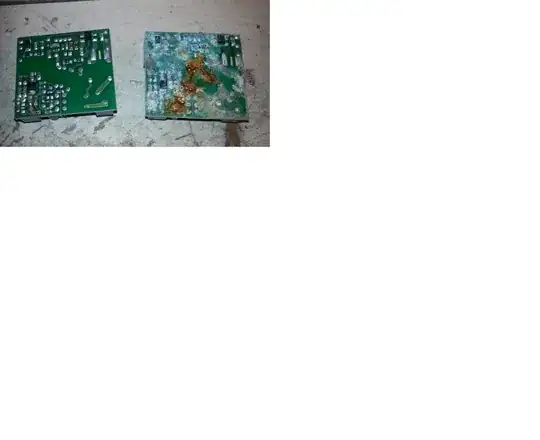
The above picture shows the result of the ingress of moisture. Similar situations I have seen with drivers inside an LED light bulb itself.

Moisture paths Moisture can enter enclosed fixture alongside a seal but also through the connecting cable.

Prevention
Prevention can only be reached when the driver is completely enclosed with a compound at a higher cost.

Decapod
  • 500
  • 2
  • 6
0

The rule for enclosed fixture is the same for CFL bulb and LED bulb. You need CFL or LED specially design for enclosed fixtures.

0

LEDs in most outdoor fixtures should be fine if you use low wattage ones. I replaced 3 25 watt incandescents with a single 4W LED. These are very useful since they are often kept on all night. At night the heat is not a problem and during the day they will be off.

Doug
  • 1
0

It is not much about the shortened bulb life. The MAJOR risk is due to fire catastrophe. LED bulbs run cooler? True, BUT not at the base. The base heats up extremely and is considered a fire hazard. That's a reason authorities mandate a warning such as 'not to be used in totally enclosed luminaries'. Manufacturers obviously do not want to mention the work 'fire' on their product as it will deter away customers - after all, who would want their home on fire! So by using a generic warning like this, manufacturers are able to beat the system and promote their items. If it has no such warning, then manufacturer will obviously state that it CAN be used in enclosures (some bulbs are designed for enclosures, but costs lot more). But if there's no such statement or no such warning, then it's probably made in China (if you know what I mean), and I wouldn't recommend to use in enclosures. Stay safe. Hope this helps!

-5

i have used them in enclosed fixtures with no problems. They do get warm/hot, and the reason for the warning is they want the bulb to get good air circulation. I've used similar bulbs for the last 2 years with no problems.

John P
  • 120
  • 4