2

I've got a 5/8" plywood subfloor in my bathroom. I'm prepping to install 1/4" Hardiebacker on top of that so I can install 12x24" marble tiles. In checking for flatness, I noticed there is a 1/2" drop just in front of the bathtub over a run of about 12-16".

I'm planning to use a bed of thinset under the Hardiebacker, but I also know I can't make up 1/2" that way which will mean the floor tiles won't be flat.

Can I use 1/2" and then 1/4" shims of excess Hardiebacker under there in with the thinset and make up the remaining 1/8-1/16" when setting the tiles?

I'm concerned about leveling compound under there and being able to screw through it after it's set without cracking it and causing other issues.

Not sure the best way to get this subfloor flat so I can move on.

EDIT 3/16 @ 8:44am
Photos from the basement where plywood and joists are. Photo 1, you can see the tub drain and joists where the tub would end and the dip occurs. Photo 2 is just to the right showing the same joists further over. It looks like the tub is sitting on top of the plywood, which is 23/32 according to the label underneath. I wonder if the weight along with a crowning joise is the issue.
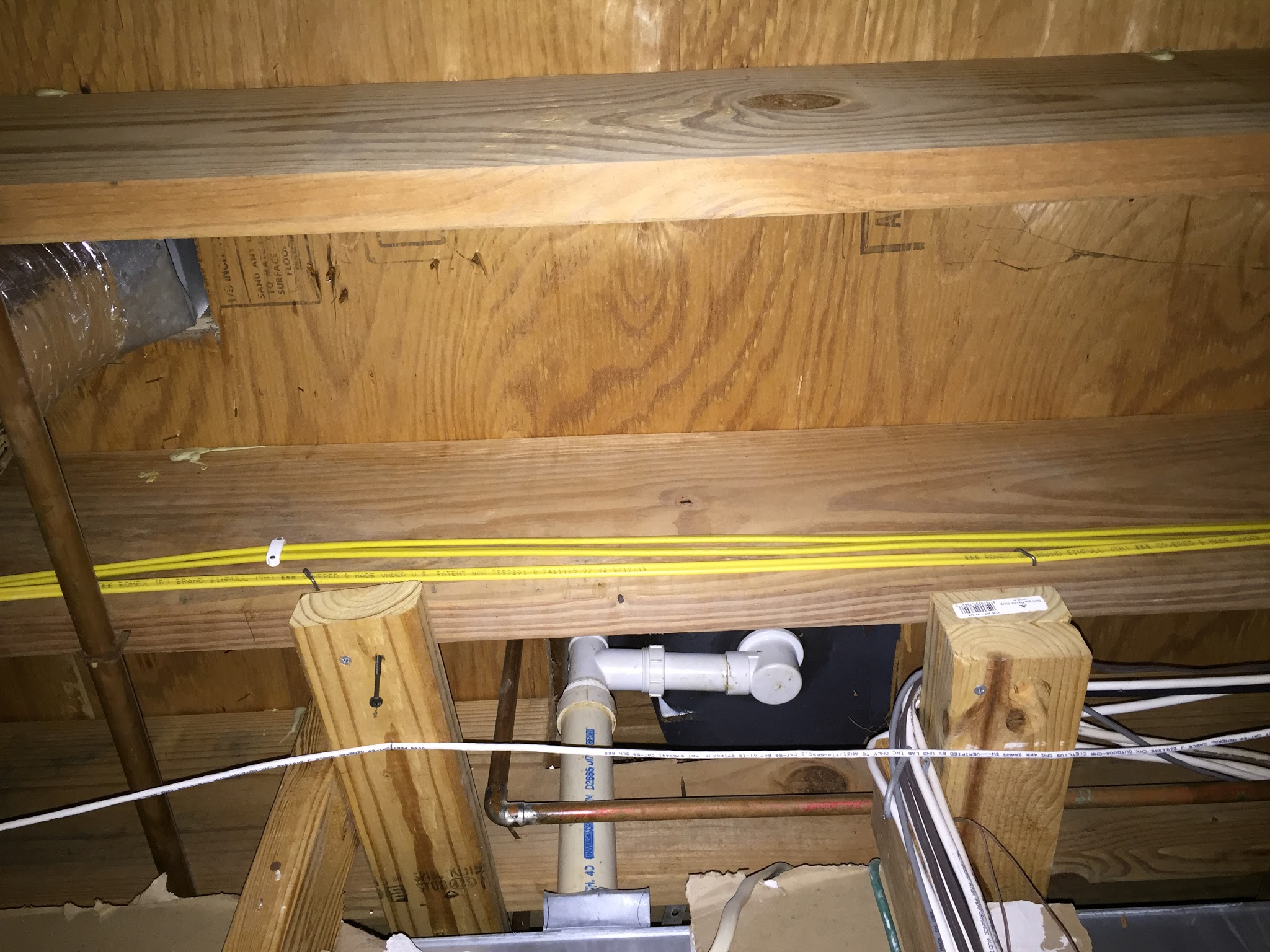
enter image description here enter image description here

EDIT 5/6 @ 6:30pm
For those that might find this later. I ended up paying the contractor doing my master bathroom to finish this space out. I pulled up the shims I had put down and he put down a mesh, used spray foam to seal the outside edges and holes and then he put down some self leveling compound instead of the backer board. He said this would be stronger and we wouldn't need the backer board since the leveling compound is like a mortar/concrete base.

Chris Rasco
  • 197
  • 2
  • 3
  • 9

2 Answers2

3

Yes, your plan sounds perfectly fine, initially. But, that deep of a divot for such a small area is concerning to me. I'd take the plywood up or drill an inspection hole in the ceiling below to see what's going on.

To me it sounds like it could be 1 of 3 things:

1- The plywood is cracked & therefore compromised, so it should be cut-out & replaced in that area. But, it would be very obviously bouncy or spongy.

2- A joist was installed incorrectly & is sagging down. But, the sag area is way too small.

3- The joist could be a cracked, which will only crack your new tile immediately or eventually. This may or may not reflect upon the ceiling below.

It's just very uncommon in newer construction to have such an odd deflection without a physical problem being the cause. Otherwise, fill & level at your own peril.

Iggy
  • 10,392
  • 18
  • 36
0

if your subfloor is plywood, and not osb, you dont need the 1/4 hardie backer. just use a crack isolation membrane (nothing fancy like the big box stores try to sell you, just use 6oz fiberglass mesh) and it will be fine - much stronger than hardie backer. much more important under marble than under tile. particularly if its a mascarella or carrara.

if you insist on using the hardibacker, do not put the shims between the hardie and the subfloor. just screw and glue the hardiebacker directly to the subfloor and then float out the drop in elevation with a layer of good quality mortar (ceraflex 610 or flextile 52). you will have to do a couple of coats to get a good patch (rough between coats with a cup wheel or floor stone). then just lay the tile over the whole thing in one run.

hoping i am misunerstanding, but just in case, remember that a marble floor needs to be ultra stable, so use at least a 1/2" notch (and backbutter each tile) or a 3/4" notch and a real wet mix.

as a last suggestion, if you want a super flat floor with marble (marble can warp when its wet), use a floor leveling clip system to make sure you dont get any lippage on the finished floor. its well worth the extra $100 or so