30

I have read this question - Solar panels and hail and my question is similar. I have the possibility that neighboring kids may throw stones at my roof top solar panels to scare off monkeys which are a local pest.

What protection measures I can take as I do not think my insurance will cover that damage ?

I have been told by my neighbor to use chicken wire. Will that reduce the output of solar panels ?

Chicken wire

UPDATE Background - I stay in a rural area where monkeys are common. I also live in a hilly terrain and there are houses above and below me. So kids may accidentally throw a stone at a monkey when it is over my roof.

13 Answers13

16

The real problem is the monkeys. The collateral damage due to flying rocks would best be dealt with by trapping and relocating the monkeys. Or, it might be helpful to use an electric (chicken wire) fence to keep the monkeys off the roof. Other deterrents might be motion activated sprinklers or ultrasonic alarms.

Obviously, there is not a perfect solution, but reducing the monkey population should cut down on the number of rocks being thrown at your house.

An alternative to chicken wire would be (bullet-proof) polycarbonate. Supposing that you have a glass solar panel, I would particularly recommend replacing glass with polycarbonate, especially if they do break the glass, because polycarbonate is much cheaper and more durable. Polycarbonate will become hazy after a few or several years, so it will need to be replaced occasionally for efficiency.

Pros and cons (polycarbonate vs glass):

Pros:

  1. Polycarbonate is significantly cheaper than glass.
  2. It's durable/bullet proof.
  3. It can be cut to shape.

Cons:

  1. If you replace the glass with polycarbonate you will get about a 9% reduction in power. But you would definitely want to replace the glass, because if you use polycarbonate over glass, it will reduce the efficiency by about 20%.
  2. It becomes hazy after several years and needs to be replaced.
  3. It expands and contracts, so you need to attach it with screws and allow room (around the edge) for expansion.
Ben Welborn
  • 6,292
  • 5
  • 23
  • 49
12

I live in a small Himalayan Village facing the same problem. But we kept our solar panel in such a place which is not accessible to kids or monkeys. The second thing I would like to mention is that if our neighboring kids don’t have that much of vision of damage of the solar panel due to stone pelting to monkeys may broke our panel - we have to make them understand - this may be broken due to - your good throw of stones towards the panel.

We have to make them understand the process and for monkeys we have to train dogs and extend shelter to them in our homes in compassionate manners. Extend your knowledge and help for understanding the ecosystem and in between the energy needs.

JDługosz
  • 1,131
  • 5
  • 13
J.P.Maithani
  • 121
  • 2
3

How big are the rocks and how far are they being thrown from? Panels are generally designed to be able to withstand small to medium sized hail... if kids are throwing rocks large enough to break panel glass at your house, I'd imagine your house would be taking a lot of damage as well.

Stating the obvious, but anything obstructing the sun will reduce output — but chicken wire shouldn't do so in a way that's hugely significant. I'd be surprised if you saw more than a 5% reduction even if you completely covered the panels with the wire.

Alternatively, I'd recommend security cameras and some signs pointing out said cameras. I think it could go a long way as a deterrent, and if you really wanted to pursue it you could track down the kids and talk to their parents.

user1869753
  • 131
  • 1
  • 1
  • 7
3

I would think a security camera that records, along with a phone call to the police, would be cheaper and easier than trying to figure this out. Along with the threat of legal action and jail time may come restitution for any damage to your panels.

Rob
  • 1,237
  • 7
  • 21
  • 38
3

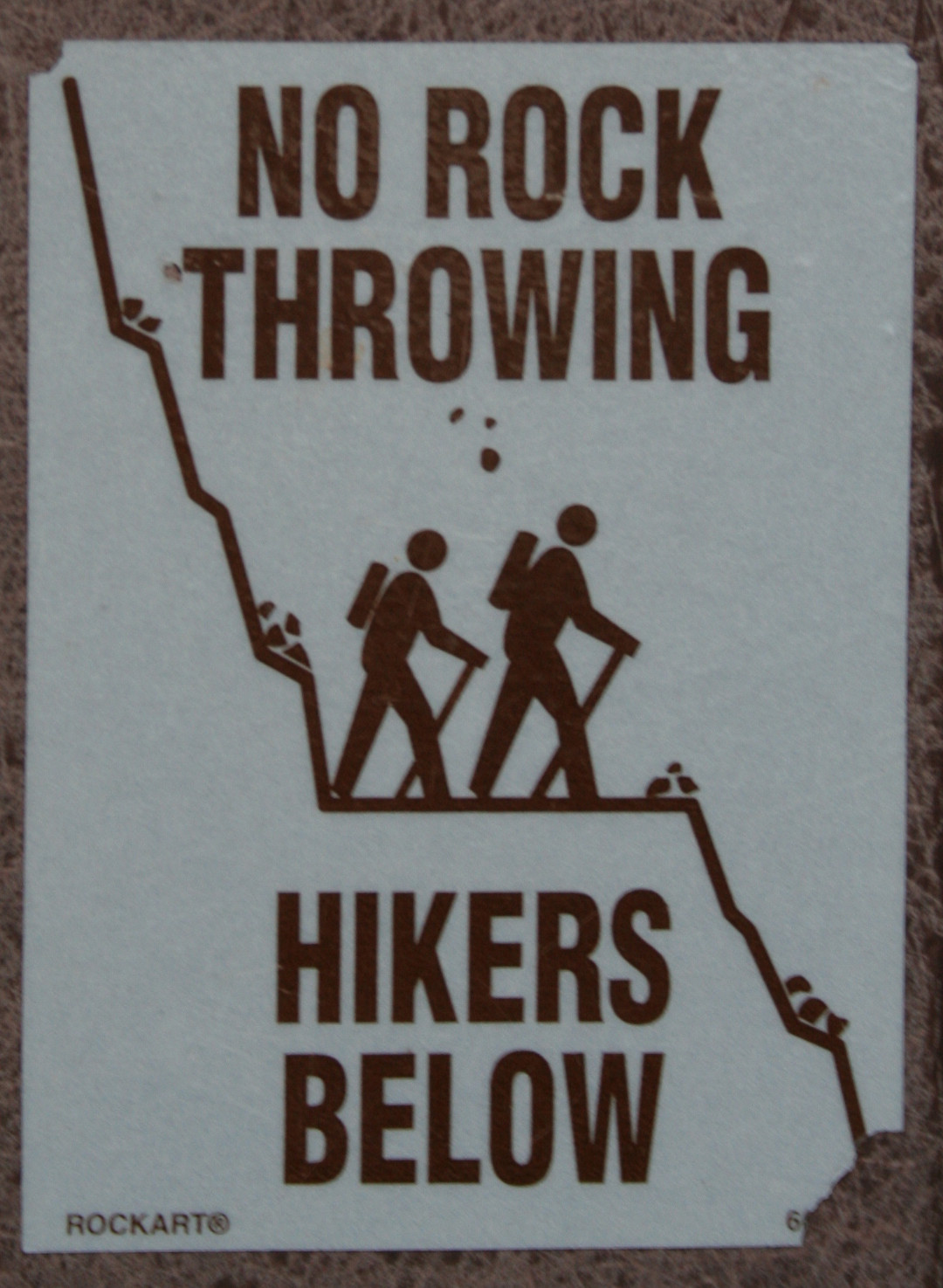
Could you post a simple sign that asks the well-meaning kids to not throw rocks at your roof?

You would want to depict rock throwing hitting a solar panel or glass pane. I could not find a precise sign but something like these might work as inspiration: no rock throwing, hikers below

fragile glass

Freiheit
  • 4,262
  • 13
  • 51
  • 68
3

OK - so you're not going to be able to stop the kids from throwing rocks at monkeys and you're not going to be able to protect the solar panels from rocks. The only solution I see is to keep the monkeys off the roof.

If the monkeys will run away from water, you can get motion detecting spriklers (available at Amazon) and mount them by your solar panels. The water will allow sun through while a spritzing may chase off the monkeys.

On the other hand, if you're in a hot climate, the monkeys might enjoy a good spraying and hang out more often.

Hannover Fist
  • 297
  • 3
  • 11
2

Adding this answer to comment on the chicken wire approach. Two points:

  • The shading by the chicken wire isn't as small as it might seem.
  • The effect the wire has on the efficiency will vary with sun angle.

To calculate the % area shaded we need to know the opaque proportion of the total area of the chicken wire. Instead of doing this geometrically, it seemed easier to do this using bulk material properties:

  1. Sample chicken wire:

    • 3' x 50'
    • Weighs 13 lbs
    • 20 ga steel (0.0375 inches; ref)
  2. Total volume of chicken wire sheet if laid flat: 0.46875 cuft

  3. Density of steel: 484 lbs/cuft (there is a range but I assumed cheap lighter steel)

  4. If totally solid, the same volume of steel would weigh 226.9 lbs

  5. Therefore it has only 5.7% of the expected weight.

  6. Assuming that the chicken wire's thickness is uniform, the variance from theoretical weight must be due to only 5.7% of the surface area being present.

Therefore, at BEST, the chicken wire will reduce efficiency by 5.7%. That's not trivial.

When the incoming solar is aimed directly at the chicken wire, it will have its least shading effect (i.e., 5.7% blocked).

As the sun angle departs from best-case 90 degrees, this will get worse. Obviously if the sun were shining directly on edge to the chicken wire, it would block 100% of it. I think it would go as (1 - 5.7%) sin(angle) where angle is just the elevation from the chicken wire to the sun.

But this may be mitigated somewhat because you'd expect that the efficiency of the solar panel would also decrease as the sun angle decreases. You'd have to get that info from the manufacturer to compare.

StayOnTarget
  • 5,675
  • 21
  • 58
  • 102
1

To answer the actual question, I think chicken wire will usefully help. The wire will have insignificant effect on solar production.

However, the bracing to reasonably support chicken wire so it is effective deterring monkeys and decreasing the damage caused by rocks will probably cast a few shadows which will have an effect. The wire will have to be suspended at least two feet/60 cm above the solar panels.

Note that large stones may still occasionally break through the chicken wire, but it is easily and inexpensively mended.

wallyk
  • 12,399
  • 3
  • 24
  • 51
0

In my experience, even the "worst of the worst" neighborhood kids can be repelled by:

  1. threatening to call their parents
  2. Actually calling their parents

If their parents "don't care", they will if you send them a bill.

0

You're trying to solve the wrong problem. If neighborhood kids are throwing stones at your house or solar panels, it means they don't respect or fear you. Fix that. They're just kids; you're an adult. That means you have power and authority over them in a variety of ways. Exercise it. There is ZERO reason to put up with this kind of childhood hooliganism.

iLikeDirt
  • 12,685
  • 18
  • 57
  • 98
0

It sounds like anything you put over the solar panels to protect them will reduce their power output. If that's important to you, I agree with Web Welborn about finding a way to deter the monkeys from being on the roof.

Do the monkeys loiter on top of the solar panels or surrounding roof area? Here are some deterrents used for birds which you could attach to areas of the roof. They might work for monkeys, too. In the event you need to go on the roof to perform occasional maintenance, these may work as long as you wear some sturdy soled shoes.

Good

MJA
  • 111
  • 3
0

If you'll excuse my primate drawing skills, since we're talking about our theoretical distantly-related cousins (I must admit that they are generally better climbers than we are), monkeys do have their own physical limits.

Having this in mind, if you re already planning to spend some money, this is what I suggest:

Wide panes

Basically you can place metal (or other more appropriate material) panes around your panels preventing access to your roof. Small holes can be drilled at the bottom of these panes in order for the water to flow out. Lastly, one of those panes may be allowed to tilt down (or perhaps have a small door on it) for accessing the roof when needed.

Just in case you have other structures tall enough around your house, you may try to correct their angles like this (without covering the panels):

Tall panes

I'm not sure how viable this solution is to your case, but if it's feasible enough, you won't have to place or replace anything on your panels... And you will not have monkeys on your roof.

CPHPython
  • 111
  • 2
0

In an analogous situation the approach taken is the following form of social engineering:

Image of fly painted on men's urinal

EDIT: As Isemi noted in the comments, "some urinals provide painted flies or plastic soccer balls or even miniature waterwheels to induce patrons to aim properly and minimize urine spills".

Thus:

  1. Provide some decoy or other point of interest that the monkeys would prefer, rather than your roof.
  2. The kids will then throw rocks at monkeys which are not on your roof.

So its a "fly" provided to both groups of pests.

StayOnTarget
  • 5,675
  • 21
  • 58
  • 102