25

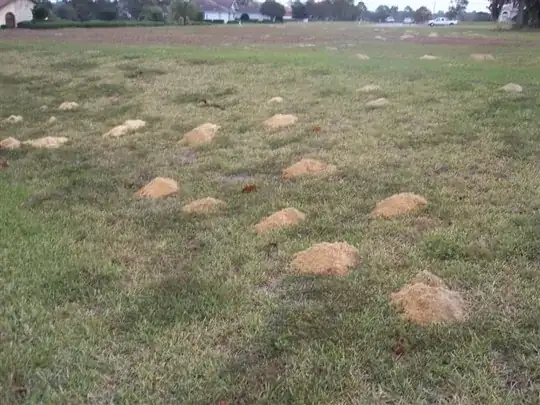
Gophers or ground squirrels are common pests in North America, that can destroy the fruits of your hard labour. They create extensive underground tunnels and are mostly active at night. A typical gopher infested yard looks like this with mounds of mud and dirt piled up at the entrances to the tunnels.

enter image description here

What would be a good way to get rid of the gophers in a non-lethal way? I know that there are professionals who do come out, lay traps and kill them or you could buy some rodent poison at the local Home Depot/any gardening store. I'd like to know if there are alternatives to these because a) the first option can be expensive and b) I don't want to end up with a bunch of dead animals in my yard when I have no clue how/where to dispose them.

Lorem Ipsum
  • 11,219
  • 8
  • 58
  • 95

5 Answers5

20

I originally posted this as an answer to this question on Home Improvement:

I have a friend who swears by Euphorbia Lathyrus (he calls it Mole Purge). It has naturalized itself in his back yard and in flowerbeds at the front of his house, and the only places I've seen molehills are at the extreme edges of the front of his lot.

I've also never seen any dead gophers or moles in his yard, so I believe it's acting as a repellent instead of poisoning them, and as I noted in the comments there, he hasn't had problems with his dogs chewing it.

Niall C.
  • 7,289
  • 11
  • 53
  • 81
11

In addition to the answers above, my local gardening center had the following suggestions which are really simple solutions

  1. Gophers aren't fond of strong smells. So dumping some coffee grounds in their tunnels should drive them away. Also, the dryer sheets (fabric softeners, I think) which are strongly scented should do the trick.
  2. This is useful for people with indoor cats as pets. The suggestion is to put used cat litter in their tunnels and fresh mounds. Gophers, being rodents are natural prey for cats and the scent of a cat in the litter is enough to scare them away.

Both of these should serve as good alternatives to using traps/poison, but as Randy points out, traps are pretty cheap (I had just assumed they might not be)

Lorem Ipsum
  • 11,219
  • 8
  • 58
  • 95
10

I don't think that reason (a) has to be expensive. I picked up a pack of two gopher traps at the local hardware store for less than $10 and they are pretty simple to set and are more effective than poisons and bombs (since you absolutely know if you got one or not).

That being said (b) is a real concern, but if you have a larger plot of land like me, they can be disposed of far from your home and are usually taken care of by other critters within a day or two.

Randy
  • 1,543
  • 12
  • 17
9

Below are a couple more suggestions:

  1. Attract natural predators, especially birds of prey might be another option worth investigating a little more:

    • Attract hawks and owls into their area, by putting up a perch (roost) in the middle of the area. A simple cross beam "T" six or more feet off the ground will give those birds of prey a convenient platform to hunt from.
  2. To prevent gophers (and other burrowing, tunneling pests) entering an area, a "low" level fence that is sunk (buried) into the ground 2ft (600mm) makes a very effective barrier:

    • If using a metal mesh type fence, spacing between wires should be no bigger than ½inch (12.5mm).
Mike Perry
  • 18,467
  • 2
  • 48
  • 90
0

This is one of my biggest pet-peeves. Sigh...moles, gophers, shrews are wonderful slaves for a garden...AND a lawn! Problem is that they don't let you know in advance when they will be burrowing and present before your garden party...those hills of soil mean aeration! Just rake or blow them down into your lawn. And usually there is only one or two animals 'making this mess'...people paid me a lot of money to go dump piles of topsoil/gro-co on their lawns and to rake it in. They do it for free. Their main diet is grubs in the soil, not your plants. Once in a while they might chew on your bulbs (especially if the bulb is full of larvae, grubs) or plant roots when low on the insects they'd prefer.

Problems arise if the homeowner applies pesticide to their lawns/beds to kill grubs. Kills their pantry and they'll nibble on plant roots, bulbs instead. Voles especially can be a problem during the winter and early spring months. They love to hang out in thick mulch to keep warm and if there are trees, shrubs, perennials, bulbs nearby well they will eat roots and girdle stems.

Stay with organic and minimal killing of animals and insects. There is a nice, stable environment that will accommodate your plants, vegetables and these tiny mammals. Killing rodents or these soil burrowing mammals does absolutely no good. There are always more to fill the niche.

Do the screen beneath the soil to 2'...keep your plants in a hoop house or greenhouse to prevent rabbits, deer from eating your garden. The more you try to control with chemicals the more you open your environment up to even more problems. Adopt a more relaxed attitude towards 'damage'...take this seriously. If you don't you'll keep making more problems and soon will be an ex-gardener. There is usually plenty for you and your homestead critters!
stormy
  • 40,664
  • 4
  • 33
  • 76