9

If you've seen the youtube video Will Allen's Growing Power organization, then you probably wish you had something like this in your backyard, whereby you could make the most use of vertical space.

My goal would be to make a garden in a greenhouse using plywood planters, about 3-4 stories. I would grow anything that could grow in 6-8 inches of soil that would tolerate cold winters and humid summers.

I'm not concerned about the following things:

  • Aquaponics, but if it's necessary, then it's necessary.
  • Vermicomposting
  • Collection of compostable material from restaurants
Peter Turner
  • 9,211
  • 5
  • 40
  • 83

4 Answers4

6

Obviously the sort of system pictured is not feasible for the average gardener, however, the use of vertical space is possible if you construct it properly.

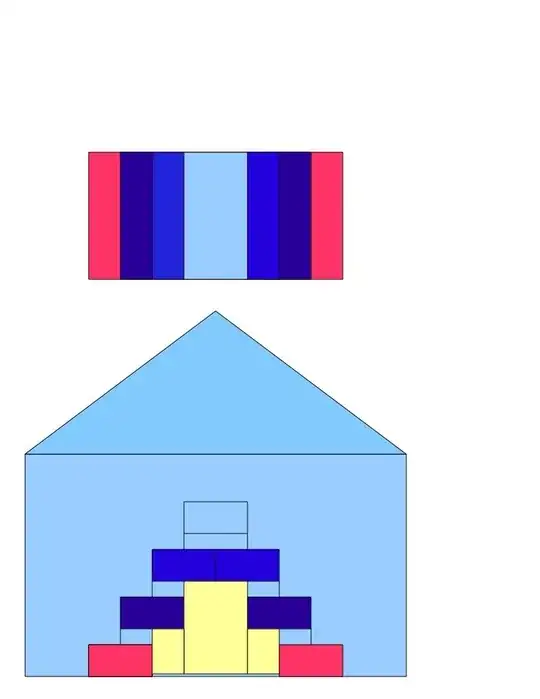
The trick would be to construct a series of wooden planters that are offset so that the back edge of each planter gets sun while the sun is at a fairly low angle and then the next planter is constructed partially overhanging the lower one.

The key here would be to support each level well and probably to construct only a limited number of them across the sun's path in kind of a pyramid shape.

The other consideration would be to plant shaded or limited sun crops in the lower bins and full sun crops in the higher bins.

This may be too much of an eyesore for some neighborhoods, but if you live in an area with wide house spacing, or can do it on a rooftop then this seems like a setup that would work well provided it was constructed properly.

This is a crude drawing of what I'm thinking ofenter image description here. What I would do is use concrete in the yellow part in the middle then use cinder blocks or maybe even molded concrete blocks for the front end supports on each layer. This way I would not feel unsafe climbing up to the top of the beds (filled they should be heavy enough not to slide). I am unsure if I would build the top layer in my drawing or not.
wax eagle
  • 5,188
  • 6
  • 36
  • 70
5

Plants need light. In that video they have shelves in the greenhouse at a height of about 6' with plants in trays. They also have plants in baskets hanging from those shelves. Underneath the shelf is the "second story", but that's where they're growing fish, not plants. I've never seen any greenhouses that grow plants in multiple "stories". (Sometimes you'll see a nursery where they have plants for display and immediate sale that are stacked, but this isn't a good growing environment.)

It sounds like you want to make more efficient use of space and seasons in your small backyard garden.

Some strategies to maximize the use of the seasons:

  • Use a cold frame or low tunnel to extend the harvest season of hardy plants like greens (spinach, lettuce, kale) and root vegetables (carrots, parsnips, turnips).
  • Use a hot bed to kick start your late winter / early spring planting.
  • The cold frame and low tunnel are removable so that you can use that space in the summer without baking your plants. And they're inexpensive versus a greenhouse which is fixed in place and requires a bit more care.
  • The season extenders can also be rotated from bed to bed so you don't get a buildup of pests and/or disease like you can with a greenhouse.

Some strategies to maximize the use of space:

  • Trellis everything you can possibly trellis:
    • Tomatoes
    • Cucumbers
    • Melons
    • Winter squash
    • Peas
    • Beans
  • Plant bush varieties of space hogs like zucchini...
  • ...or don't plant the space hogs
  • Plant fast-maturing cultivars and relay plant so you can harvest multiple crops from the same bed. As an example: start spring peas early in the hot bed, harvest in May/June, pull them out on July 1, plant 65-day carrots that you harvest in early September, and then transplant three-week-old spinach that you can harvest all fall/winter.
bstpierre
  • 41,932
  • 8
  • 118
  • 240
4

At this moment in time I'm not exactly sure what it is you're after achieving. Sorry.

But below are a few thoughts, which I will expand on, as and when it becomes clearly to me, what it is you wish to achieve and how you wish to go about achieving your goals:

  • A Greenhouse or Polytunnel, even the smaller sized ones can be productive nearly all year round.

    • Keep in mind, it's considered good practice to "clean" them out at least once a year. Doing so helps in the battle to keep the "enclosed" environment "disease/pest free".

    • If planting directly into the ground that the Greenhouse or Polytunnel sits on, you will probably be best served by rotating crop types to help reduce the build up of soil based "diseases/pests", or physically move the Greenhouse or Polytunnel to a new location every 3 to 4 years.

    • Successful growing within a Greenhouse or Polytunnel takes planning and a small amount of almost daily work to look after, care of crops within. Some of the workload can be "automated" eg.

    • Installation of some kind of self-regulating temperature/ventilation system.

    • Installation of some kind of self-watering system.

  • Cold frames may offer another possible solution, or used in combination with the above.

  • Depending on your location and local growing environment, there are probably at least a few crops that can be planted outside with no protection, or minimal protection (eg Mulch layer or a simple hooped covered system) for Winter harvest, or early Spring harvest.

  • Using clothesline in the garden - what needs the most support?, have included as it references crops that do well on some sort of trellising system ie Grow vertically, thus allowing other crops to be planted below (maximise the space being used).

  • Today (2011-09-01), reading this, Pretty edible gardens - a guide, I thought you might find "Forest gardening" an interesting concept worth further investigation.

Forest gardening is a food production and land management system based on woodland ecosystems, but substituting trees (such as fruit or nut trees), bushes, shrubs, herbs and vegetables which have yields directly useful to humans. Making use of companion planting, these can be intermixed to grow on multiple levels in the same area, as do the plants in a forest.

Mike Perry
  • 18,467
  • 2
  • 48
  • 90
2

You may want to consider some vertical gardening kits. They make the construction a lot easier. If you use a material like plywood you could run the risk of having your wall rot which will destroy your work over time. With the effort that goes into making it, it may make more sense do use one of the kits.

This vertical garden panel is of a synthetic felt which is rot-resistant. Also the pockets are about 6" deep which meet your requirements.

Gavin
  • 69
  • 1
  • 1