9

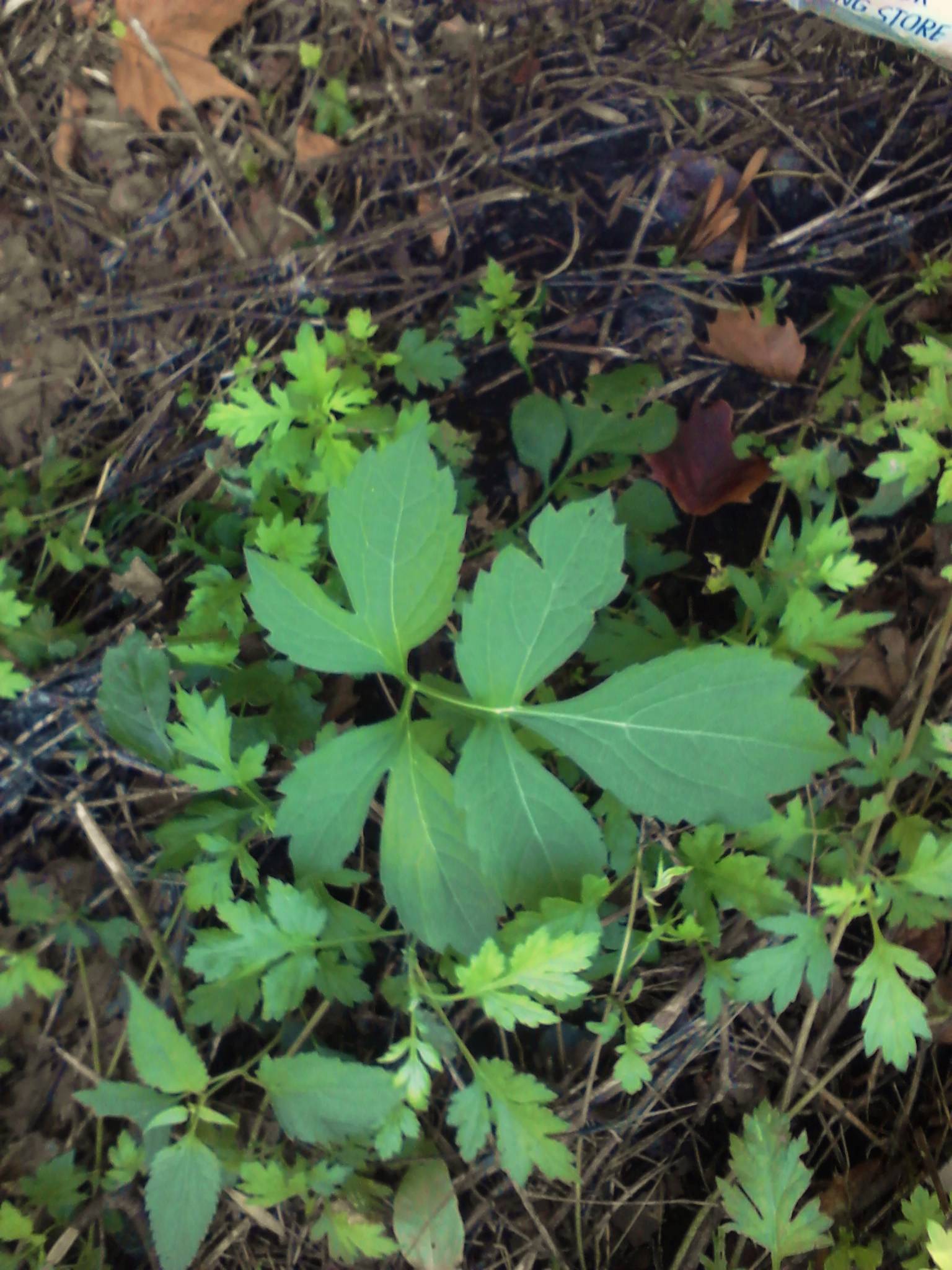
leaf is about 3ft tall in a well shaded area, and rough to the touch. It's growing on a river bank in Pa. It looks like a huge parsley type leaf

This plant is new to me. It's about 3 ft tall, in a well-shaded area on a river bank in Pennsylvania. It's rough to the touch and looks like a huge parsley-type leaf.

I've lived in PA for about 16 years, only to find tons of new plants and vines that are all imports, and most are extremely invasive. I am identifying as many as I can and am going to make up a report to submit to the city and possibly volunteer for a cleanup job, though it will take an army at this point. I want to see if these plants are medicinal or edible and where they come from.

Debra Brooks
  • 236
  • 1
  • 5

3 Answers3

1

That looks like cow parsnip Heracleum maximum (USDA)

Or

sweet cicely Osmorhiza claytonii (USDA)

However the plants in the Apiaceae, as this is most likely a member, are difficult to ID just from leaves.

Other possibilities are something in the Ranunculaceae (some have leaves a bit like this) or Papaveraceae (also some with similar leaves)

Don't eat anything in the Apiaceae family unless you absolutely know what it is! Some of the most poisonous plants are in this family, and unlike other plants people say are poisonous, ones in this family are know killers (there are actual records of people dying). And you can't taste that they are poisonous.

The other two family's plants are also suspect and could be toxic.

Ken Graham
  • 475
  • 1
  • 5
  • 13
Eric Deloak
  • 1,165
  • 5
  • 12
1

This plant is Zizia aurea or Golden Alexander. It will have yellow umbels/flowers later. I am researching whether it is edible, I've read contradicting information thus far.

0

It's Parsnip.

Heracleum Maximum's terminal leaflet has more lobes.

Golden Alexander has distinctive stems on its leaflets.

Parsnip roots are edible, and very popularly so. Its leaves are toxic to the touch, so wear gloves. (I had an itchy crook between my thumb and hand for about 2 weeks last year from clearing out a small patch of these suckers. Didn't know what they were and had never even heard of them beyond their occasional mention as food in a book or two.)

To further verify, uproot one of them (you'll need a tool unless the ground is soaked). If the root is a parsnip, the plant's a Parsnip.

Disclaimer: never eat anything unless you are 100% sure what it is.

Paul Nardini
  • 2,183
  • 9
  • 7