20

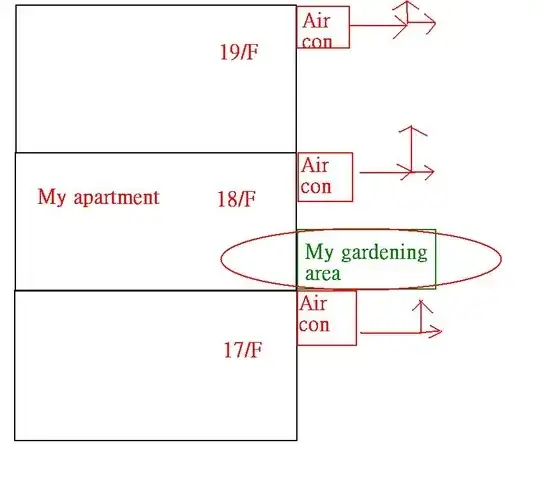
I live on the 18th floor of a building in Hong Kong. In summer, all of my neighbors turn on their air conditioners, which generate a huge amount of heat.

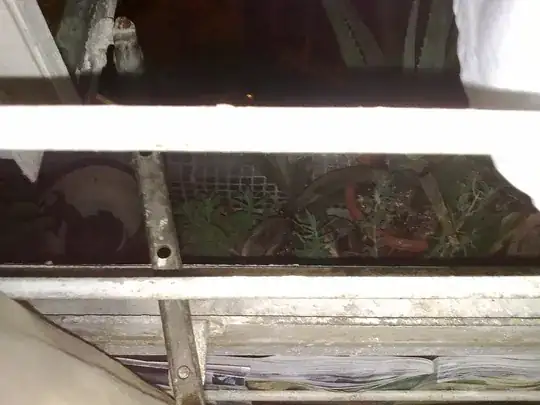
I have a little balcony like gardening area out of my window (see below).

enter image description here

enter image description here

The problem is the heat -- the heat killed most of my plants last year. This summer is coming. Is there any way to avoid the heat killing my plants? I do not want to install a fan to blow off the heat, because construction is troublesome. I want an eco-friendly method, if there is any.

Now, my ultimate strategy is to plant some heat-resistant plants (ideally herbs, fruits, other things that can be eaten and aloe vera). In general, summers in Hong Kong are hot and rainy. The location is sheltered with half sun (it faces east, gets good sun in the morning and the afternoon is normal). The plants are typically grown in pots and should preferably be less than 1m in height.

What kind of plants will survive in this condition in addition to the heat from the air conditioner? The temperature is about 31-32 degree C

lamwaiman1988
  • 7,600
  • 9
  • 45
  • 76

6 Answers6

12

If you want to grow kitchen herbs look for varieties that are hearty in warm climates. Basil is a good one, I'm not sure of others. Make sure that plants that want to be watered are watered well and others that do not like as much water are kept to appropriate moisture levels.

Rosemary, sage and thyme grow really well in heat if you have good soil and keep them well watered. (I live in Arizona, think 105-110 for most of the summer). Rosemary likes to dry out a little between waterings.

Try to find herbs/plants that are native to your climate and region, they will be better adapted to the heat and light you have available.

Lorem Ipsum
  • 11,219
  • 8
  • 58
  • 95
wax eagle
  • 5,188
  • 6
  • 36
  • 70
6

Very few plants will tolerate hot air blowing on their leaves. An echo-friendly method of solving the problem doesn't spring to mind - unless you can find some way of deflecting the hot air (perhaps with screens) - and installing a fan would seem to be the only way forward. However, you could try the following plants, which adjust well to hot, dry conditions:

  • Chinese Evergreen

  • Gollum Jade

  • Curry Leaves (Murraya Koneigii - not to be confused with Curry Plant, Helichrysum italicum)

as well as the herbs mentioned by @Bill in 'Comments':

  • Rosemary

  • Sage

  • Thyme

    N.B. Given your edit, stating that the heat generated is about 31-32 degrees C, I think that the plants I have suggested would be unlikely to survive.

Mancuniensis
  • 14,334
  • 1
  • 50
  • 85
6

Hosta's might be a good choice in your situation, if they weren't exposed to the midday sun.

I planted a Hosta garden this year on one side of our house, air conditioning compressor unit is in the middle of this garden. They only get late afternoon sun.

Hosta's do incredibly well here in St Louis, MO when they're not planted out in full sun (or exposed to the midday sun).

  • Cold winters, will drop below 0°F (-18°C).
  • Hot, humid summers, today was 101°F (38°C), but felt like 113°F (45°C).

2011-06-16, Hosta has been in front of air conditioning compressor unit for over 2 years now (10 additional Hostas where planted this year to turn this "dead" area into a Hosta garden)
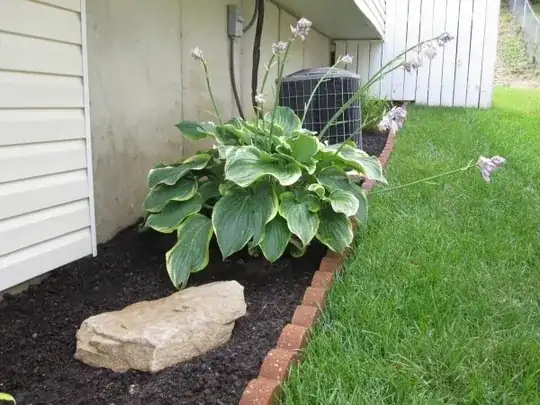
Hosta

During my daily walk, I've noticed a lot of people screen (hide) their air conditioning compressor units behind:

I know you can get specific varieties of the above plants that are suitable, will do well in containers (pots). Of course around here, Canna lily and Elephant ear do not provide screening during the Winter months...

Listening to podcast, "Sunday August 28 2011 hour 2" from "Gardening Naturally with John Dromgoole", starting at 20mins:23secs John recommends a few plants to "hide" an air conditioning compressor unit, he highly recommend:

Today (2011-09-02), while waiting at the school bus-stop (for Alpha son) I noticed the nearby apartments screened their bank of conditioning compressor units behind:

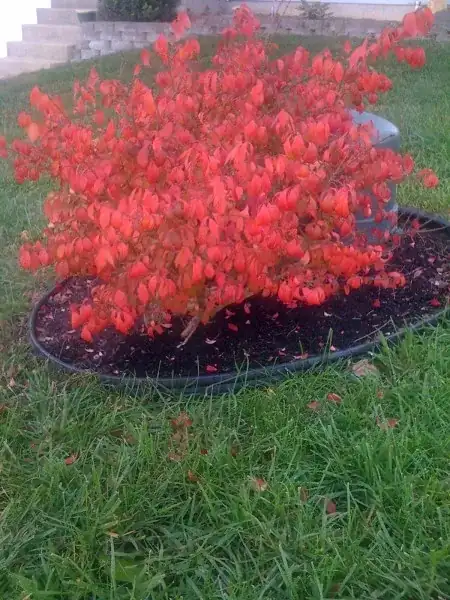
You can get "Dwarf" varieties, I have one in my front garden, screening an above ground utility cover:

  • Height: 2 to 2½ft (600 to 750mm)

  • Spread: 2½ to 3ft (750 to 900mm)

2010-11-10, Dwarf Burning Bush

Dwarf Burning Bush

2011-04-30, Dwarf Burning Bush
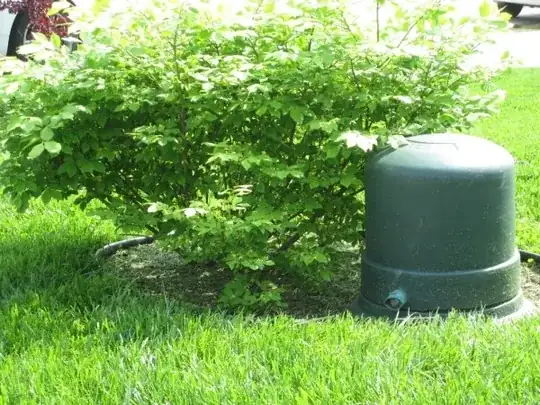
Dwarf Burning Bush

Now that it's their flowering season (late Summer, early Autumn/Fall), I'm really noticing a lot of "Stonecrops" around here:

Personally I like the look of the flowers, plus the ones listed above (and others, like Hylotelephium telephium 'Blackjack') have good looking foliage, at least I think their foliage is attractive. I'm thinking I might put one in garden...

After thought: From what I can remember and know of Hong Kong weather, isn't high levels of salt in the air another factor that needs to be taken into account when choosing suitable plants?
Mike Perry
  • 18,467
  • 2
  • 48
  • 90
6

I would try a cactus or other fleshy plant.

Jonathan
  • 1,907
  • 3
  • 18
  • 31
3

On the north east corner of my house I have hostas in a raised bed about a foot off the ground about 3 ft from the AC condenser....they look good in spring early summer ....but when it gets hot and AC runs a lot the hot air makes the leaves turn brown on edges . I would not recommend hostas unless you plant them at least 6ft from the AC condenser unit.

QCTIM
  • 31
  • 1
2

I would try to make the area more hospitable to plants through a variety of means:

  • place some sort of barrier between your plants and the nearest air conditioning unit that will deflect the hot air up or outwards

  • mulch your plants deeply (2-4" deep) to keep soil temperatures cool, especially on sunny days

  • make sure that they are getting enough water.. water will evaporate more quickly in higher temperatures, and plants will transpire more.

  • if you have enough space to work with, you can create a living barrier of heat-resistant plants (see others' answers for specific plants) that may work as well as or better than something constructed. You could also use both approaches in combination.

  • A more electricity-intensive strategy would involve placing a fan at the edge of your gardening area and using it to redirect some or all of the hot air from the A/C unit.

intuited
  • 519
  • 2
  • 8