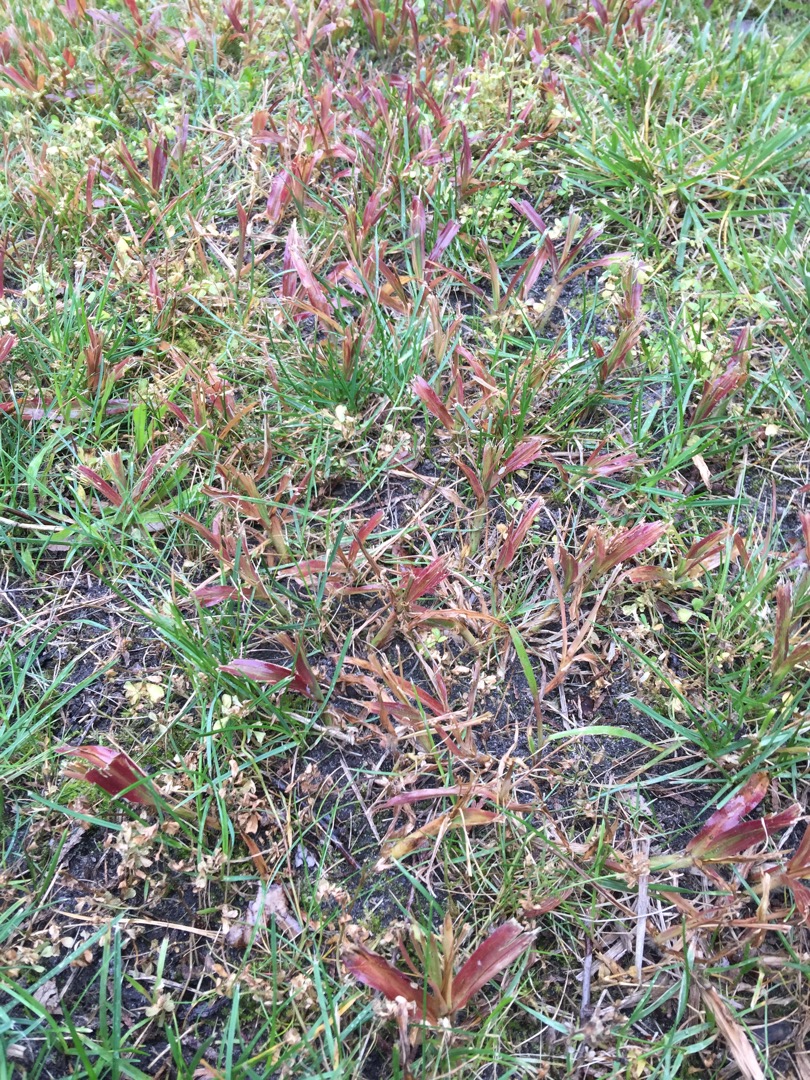
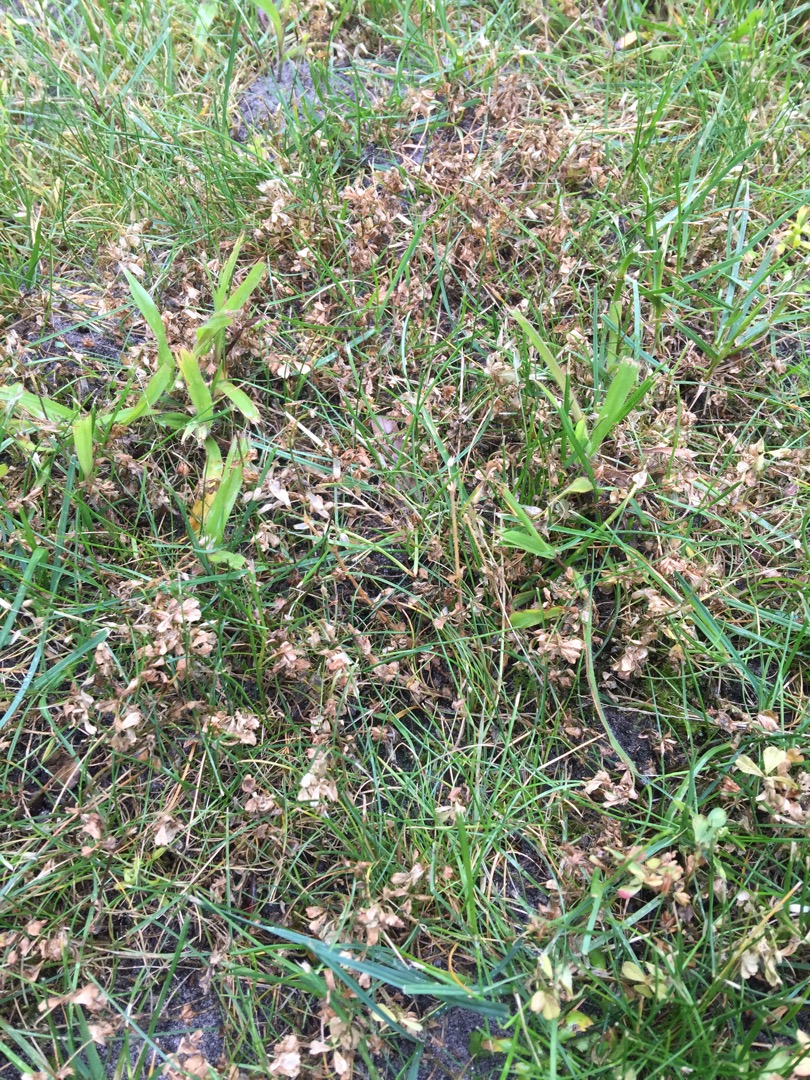
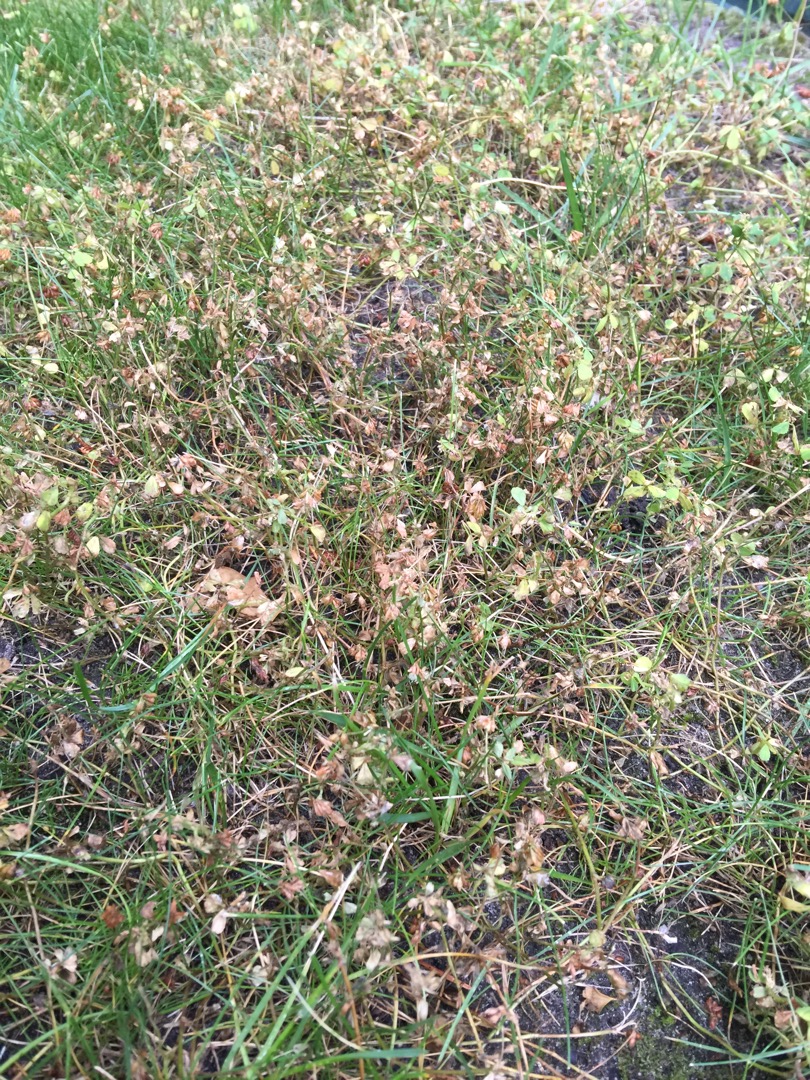
You have to wait 3 weeks or whatever is on the label to overseed. Exactly what did you use for herbicide? Obviously broadleaf weed killer. The only reason you even have that problem is because your lawn is not healthy, lots of bare ground to allow weed seeds to get plenty of sun, moisture and fertilizer to out compete your grass crop.
We need to help you turn this around. Pesticides/herbicides are never necessary. They are like a Band Aid on easily prevented problems. Yes, rake the dead material up and out of your lawn. Mow no lower than 3". This is one of the best ways to stop germination of weed seeds. Aerate by pulling plugs of soil out of the lawn and leave them where they lay. Begin a process of watering where you water very deeply (4") and do not water again until you are able to see your footprints in the grass crop. That means the blades are not able to stand back up as they are not turgid. Then and then only do you water deeply. Never water in between deep watering and those footprints. What this does is cause weed seedlings to die for lack of water, your grass to grow deep deep roots thus becoming drought tolerant and able to thrive while weeds die. Mowing 3" minimum gives your grass plants the photosynthetic ability to feed those genetically programed large root systems and have plenty of energy for all other botanical processes. Plants make their own food.
Fertilizer is as important as water and sunlight for all plants under our management. Also you need to test the pH of your soil. If it is below 6.5 you need to lime your lawn. Do not lime unless you have a test. Never ever water a little every day. Try not to use Scott's or Ortho products. I am not some 'organic or au natural lover'...chemicals are chemicals no matter how they are produced. Filler material is another story.
I found after decades of lawn installation and care that this 'organic' fertilizer for lawns was phenomenal. The words organic and natural and nutrients are so misconstrued I have a hard time using them. I have only used Dr. Earth's Lawn Fertilizer (proper formulation for the time of the season) and I don't get amazed by fertilizer results. But I was truly floored and impressed. So much so I promote this 'organic' lawn fertilizer. This truly is worth the extra money, you have to use more of it than the synthetics, it is extended/slow release which I think is far healthier for grass, takes longer to see results, lasts longer and I could not believe the difference. Doesn't have to be Dr. Earth but look at the labelled ingredients. There is also bacteria for decomposing thatch.
Fertilizer is normally applied 4X per season for cool season grasses. Different formulations for each application. Fast release sells to humans who insist on immediate results. Extended release means healthier grass and longer lasting chemicals that grass has to have to be vigorous. You use only 2 maybe 3 applications per season, not 4 so the price is mitigated. But so worth the extra money and extra passes over your lawn.
And if you follow this advice (look up other question answers for lawns on Stack Exchange Gardening and Landscaping as well) you will not have to deal with weeds and that expense and that work. Weeds are truly over rated in the garden world. Knowledge is all one needs to deal with weeds and severely reduce any worries about them.
Do not apply any more herbicide. It is not necessary nor is it helpful. If people knew basic management tenets of gardening, lawns... pesticides and herbicides are never needed. And I can say this from decades of being a licensed commercial pesticide applicator.