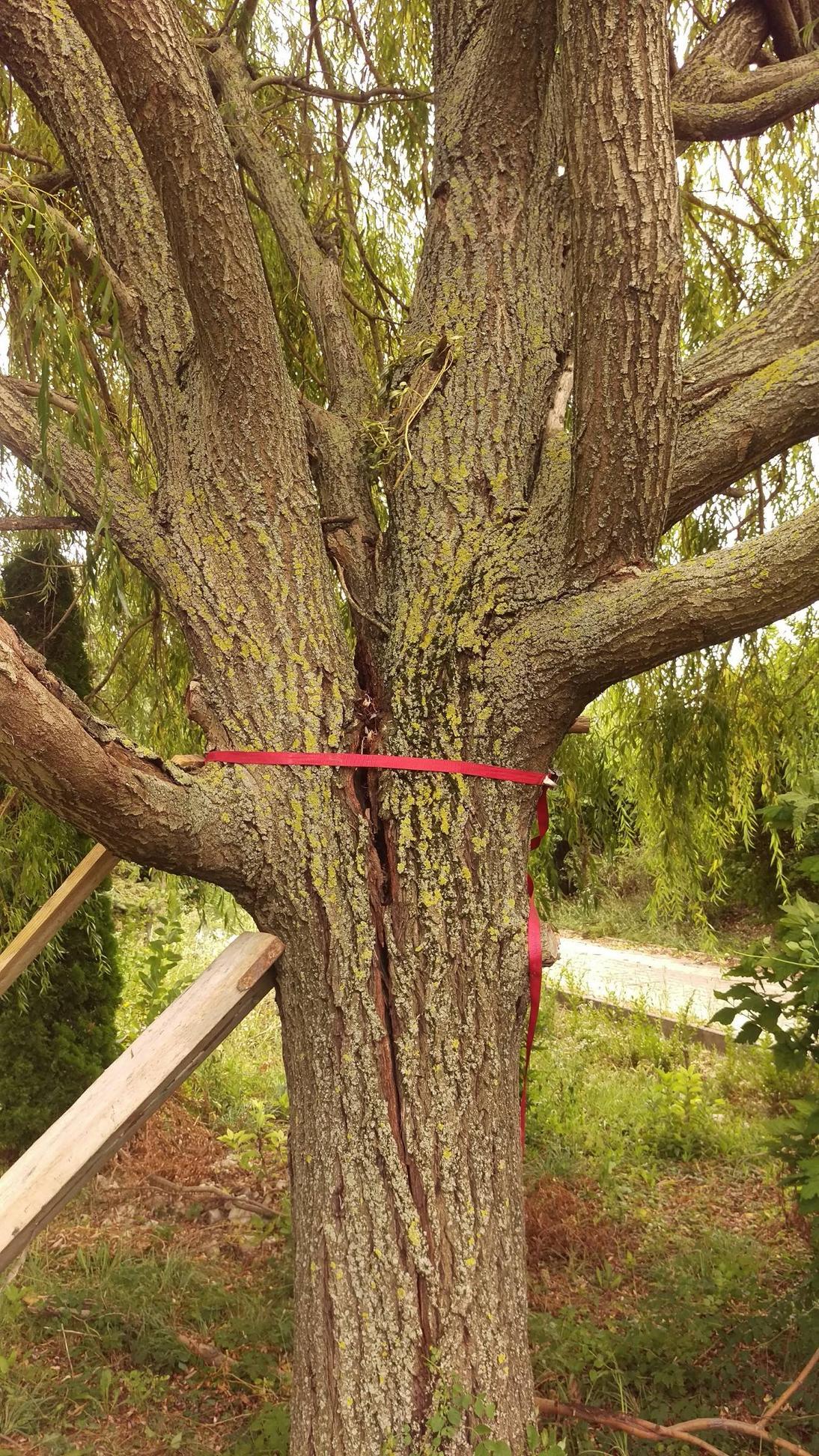
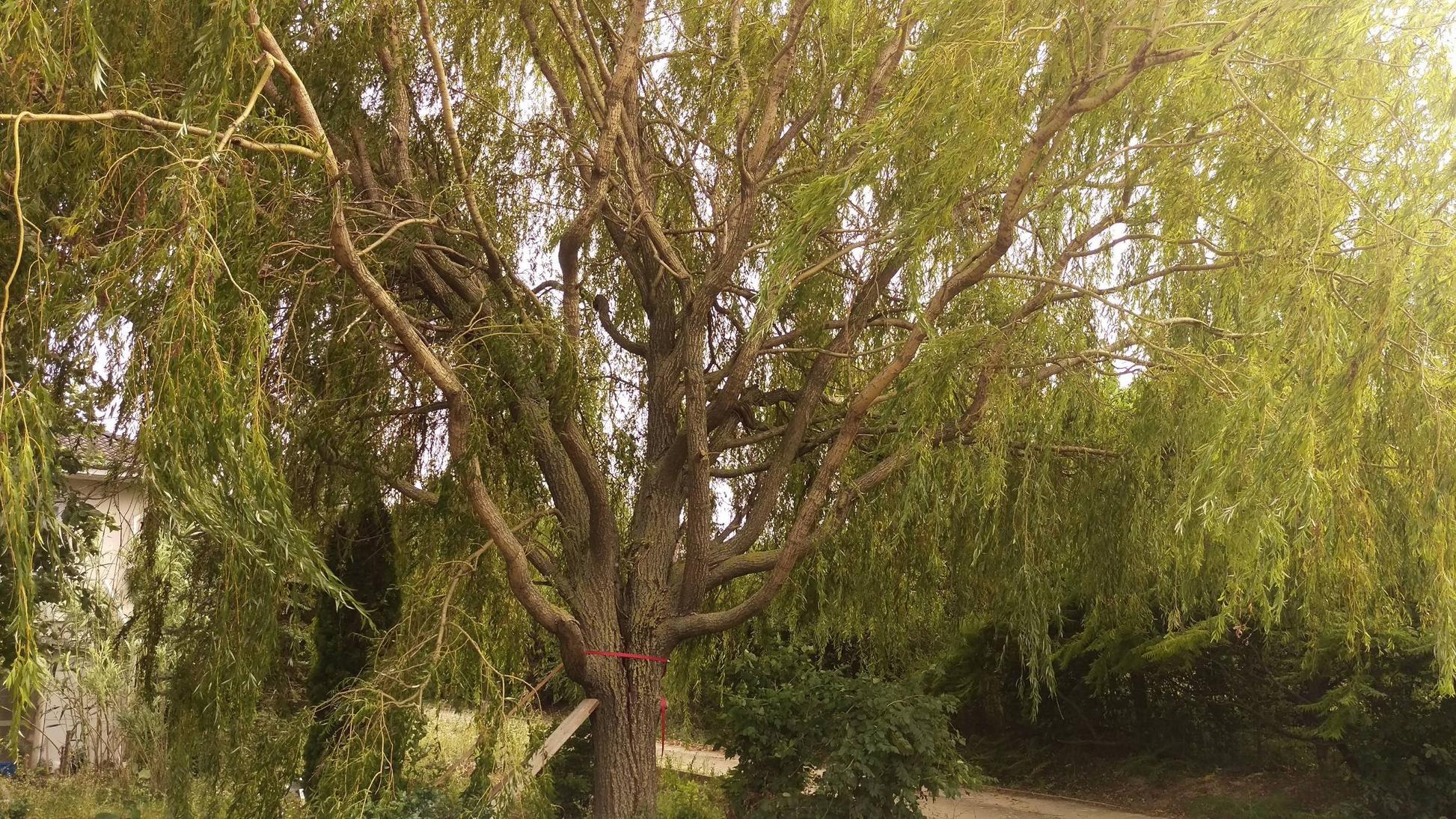
Given the location and severity of the crack it looks like replacement would be the way to go. As you are probably aware, willow roots from its own branches and twigs fairly readily, and also will sprout out as a result of heavy pruning. So it is very easy to generate your own replacements from cuttings. It's not however reasonable to expect a good mature tree to result from simply cutting back to the ground and training up one of the volunteer sprouts, since it will be constantly weak due to the connection to the old stump and growing in what must be exhausted ground.
Keeping the tree would probably involve a combination of heavy pruning (to reduce wind resistance and weight of the branches) and cabling and woodrods (to help secure the tree in windy conditions). Woodrods are simply long threaded rods that pass through heavy branches lower down in the tree, a nut and washer placed on the ends and tightened down; the split is prevented from getting worse in the stretch of the rod. Cabling takes place higher up in the tree to pull major branches together, so that each side of the split is mutually supporting the other.
So:
- take cuttings and plant them up in a nursery
- take some weight off the heavy branches
- cabling if required
- plant out rooted replacement trees from the nursery in clear ground in the same or different location as the old tree according to need
- begin removal of old tree