13

I have two trees that experience significant traffic of ants up and down?

  1. Crataegus 'Pauls's Scarlet' - An established mid-age tree. Ants go up to the top of the tree, can't see what they are looking for. No visible damage or decease of the tree.

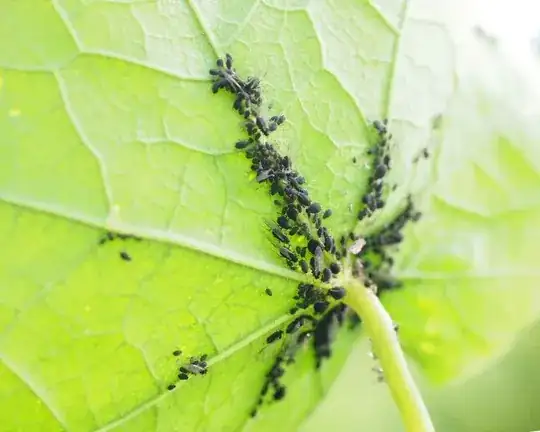
  2. Sorbus aucuparia - This is a young specimen, only 1m/3ft high. I noticed some black spots on the underside of emerging leaves. Ants come as if attracted to these spots. Or they tend them. Could they be their eggs?

Here are two pictures of affected sorbus' leaves underside:

enter image description here

enter image description here

Whereas "Paul's scarlet"'s leaves look fine at the first glance:

enter image description here

Some pictures of ants:

enter image description here

enter image description here

enter image description here

They are approximately of length 3mm / 1/8 inch.

Should I do something about it, or just ignore it?

Also, I noticed that ants respect 'right side' rule when passing each other. The trees are in continental Europe (Serbia, 30 km off of Belgrade, altitude 100m). Would ants in Britain behave differently?

Alex Alex
  • 565
  • 3
  • 24

7 Answers7

14

The trees have probably got aphids. From the RHS website here:

Ants may be found climbing plants with aphid colonies, they tend the aphids obtaining honeydew as a reward. The ants will remove aphid predators.

Not much you can do about it. If you spray the aphids, you risk killing useful predators such as ladybirds. Best treat it as all part of nature's rich tapestry. Here in the UK ants are legally obliged to walk on the left :-)

Peter4075
  • 4,386
  • 11
  • 16
14

I agree with the other answers, you probably have an aphid infestation.
But rather than spraying your trees to get rid of the aphids, you may try putting a ring of glue on your tree, to get rid of the ants.
Without their support, your aphid infestation will probably quickly rescind due to the natural predators.

Garrluk
  • 141
  • 4
9

The problem with not treating for aphids is it's likely to get worse, especially with ants warding off aphid predators. With large trees, it's obviously next to impossible to treat for aphids because you can't reach the top easily, but for your smaller tree, if there are a lot of aphids,I would recommend some treatment, even if that's just you physically rubbing them off. If you don't want to do that, then use one of the organic sprays mentioned in the RHS link already supplied. If you clear the aphid infestation, the ants will disappear. Note also that, although ants on plants most often indicates the presence of aphids, it may also indicate scale insect infestation.

Bamboo
  • 135,647
  • 3
  • 80
  • 169
5

It might be instructive to look for the Hawthorn shield bug which feeds on the fruits of both hawthorn and other species including rowan (mountain ash). The fruits are attractive because both are pomes, like apple fruits, with a fleshy, juicy outer cover. The shield bugs pierce the fruit and allow them to bleed juices which contain sugars that the ants can profit from. Humans should be very careful about trying haws and rowan fruits, they need to be prepared correctly in the making of jams and jellies.

Colin Beckingham
  • 21,268
  • 1
  • 15
  • 45
5

Aphids and ants might like my trees, but they love garden nasturtium.

enter image description here

If there's a nasturtium somewhere close to the trees, aphids, ants and ladybugs will happily move there (here's a related article):

enter image description here

As a bonus, these plants are easy to grow. Every part of it tastes great, provided it's not too rich in protein.

Eric Duminil
  • 151
  • 3
1

You didn't say how big the tree is. If you have aphids on roses, you can just brush them off. A tiny minority might make it back to the plant or be carried back by ants, but most won't.

This is doable if it's a short sapling, but perhaps not too practical for a huge mature tree :).

tripleee
  • 127
  • 5
Ne Mo
  • 141
  • 1
  • 5
1

Contact a local tree care company. A lot of the times they offer a systemic injection into ground around the root system of the tree. The tree will uptake the treatment and then when the aphids bite onto the tree (usually the underside of the leaves where its soft), they will take in the treatment and die. I have had this done with Elm Scale for my Elm tree.