7

I own a Peugeot 405. At first I was using 20w-50 engine oils but The last time I went for changing the engine oil I used 10w-40. After that The engine temperature rises constantly and (even when it's cold outside) and after the second fan starts it'll cool down immediately.

I check radiator water constantly and refill it if needed.

Can the engine oil affect engine temperature?

DucatiKiller
  • 32,976
  • 22
  • 150
  • 267
Andrew Ravus
  • 569
  • 2
  • 8
  • 14

4 Answers4

6

I don't think so

I've had many experiences with strictly oil cooled engines. In particular the 1986 Suzuki GSXR 750/1100 platform.

They went strictly oil cooled with a giant oil cooler and 8 quarts of oil.
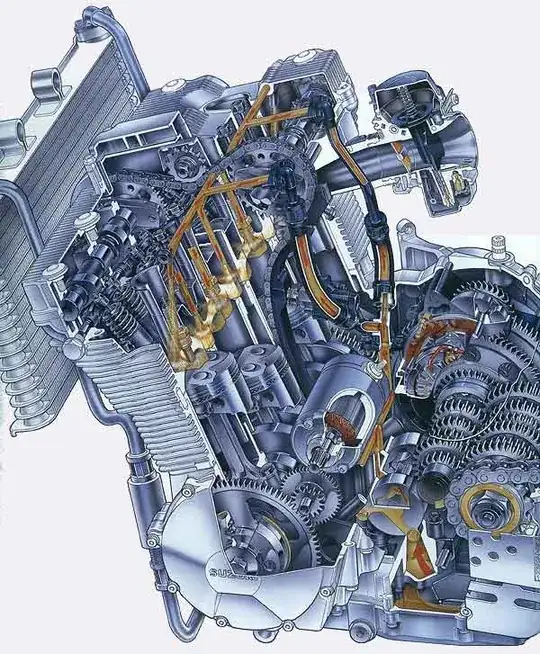
enter image description here

As you can see, this motor is filled with oil galleys and has no coolant or radiator.

Another note, I live in the desert of the US Southwest where temperatures exceed 120F in the shade during late June to August.

I have never had an issue running 10w-40, 20w-40, 20w-50....so on. Although the 10w-40 is 'less dense' than 20w-50, in theory, I have not detected a difference in power, cooling or engine life.

Certainly, comparing this engine to your liquid cooled modern car platform might seem ludicrous but at the end of the day taking the motor I am talking about to a track and running it a very high RPM's in desert summer heat and not detecting a difference in cooling is pretty meaningful.

You mentioned

I check radiator water constantly and refill it if needed.

If you are needing to refill your coolant on a semi-regular basis I suggest you focus on your actual cooling system.

I haven't added coolant to my 2013 Toyota Truck for at least 6 months and I'm sure I'll be able to get to summer before I add a little to the reserve reservoir.

IMO, focus on the actual cooling system.

DucatiKiller
  • 32,976
  • 22
  • 150
  • 267
1

The only place where I expect direct interaction between oil and the cooling system is the oil-water heat exchanger.

I don't know if your 405 has one (some oil-coolers use air instead of water) but if it does have one and the 10W-40 runs hotter than 20W-50 (I don't know how to verify this), this might explain the hotter temperatures seen in the cooling system.

Zaid
  • 39,276
  • 50
  • 151
  • 294
1
  1. Check/ replace water temperature regulator ( if the regulator is late to open, the coolant temp sensor will be late to order your fan to start, hence a higher temperature)
  2. Make sure their is no air bubbles or trapped air in the cooling system ( air bubbles can reduce heat transfer in the cooling system hence over heating)
  3. Use manufacturer recommended oil viscousity ( usually found on the oil cover or/and operator manual) Please, it is not normal to that you add a liter of water every week. Note: tap water is not a replacment for coolant. Check manufacturer recommendations for the coolant mix.
Sgdeeba
  • 11
  • 1
0

The level of oil will definitely make an engine run hot (how full is it?). If you are having to regularly add water to the radiator, you should check the oil quantity and condition at the same time. I'm very skeptical that oil viscosity would make a noticeable change in engine temperature all other things being equal.

Tim Nevins
  • 1,036
  • 7
  • 7