31

My uncle says a driver advised him that whenever the car is parked, the wheels have to be aligned with the body of the car, or else there will be un-necessary weight on (I think) the axle or wheel, which reduces the life of the parts.

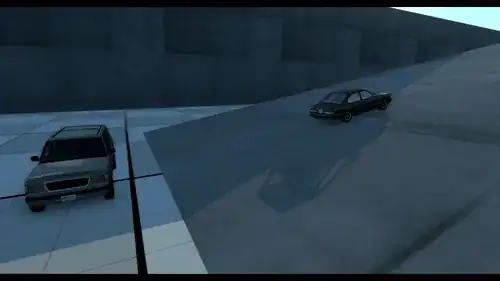
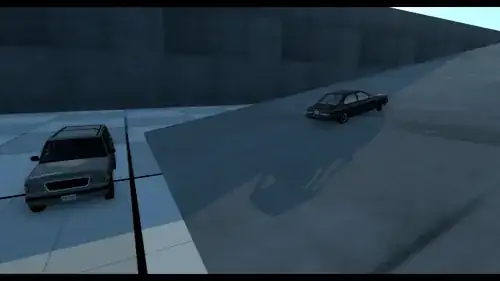
So is it really bad to park with the wheels at an angle as shown in the image below? Seems quite impractical to me, because while parking, the wheels inevitably do end up at an angle and a friend tells me the steering wheel should not be turned when the vehicle is stationary as that puts too much strain on the parts. Moving the car forward and backward just to get the wheels aligned expends extra fuel too.

enter image description here

Nav
  • 1,431
  • 5
  • 19
  • 27

8 Answers8

54

Not at all, in fact there are many occasions when you would want the tires at an angle to the body of the car. Any time you're parked on a hill it is prudent to angle the wheels of the car so that if the parking brake failed to hold the car would run into the curb.

If the wheels were aligned with the body when parked on a hill the car would be free to roll down the hill until it collided with something. That could be bad…

One more thing: if there is an increased load due to the wheels being turned, it is likely to be far less than the load imposed when the wheels are turned in normal driving (as then the car is turning and moving with forces imposed both by bumps and the act of turning). So even if the driver informing your uncle is correct about the load, it is unlikely to have a significant impact on the life of the vehicle – not to mention needing to balance that impact against the impact of turning the wheels while the car is stationary.

dlu
  • 14,506
  • 8
  • 52
  • 85
26

Perhaps my post is a bit late, but make sure you always face your wheels to an angle if you park your vehicle on a hill. A brake failure can lead into some heavy damage.

#1

If you parked your vehicle at an angle, you will get the following:

#2

Much better, right? Also, if you drive a car with a clutch, make sure you are in the reverse or the first gear. This will also prevent your car from moving if your parking brake fails.

Oxy Synth
  • 371
  • 3
  • 6
9

(I would have added this as a comment but I don't have the reputation yet)

As dlu pointed out, on steep hills you want to angle your front wheels towards the kerb, but there are also situations where you want to leave the wheels straight - my brother's car was written off when he left it parked on a very narrow street with the wheels at an angle. A van drove into the exposed tyre and popped the wheel off (and then drove away...)

Ben A
  • 91
  • 2
5

The reasons taught by driving instructors to keep wheels angled to the kerb:

  1. one so that if the car rolls on a slope the tyres hit the kerb (as above);
  2. to avoid the wear and tear of turning the wheels when stopped (a no no);
  3. this is where they end up in a parallel park and makes it easy to leave.
4

It depends on other circumstances.

If you are on a slope angled wheels secure your car from rolling down. In the worst case you will damage your tyre agains curbs.

In parallel parking, aligning wheels is unnecessary wear of the tyres.

But if you are on leveled place with very limitted room aligned wheels allow you to push the car and free some room around you. In some places the bumper is used to bump the cars away to free the parking slot.

Crowley
  • 387
  • 2
  • 8
1

There is a reason I was taught for straightening the wheels when you park at the roadside.

It's simply so passing drivers can scan quickly along the line of parked cars and if the wheels are straight they don't have to take precautions against the vehicle pulling out. If the wheels are pointing out you should slow down, check indicators, presence of driver etc.

As others have mentioned, there's no mechanical reason for doing so.

Separatrix
  • 287
  • 2
  • 8
0

I can think of a situation where you may want to straighten your wheels prior to getting off after parking. such as in a parking lot or garage when your car is parked close alongside another vehicle. Once you get in and start reversing the front end may hit the vehicle next to you if you still have the wheels turned.

Dinesh
  • 106
  • 1
  • 4
-1

Power steering. Rotating the wheels while at rest is nothing to even think about. You may as well worry about wearing out your turn signal bulbs with all that flashing on/off.

However if the engine is off, do not turn the wheels in a power steering car, at least going by the old Chrysler-Dodge-Plymouth van in the driveway. The pump has issues with that. When I do so, I do it very slowly, no problems.