27

For about the last year, a rat (or more) has been biting through the fuel line of my car and last month was the 4th time now. We have two cars in the garage at our place, but the rat is bothered about just this one car in particular. I have replaced the whole pipe 3 times now and after the 4th incident I did not bother replacing it. I have tried rat repellent sprays, rat cakes, rat repellent insulation tape, rat traps (cage with a bait) but this specific rat (or gang of rats) doesn't seem to care nor get caught in the trap. The surprising part is, it is biting off the fuel line at the very same spot every single time. I don't know what else to do now.

What are my other options?

CGCampbell
  • 103
  • 3
vick_4444
  • 397
  • 1
  • 3
  • 6

10 Answers10

57

X-Y problem time, I think. How do you know it's a rat?

Your comment on the question says that it looked "chewed and not cut with a tool". This is precisely what wear looks like, and this is backed up by you saying it's happening in the same place each time, and it's always the same pipe and never anything else. A lack of dead rats in traps makes this virtually certain.

Most likely, something is rubbing on your fuel line. Not all the time, but often enough to do damage over time. Check for anything which could rattle in the direction of the fuel line. Pull on every wire, cable, pipe and mounting to see what could potentially reach the fuel line.

As an alternative, this could be due to how the fuel line is run. If the fuel line has to run round a tight bend, and especially if a fixed (metal) pipe points in one direction and the flexible pipe then has to do a sharp right-angle turn to the next place, this is setting up for the pipe to fatigue on the bend. Usually manufacturers design this out, but it's still possible if you get a sloppy Friday-afternoon-production specimen. I wouldn't expect this to happen as quickly as you describe, but it's definitely worth considering, especially if the point of damage is within an inch or so of a pipe mounting.

Graham
  • 1,517
  • 8
  • 12
41

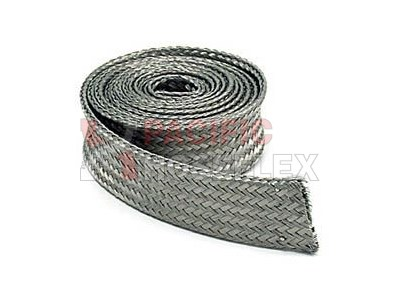
You could cover the pipe with some protective braiding like this - enter image description here

https://hoseflex.com/product/stainless-steel-braid/

HandyHowie
  • 25,681
  • 3
  • 40
  • 76
23

Here in Arizona where wood rats (a.k.a. pack rats) are a major pest, a common solution is to put lights under the vehicle and/or inside the engine compartment. You can put a cheap shop light on an extension cord and stick it under the car when it's parked. The rats no longer feel safe in the brightly lit space.

StackOverthrow
  • 331
  • 1
  • 4
22

I joined this community just to answer this question.

While there are already some good answers here, one proven solution that is highly effective is to mix crushed hot pepper with paint. Apply it to the hose, cable, etc. and let it dry.

Next time that the rodent gnaws on the painted fuel line hose, the little varmint gets an unforgettable hot mouth and never comes back!

The cayenne/paint mixture that I read about dried with a textured look. The pepper was both sufficiently concentrated and just coarse enough that the paint sealed in and protected the pepper granules.

This method also works on wiring harnesses, other tubing, coaxial cables, etc.


What attracts rodents is the fairly recent plant-based composition of hoses, wires, and other plastic- and rubber-like materials. I don't know the details, but at some point in recent history, Federal law mandated the use of soybeans as an ingredient [citation needed].
Mike Waters
  • 351
  • 1
  • 6
5

I also joined this community just to respond. In my part of the world we have this a lot. Fuel lines and other similar tubes and cables are often damaged. It is because martens are attracted to the smell of certain types of tubing, because fishmeal is added to these plastics and rubbers.

You can try things like parking on chicken wire and hanging toilet blocks in the engine bay, and anti marten ultrasound generators.

Frank
  • 210
  • 1
  • 5
2

I heard that peppermint spray mixed 50/50 with water will make them stay away and should last about 6 months. Many people use this to keep mice out of engine compartments.

joe
  • 21
  • 1
2

We've faced this problem a lot of times. It's one of my previous questions here.
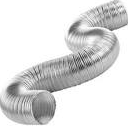
When we took the car for servicing, the mechanics covered the wires and tubes with a thin and very light-weight tube that looked like this.
enter image description here

This kind of protection should actually be implemented as a built-in feature for vehicles. I don't understand why they don't do it.

Even my bike is parked in the same place, and the rats usually never touch the rubber tubes. But during the past 6 years, they chewed off the tube from my bike twice, and the only correlation I could make was that that was the time we had placed rat poison in the area, and I think it chews off the rubber to give it's stomach some relief (like how lions eat grass). I did consider the possibility of it needing rubber to line it's nest, but if that was the case, the incidents would've happened far more often. Don't say they were taking revenge for the death of their fellow-rats :-).

Best way to get rid of them is to use a multi-catch live trap like this one: https://youtu.be/a82q_zWW4T4

Make sure the bait has such a strong smell that they'd go toward the trap before even thinking of going toward your vehicle. If it's a much larger rat, you'd need one of the more powerful traps that snap shut onto their necks, killing them immediately.

Nav
  • 1,431
  • 5
  • 19
  • 27
2

I am surprised that you are OK to live with rats as they are pretty good at destroying things and spreading diseases. I would give the rats something else to eat, like rat poison bite. I am doing it and I don't have rats nor mice anywhere around my home. You can use traps, there will be fewer rats but still some.

Mart
  • 21
  • 1
0

The stainless steel braid is most likely an effective solution, but it is kind of expensive. For similar protection of underhood wires and rubber lines leading from the propane tank to a grill, I've used other metal tubes. In one case, I had a square-cross-section aluminum leg from a broken clothes rack. I split it the long way with a dremel tool, opened it up, put it around the hose, and then pressed it back together. No more squirrels eating the propane lines. You can buy, or preferably find, various sorts of electrical conduit for cheaper than the stainless steel braid. One might worry about dissimilar metals, but you may have small diameter copper pipe lying around. Even a pvc water line might be good enough; it is much thicker and harder than rubber fuel lines. If you fuel line is strongly curved, the braid will work nicely, but you can also just cut smaller sections of metal pipe or tube and string them together.

We've also found some of the sprays to be effective for chipmunks and squirrels chewing on automotive wires.

Our worst case was an old Chrysler minivan that had a low-hanging wire that simply signaled the computer than the transmission was active. If the wire was cut, the car wouldn't run. Squirrels loved chewing that wire.

BugFinder
  • 11
  • 1
0

I would combine several answers to one.

As Graham already suggested, it is suspicious that rodents damage only one exact spot on the whole pipeline. So identify the cause thoroughly.

HandyHowie also suggested good solution to anticipate the pipe wear no matter what causes it.

The pipe may actually seem tasty for rodents so changing the material may be solution as well.

  • When instaling new pipe, use different material. Were the rodents the problem, use same material as in the other car.
  • Feed the whole pipe through the stainless steel braiding. Use appropriate size so it fits tight and seal the ends. This will reduce the wear no meatter what causes it.
  • Use thick layer of a soft paint on spot(s) where the pipe was damaged. Whenever something touches the pipe it will be marked. You can add the chili peppers to train the rodents, if they are chewing it.
  • Check all possible parts that may be loose and able to reach the pipe.
  • Go for a test drive. Drive through all typical terrains.
  • Check the paint.
  • Check the pipe after a week and after a month.
Crowley
  • 387
  • 2
  • 8