3

I need to change the blade on my Dewalt DCS391 circular saw for the first time. The blade clamping screw is for an hex key left-hand threads, but I can't unfreeze it no matter how much lever of pressure I put on it, I'm starting to eat the screw head.
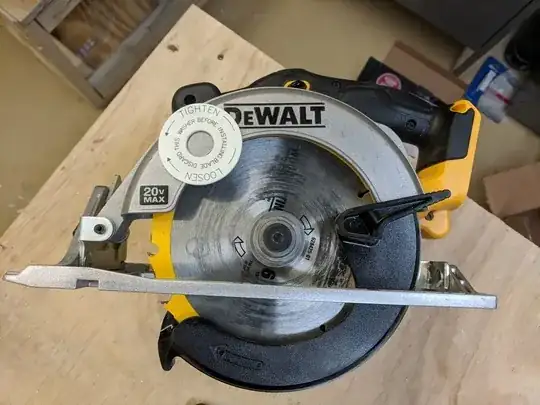
Dewalt DCS391

I'm following instructions from the manual with no luck.

Suggestions?

Maxime Poulin
  • 91
  • 1
  • 2
  • 8

5 Answers5

5

Following up on how I've resolved this and what was the issue. At the time of this post I've tried everything that was suggested and the clamping screw did not bulge at all. However, I did not had access to was pneumatic tools in my shop at home, so I went to a local tool store and they dislodged the clamping screw for me.

They explained to me my mistake and why I had such a hard time removing it. The issue was that I've inverted the washers (r, s) and they were not in the correct position.

Here's a picture of the circular saw once it was correctly assembled with the r and s washers in the correct position.

correct assambly of DCS391

Maxime Poulin
  • 91
  • 1
  • 2
  • 8
1

From the manual:

  1. Thread blade clamping screw (H) into saw spindle by hand (screw has left-hand threads and must be turned counterclockwise to
    tighten).

This matches your posting. Can you confirm that you are turning it clockwise to loosen it?

If you are, one method of releasing a tightly stuck fastener is to strike it sharply with a mallet. You would obviously want to ensure that the blade will not rotate and that the saw assembly will not be dislodged. Perhaps clamp the base plate to a bench and provide support for the hex key axis that passes into the fastener.

Use eye protection, as the result should be that the key flies into the air after the blow, but causing the hex bolt to release.

fred_dot_u
  • 11,958
  • 2
  • 21
  • 35
1

I had the same issue..wrecking the screw head using the Allen key supplied with my dewalt ..it's just not beefy enough for the job..after countless attempts I went big and got my multi tool on it and cut a groove into the top of the head, I then sat the saw blade between my black and Decker workbench clamps and nipped it up tight so the saw couldnt move and gave it a hefty clout (remember - clockwise to loosen)!! with my bolster chisel and lump hammer..job done!! I had already purchased a new screw and clamp for just over a tenner on fleabay..I'm chuffed I have now got my dewalt back in working order after struggling with my corded one..it's just not the same!..cheers guys

1

Same problem but with a BRAND NEW SAW that hasn't been used yet (but has been in the plastic bag it came in for a few years). It is squeaky clean and has NO CORROSION. I tried clamping a large Crescent wrench in a vice and catching the f and hitting the small L-wrench with a hammer. It only distorted the hole in the bolt a little. The next step is to use a socket and try it with the

E. T.
  • 11
  • 2
0

I would apply a penetrating oil such as wd-40 or if its rusty then pb blaster. not a lot, and let it sink in the threads for 10 min. Then try again with your tool.

If you say you are using an allen key, you could put something on the end like a section of small pipe (or the cylinder from a metal pen?), to make it longer and gain leverage. Secure the drill so it doesnt move if you can while doing this.