19

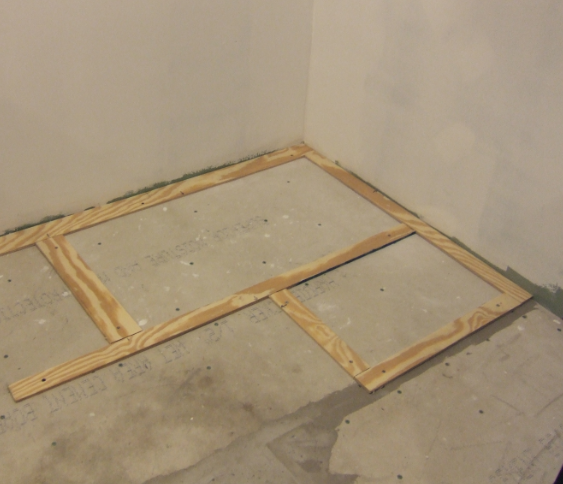
I’m putting in hardwood floors and I am at the spot where kitchen cabinets would go. The last strip is going to be narrower than whole flooring boards, and usually I would rip the boards going elsewhere in the room. Should I just leave the last few inches of floor exposed? What is the downside? It’s a second level of the house with joists and osb. I am also leaving some exposed parts around plumbing and central vac pipe. Does this look good? Thanks!

EDIT: flooring is not floating, it’s nailed down 11/16 thick hardwood.

EDIT #2: Wow, I didn’t realize I was starting a topic that was so controversial! :) I might as well asked what was better PC or Mac. I ended up finishing to the wall with some gap for expansion (though type of hardwood I am using doesn’t really expand). Cabinets are in and it did actually make the leveling them easier. Thanks to all who contributed to this (at times heated) discussion!

enter image description here

David
  • 1,107
  • 6
  • 25
  • 40

12 Answers12

36

It's not the end of the world, but you might consider cutting the pieces so the gap is smaller.

Why? Some cabinets sit on the floor via little legs. If the legs were to be exactly where there's no flooring, it becomes uneven. You'd then have to put something under it the right thickness, which just happens to be your flooring.

If it were me, I'd spend the extra few minutes and rip the pieces to within maybe 1/4 inch of the wall (for expansion/contraction).

19

That is just fine. The only possible downside is that if you decide to re-arrange the kitchen in the future and the area will become "uncovered", you will have to deal with it at that point. Maybe make sure you keep enough of the flooring around to fill in the remainder if needed.

najel
  • 5,287
  • 1
  • 21
  • 42
19

There are arguments for not having the flooring under the cabinets at all (if it's "floating" flooring, the cabinets on top "pin" that part of the flooring to the floor so it does not "float.") In that case you'd stop 1/4-1/8" from the toe-kick at the front of the cabinet.

Other than that, it's a highway for rodents and insects. Nice to think we don't have any of those in OUR house, but rarely realistic.

Rather than waste money on expensive fine finished flooring that will never be seen under cabinets, plywood or cementboard to fill the space level with the finished flooring would make more sense. The finished flooring can either stop just outside or just inside the front toe-kick if it's not floating - as mentioned above, floating flooring should be just outside so that it can float.

Ecnerwal
  • 235,314
  • 11
  • 293
  • 637
10

Things may be different outside the UK, but I've never found the "top coat" flooring to go all the way to wall under cabinets. The cabinets generally have extendible legs so you can get the cabinet to the correct height and level, and so it's unlikely you'll need the additional height that the flooring provides. Putting (possibly expensive) flooring under a cupboard that will never move seems an unnecessary expense. If you do eventually take some cupboards out, it's unlikely the floor underneath will match the rest of the room, or be in a state you want to use - so "just in case" probably isn't a justification either.

However... there are exceptions. I'd advise you do put flooring all the way to the wall wherever you're putting appliances (that sit on the floor). For example, dishwashers, fridges, stoves, washing machines etc. An exception may be ovens, because in many cases they actually fit into a cupboard, rather than sitting directly on the floor (so there you'd fit a cupboard and then the oven into it).

Also, if your flooring is several layers, then maybe put the under-layers to the wall. For example, if you put in underfloor heating, you probably won't put pipes under cupboards, but you should put the screed or other coverings all the way to the wall. Likewise, if you put some ply or concrete board down before the actual flooring, then put that all the the way to the wall. That way you have a completely level basis to put the top floor covering and kitchen cupboards onto.

Regular appliances and even "integrated" devices have to slide in and out of the space to fit or repair them - and for that, it's an utter mess trying to do that without smooth(ish) flooring all the way to the wall. Save yourself the hassle - just put in a bit of extra flooring.

In one place I owned, the previous owners had taken the dishwasher with them when they moved out. They hadn't tiled the floor all the way to the back, so getting the new dishwasher in was a full-on mission. Eventually, I cut a piece of ply that was very nearly the same thickness as the laid floor tiles and "wedged" it in place so it didn't move as we slid the dishwasher into place. This approach works, and can save a bit of flooring if yours is particularly expensive (or like me, you can't get any more the same as what's there), but unless you're really struggling with the budget, I'd say just put flooring to the wall (as close and as neatly as possible) anywhere you're putting an appliance.

Something I personally like to do is to fill any gaps around pipes and whatnot. If the pipes come up through floorboards, I'd stuff some wire wool around them so that there's no way a pest can get through the gap. I'd then cover over with a dollop of cement, filler or maybe a bit of cut ply or tiles or whatever else and make sure it's all stuck down. The idea being that you have a smooth, level, close-fitting covering around pipes or cables so that dirt and pests can't hang out there. By no means obligatory, but you're "only going to do it once", right?

Ralph Bolton
  • 504
  • 2
  • 6
8

I did a similar job with tiles, but stopped the tiles at the base of the cabinet. Rationale for this decision was that if a tile near the cabinet cracked or otherwise became damaged, it was easier to remove and replace than if the tile ran under the cabinet.

I raised the cabinets up by the 1/4" or 3/8" thickness of the tiles (which ran under the dishwasher opening) so that the dishwasher would fit, using 3/8" plywood that I ripped and attached to floor where the cabinets would be sitting, like this:

enter image description here

Here's what it looked like when almost done.

enter image description here

SteveSh
  • 7,107
  • 2
  • 15
  • 31
7

We do not install hardwood in kitchen under cabinets on the plumbing/gas wall. Your last row should sit about 1/4" from cabinets - you may need to rip these planks.

I am a little perplexed at some of the answers and advice here. This isn't a hard question.

  1. In Europe we do... No you don't. I have done many renos in France and spend a lot of time in the UK and Italy. There isn't hardwood in kitchens and if there is it isn't under the main plumbing or gas appliances (islands). Most people in Europe tile their kitchens fully - which is a whole different ballgame and the right way to tile. Reasoning here is in a lot of parts of Europe you bring your kitchen with you (although this is changing).

  2. What if we change the layout? No you won't. You aren't changing your main plumbing wall or gas wall in a kitchen. If you do you are tearing out the floor anyways 90% of the time.

  3. Why not just put flooring under? This is really simple. Because it only begets problems. So the plumbing is there, a sink, stove, whatever. You have cabinets (weight) on top of the flooring, probably nailed or screwed to the floor in some way. You get a spill or some water... You can't see it because cabinets are on top, the wood expands a bit and now you have possible buckling on that plank, that is also outside the cabinets. For what? What is that flooring doing underneath the cabinet.

  4. Well... There is only one reason you would put hardwood flooring under this cabinet wall. If the cabinets were on exposed legs - meaning you can see under them. This gets rid of problem #3 and obviously you need the flooring for aesthetic reasoning.

Ask yourself this - If there is a leak under the sink or dishwasher and it ruins part of the flooring and that flooring being expanded ruins more... are you going to take apart all of your cabinets and appliances to "fix" the issue right? (no you will patch that part or just remove it)

Another Note: You have really nice prefinished hardwood yet I see a line for your ice maker coming up through the floor. The ice maker line flooding is one of the top insurance claims on houses and will ruin these floors quickly. While things are open you should install a proper shutoff box to help neutralize this problem.

DMoore
  • 50,637
  • 16
  • 93
  • 208
6

Having never installed a floating floor before, take this with a grain of salt...

However, I think you'd be OK leaving it like that. The majority of the cabinet's weight will be sitting on the new flooring, so you're not likely to have any tipping or other issues with setting your cabinets.

If it were me, though, I'd probably rip flooring to mostly fill the gap to the wall. It doesn't have to be a precise fit since it will be hidden, but close enough that I could cover the gap with thick baseboard if necessary.

As for the gaps around the plumbing, I'd say you're fine there, too. It will all be hidden by the bottom of the sink base, so nobody will see it.

FreeMan
  • 48,261
  • 26
  • 101
  • 206
3

I would go all the way to the wall so the back of the cabinet has something to sit on. Nice job BTW.

BrianK
  • 5,475
  • 8
  • 30
  • 38
0

You absolutely, should install the flooring all the way to the wall, in both bathrooms and kitchens. However, this opinion goes against the building trade, because they never do it. I believe it is all about cheapness, and it's been SOP for about a century. If you want to do future remodeling, or if you simply want to pull your stove or refrigerator out for cleaning, the task is a breeze with appliances that sit on finished floors. The worst offender of all here is the dishwasher. It is the hardest appliance of all to move when it sits on an unfinished floor. In your bathroom, you may want to replace a traditional sink with a more stylish pedestal sink, and doing this work now saves you a headache down the road (for some reason, only toilets sit on finished floors). The only downside to this idea would be if your sink or kitchen appliances sit unevenly on the floor due to grouting areas, or slate flooring texture. A skilled floorer wouldn't like the idea because the sink sits best on a flat floor. However, it's just a little faux pas, it takes an expert's eye to see, and, if needed, it can be covered up by caulk.

0

@kojiro made a really good point in the comments, and this was originally just going to be a reply, but it's too long for that...

If OP (or future owner) ever wants/need to replace an appliance, they might be limited to those with exactly the same dimensions as the old one. The change in height will look bad if a smaller unit is installed, and it might cause leveling issues if the footprint isn't the same (smaller or larger).

And, as mentioned in the comments, it might be extra unpleasant to find that this "lip" in the flooring is working to box the old appliance in place. That is part of the reason I still have a dishwasher from 1992 (well, that and it still works, but I don't think I'll be getting warranty service on it).

If you do decide to not bother with the trouble of ripping all those boards just to cover them up, I can't blame you. But you'll do yourself and any future owner a HUGE favor if you stash away some extras in the attic with a note that explains what this little stack of boards is for. Always good to buy some extra tile / flooring / molding / fencing / siding / shingles etc...

Z4-tier
  • 1,500
  • 8
  • 12
0

The usual practice I've seen here (in tropical southern Minnesota) is to run the flooring under the front of the cabinets for several inches, then attach pieces of scrap along the back, to support the backs of the cabinets. This gives you a level surface for the cabinet all around, without having to futz around too much.

Hot Licks
  • 2,103
  • 1
  • 15
  • 16
0

I would put it all the way to the wall. It will more than likely bite you later other wise.

FYI the way you can cut the pieces into the right size:

  1. Is to place the piece you want to cut on top of one of the existing pieces
  2. Place another tile on top, but butted up against the wall.
  3. Use the edge of the butted tile to draw a cutting line on the middle tile
  4. Cut the marked tile along the mark (accounting for grouting etc)

This will let you cut the tile to just the right size and shape to fit the gap.

Hope that helps.

DarcyThomas
  • 161
  • 4