10

This water heater was replaced by a plumber 4-5 years ago. Within about a year, all the new connections were rusting/corroding.

Did the plumber not sufficiently tighten the fittings?

Is this perhaps an electrolysis problem?

Notes:

  • Water here is quite hard
  • Pipes in the house are a mix of copper, galvanized, and pex.

inlet

inlet valve

outlet

Machavity
  • 26,498
  • 8
  • 44
  • 100
zwiebelspaetzle
  • 671
  • 1
  • 14
  • 26

5 Answers5

21

Looks like minor leaks, compounded by mixing galvanized pipe and copper/bronze valve without using dielectric couplings between dissimilar metals.

Honestly, any plumber installing NEW galvanized pipes (rather than just making repairs to existing) in the past 5 years is doubtful. If you really want threaded pipe, stainless is available and lead-free, which galvanized iron pipe is not.

Ecnerwal
  • 235,314
  • 11
  • 293
  • 637
9

100% galvanic corrosion, "Pipes in the house are a mix of copper, galvanized, and pex", different metals cause corrosion. You should stick to one type of metal in your pipes or use pex.

**Note that galvanized means iron/metal with sacrificial coating usually zinc in this case.

See https://galvanizeit.org/hot-dip-galvanizing/how-long-does-hdg-last/in-contact-with-other-metals for more information,

I want you to consider that if you have old iron pipes with copper , the iron will flake off internally due to age and cause corrosion spots on copper and that is how you get pin hole leaks inside your pipes , check your aerator in your faucet for such things and flush your pipe when you have this corrected.

binaryOps20
  • 460
  • 2
  • 5
5

Yes, you have small leaks causing rust. See how the rust practically flows like water in this picture?
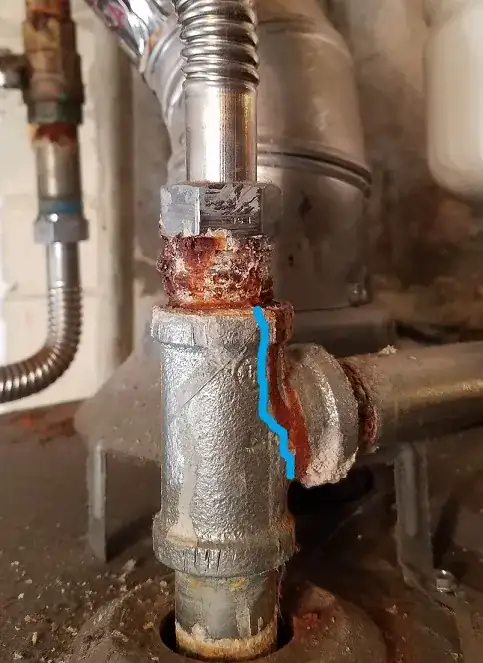
enter image description here

Overall, galvanized pipe should be avoided nowadays as there are much better options such as pex. Ever seen the inside of an in-use galvanized pipe? It looks exactly like what your seeing on the outside.

I would not try tightening it further as you will introduce new problems. You can leave it be if the leaks aren't pooling anywhere or get things re-piped with plumbing that doesn't have this issue.

You can try galvanized steel again but just make sure all the connections are properly sealed with tape or dope and are screwed on tight enough.

MonkeyZeus
  • 17,328
  • 2
  • 27
  • 64
4

The galvanized pipe is what is corroding and rusting. As noted,there may be other factors at play here like leaky connections but the galvanized pipe is definitely a problem.

You should re-plumb with cooper pipe, or pex, and make sure to use a Dielectric Nipple on the inlet and outlet of the water heater.

Alaska Man
  • 13,792
  • 2
  • 20
  • 30
1

The zinc was cut off when the pipe was threaded and most rust is from bare steel threads . There may be a bare steel close nipple in there also. So the zinc/galvanized is pretty much doing it's job where it was not removed. The moisture is from condensation not leakage. If you replace it with new galvanized ( which contains no more than a trace of lead) the labor will be costly. Same high cost for stainless and copper. Or ,you could wire brush off the rust and put on some grease for very low cost ; and hope there will not be much more corrosion. I doubt there is significant metal loss . mostly it looks bad.

blacksmith37
  • 8,401
  • 2
  • 18
  • 33