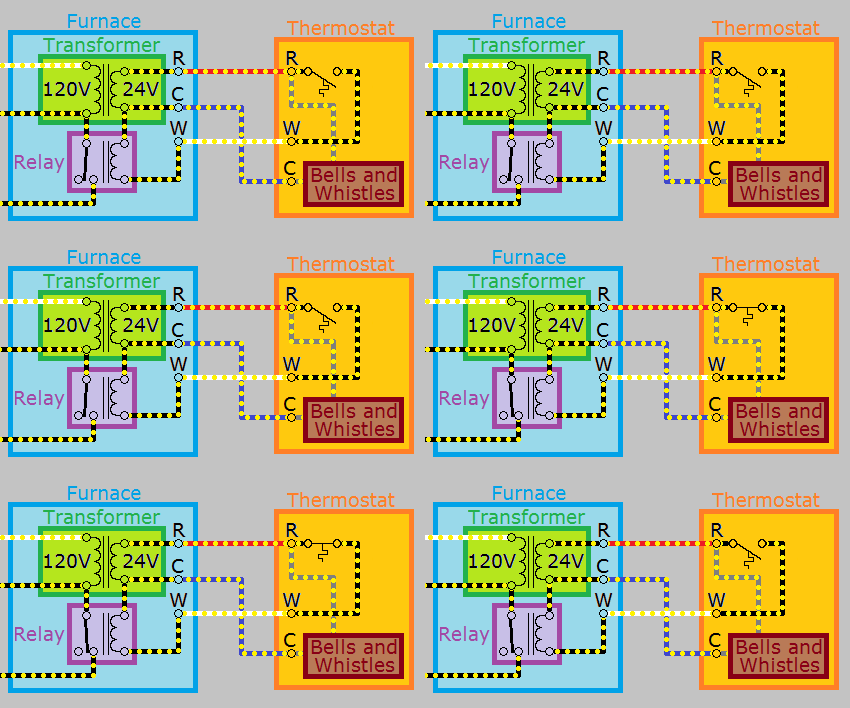
To start, read this excellent answer about how a thermostat works
This is a good diagram to focus on:
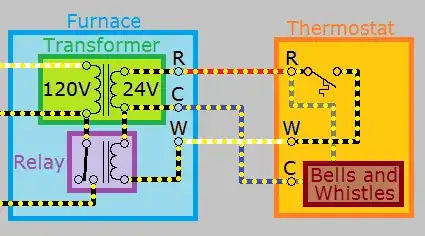
This is how a thermostat works for a typical HVAC system. The 24v transformer supplies power to the thermostat on the R terminal and the thermostat connects the R wire to W for heat, Y for cool and G for the fan. Whats important is that if you have voltage on the R terminal, that voltage is connected to W. The smart thermostat also uses a C wire so it can power itself (R to C is 24v).
The issue that you (and everyone else with a boiler or oil heat system) has is that they need the thermostat to be a "dry contact" that doesn't use or supply any voltage on the two wires. In fact, your particular controller explicitly states that the thermostat should not supply voltage to the T wires under any circumstance.

That means that a normal smart thermostat will not work because it needs power on the R terminal to function and it will pass that voltage on to the W wire when it calls for heat.
So, what can we do about that? Well, there happens to be an easy way to turn a voltage contact into a dry contact, and its actually in the diagram above. See how the C and W wires go back to the furnace and power a relay? That's what you need to happen. You can power the coil side of a 24v relay with your smart thermostat and use the normally off contacts on the relay to switch the T terminal wires on your controller.
There are "fan controllers" that are a combination of a 24v transformer and a relay that can be used for this, or you could easily use a separate 24v transformer and relay.
The Honeywell R8239A1052 Fan Center is one such control, but there are a few different companies that make them. Since they are sold as a fan control, they are designed for the thermostat wires (R and W) to be connected to R and G.
If wiring your own relay, here is a sample diagram.
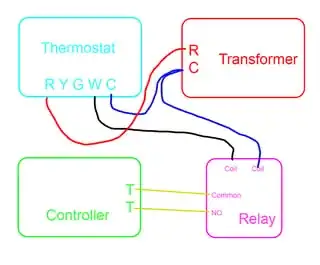
Click to embiggen