7

My Siemens flush mount combo electrical panel is installed to the exterior of my garage. The garage isn't finished (open studs) and eventually I'd like to close it up with drywall (but not for this).

Can I safely run nm-b below 8' exposed perpendicularly between stud cavities in an unfinished garage? Presuming no, based on this article, given my scenario what would be the easiest/best way to achieve wiring for a short run EVSE?
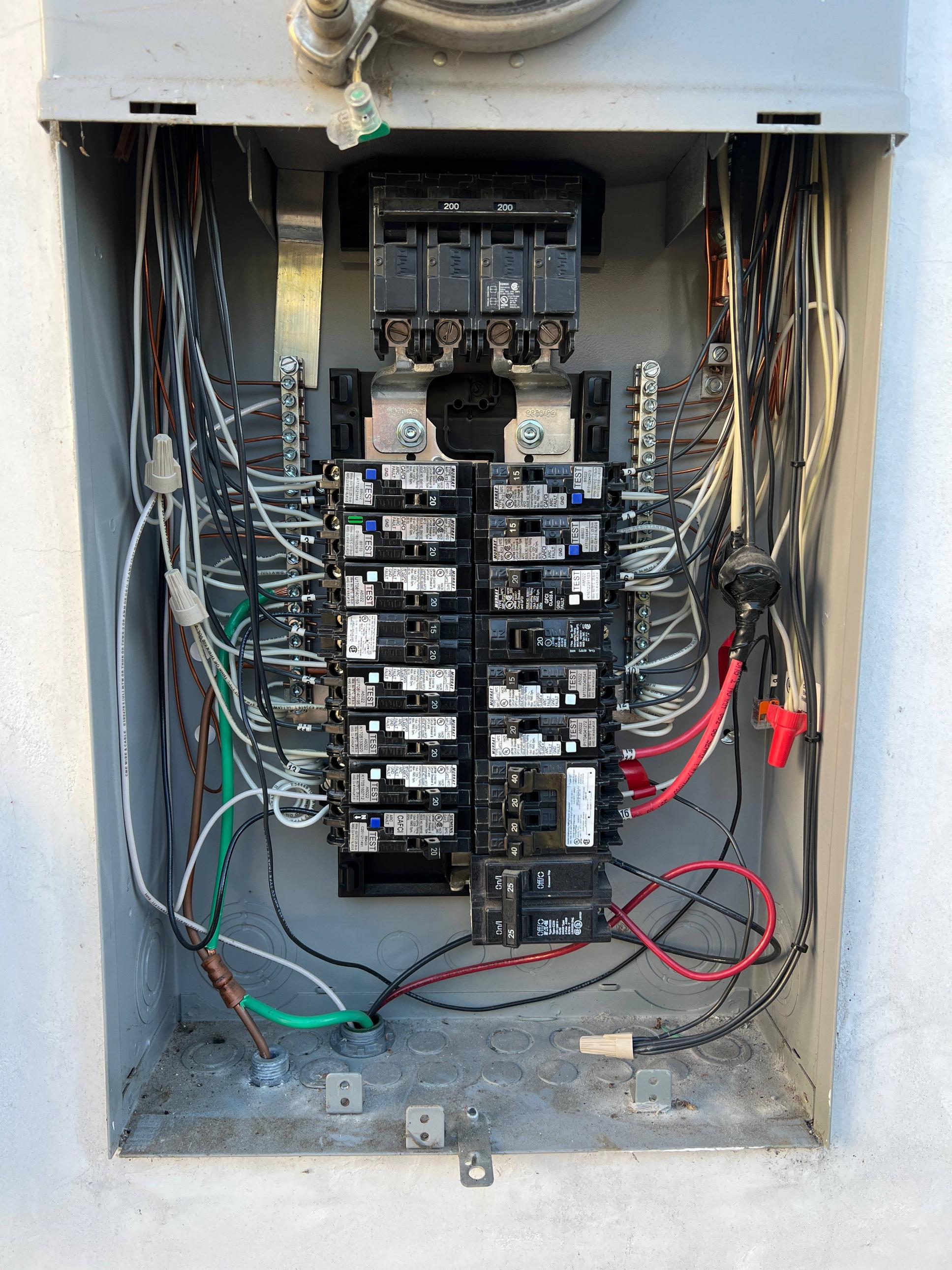
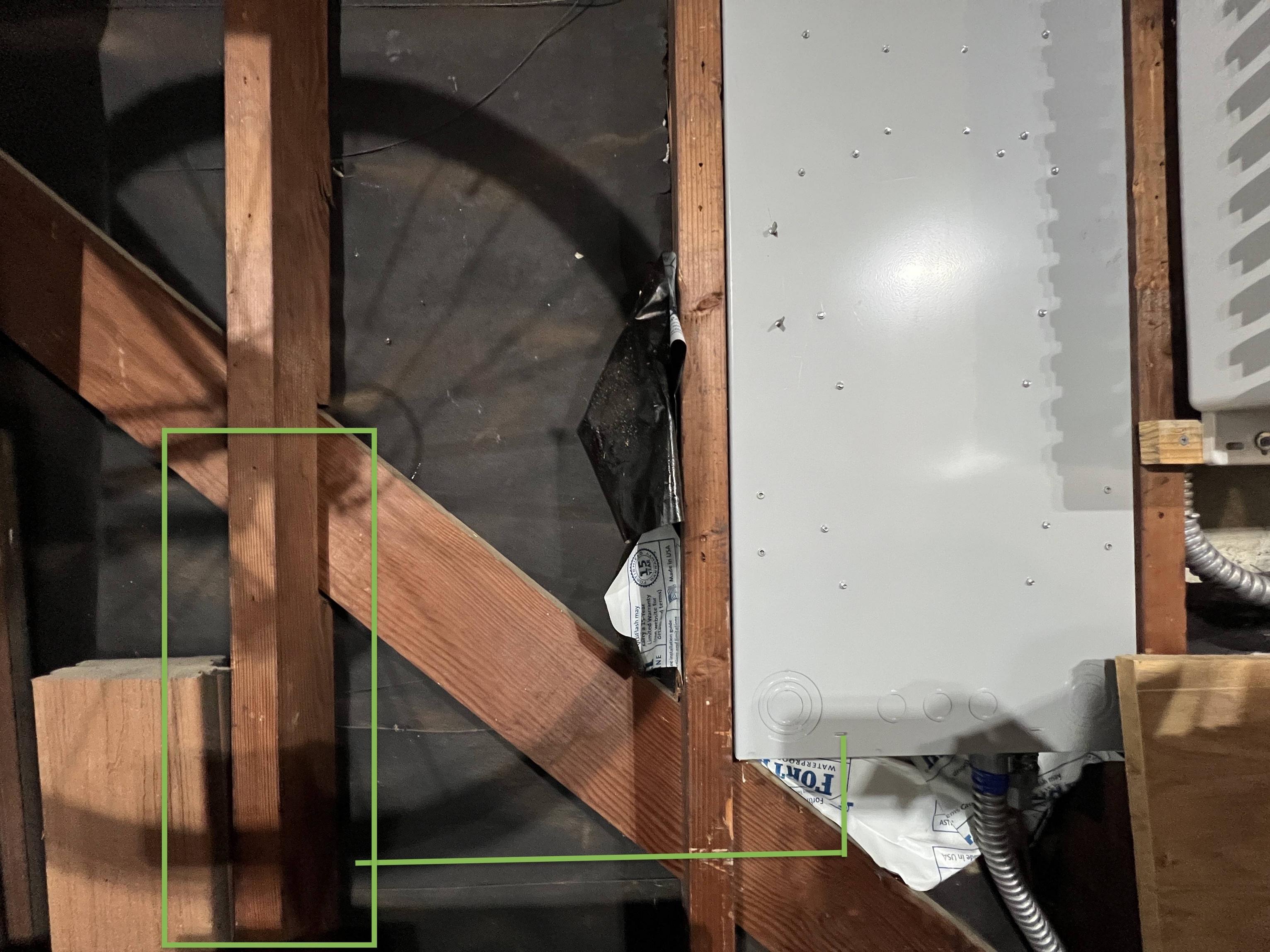
combo load center

rear of panel

I have a Tesla Wall Charger gen 3 that I'd like to install with a 60A breaker to support a maximum 48A sustained charge rate. I've gathered that this generally requires either 4/3 nm-b wire, 6/2 THHN in at least 3/4" conduit or 6/2 Metal Clad (MC) cable. If I wanted to run nm-b with exposed studs, I'd have to run it vertical along studs and only horizontal along the top plate (which would result in a long run - fine for 12/2 nm-b but expensive and a huge pain for 4/3).

The charger would be mounted to the stud, on top of a 1/2" section of plywood straddled between studs. I want to keep all of the electrical wiring within the stud cavity rather than coming in through the top or bottom of the wall charger.
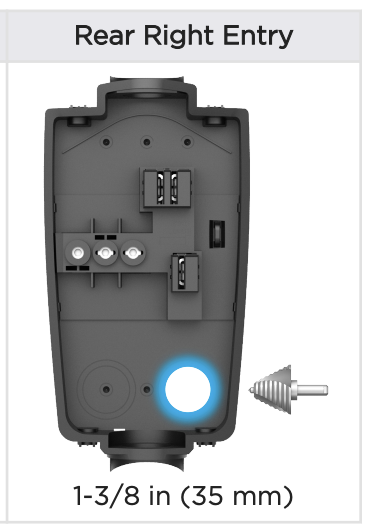
tesla wall charger rear installation

Which means at least two 90 degree angles- one turning left from exiting the bottom of the breaker panel as drawn, and then another 90 to pivot from horizontal to projected outward (into the back of the wall charger). Could I use a pull elbow for the first 90 turn, and a 3/4 compression elbow for the connection to the wall charger (or for both)?

enter image description here

Open to practical suggestions and clarifications from a code perspective. I also considered drilling through the stud straight into the existing panel's side knockout but feel like I'd more than likely create more problems attempting something like that.

For reference, the existing MC cable from the panel connects to solar (to the right of the panel).

alan
  • 73
  • 6

3 Answers3

7

Readers: I generally strongly discourage "bonkers" level charge rates because as a rule, people's electric services can't handle that. This particular panel appears to be able to (unless there's something I'm missing), but it's the exception not the rule. Don't go thinking you need 60A or even 40A to charge an EV. Anyone can make it work with a 20A/240V or even 15A circuit. Back to OP's question.

Your wire sizing seems correct.

The pull elbow will need to remain accessible forever without disassembling any part of the building, which will preclude finishing the area under the panel.

The tight radius elbows are an extreme pain to pull through. You can only have one of them between pulling points, and it must be at one end. It would also be wise to use larger than the legal minimum conduit size.

There is nothing wrong with running cable through the center of studs, unless there is a local Code requirement to the contrary (e.g. Chicago). Given that the panel is like 2 feet from the EVSE, through a stud you can drill right through, this is super easy and there's no need to use hundreds of feet of #4 Romex.

Cables and some conduits need to be physically protected from damage. It's true that "going straight across with cable" isn't allowed unless the cable is protected somehow from someone leaning a shovel against it etc. A well-placed piece of plywood or even drywall will suffice. However "going over the top" accomplishes nothing here; this means a much longer run needs protection. Conduits that provide their own protection are EMT, IMC, RMC (the non-flex metal ones) and Schedule 80 PVC, and possibly Teck in Canada. This is somewhat debatable but the last word is the permit issuer/inspector.

If it were me, I'd grab a Dremel and mill out the wood that is in the way of making a side entry into the panel via a 3/4" knockout. My EMT conduit would be about 1 foot long lol and only have one bend, and yeah, I'd use that tight radius elbow. Then #6 THHN and I'm done! Although really I'd use #10 because I have it in stock, and I don't need 60A charge LOL. Note that a ground wire must be run, because the Tesla Wall Connector has a plastic enclosure and can't carry ground via the metal conduit.

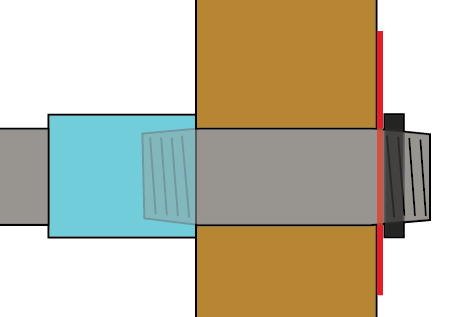
To support a comment on how to punch through the wall with minimum radius hole:

enter image description here

Harper - Reinstate Monica
  • 313,471
  • 28
  • 298
  • 772
6

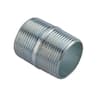
Move the charger over 16" and up 6" and use a close nipple straight into the back of the box...

Close nipple image - Halex via Home Depot website, no endorsement implied

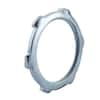
You'll need two of these conduit nuts to lock it in place:

Conduit nut image - Halex via Home Depot website, no endorsement implied

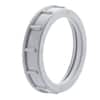
Be nice to your wire insulation and put a couple insulating bushings on the ends of it even though they are not required by code for this wire size, AIUI.

Insulating bushing - Halex via Home Depot website, no endorsement implied

Since you plan to finish the wall, put up enough drywall just there to have the charger in place on drywall so you don't have to dismount it when you drywall the rest.

Otherwise, use flexible metallic conduit just like you already have coming out of the box bottom (preferable IMHO from a rodent point of view) or flexible non-metallic conduit (either ENT (smurf tube) or LFNC) and drill a hole through the stud.

Ecnerwal
  • 235,314
  • 11
  • 293
  • 637
1

assuming the wires you want to use will fit inside the conduit according to conduit fill rules then yes using two 90 degree elbows is allowed, but they need to be large radius ones. this will not prevent you from installing drywall at some future time (a pull elbow or conduit body would prevent that)

The hole in the back of the EVSE is 1-3/8" which is the hole size for 1" conduit so it may make sense to use that conduit size, else you'll be trying to drill a 1-1/8" hole in the break-out or messing with hole reducers.

Cutting a larger hole in your panel box is specifically permitted if there is no convenient 1-3/8" knock-out available.

It appears that the EVSE needs a earth connection so you many need to use an earth nut with the conduit or just ran a bare copper wire inside the conduit to the earth bar inside the panel.

Jasen
  • 26,920
  • 1
  • 24
  • 46