14

I'm trying to install AFCI breakers on my kitchen SABCs (2x 20A circuits), in my Square D Homeline panel. Unfortunately, the breakers trip whenever I try to do anything useful on those circuits.

I've spent hours going over all the wiring inside the boxes and making sure connections are tight, conductor wrapping is intact, and even taping around every outlet to avoid something accidentally making contact or arcing with ground when the receptacle is pushed back in. I'm at a point where the breakers don't trip if nothing is connected to the receptacles (tested for 24hr+), but plugging in and using almost any appliance trips them, including:

I've tried 3 different Homeline HOM120PCAFIC breakers (2 of the same batch from Amazon, and 1 of another batch from Home Depot). The latter was still in its manufacturer plastic wrapping that I had to cut with scissors, so I'm sure it was new. I got the same results on all of them.
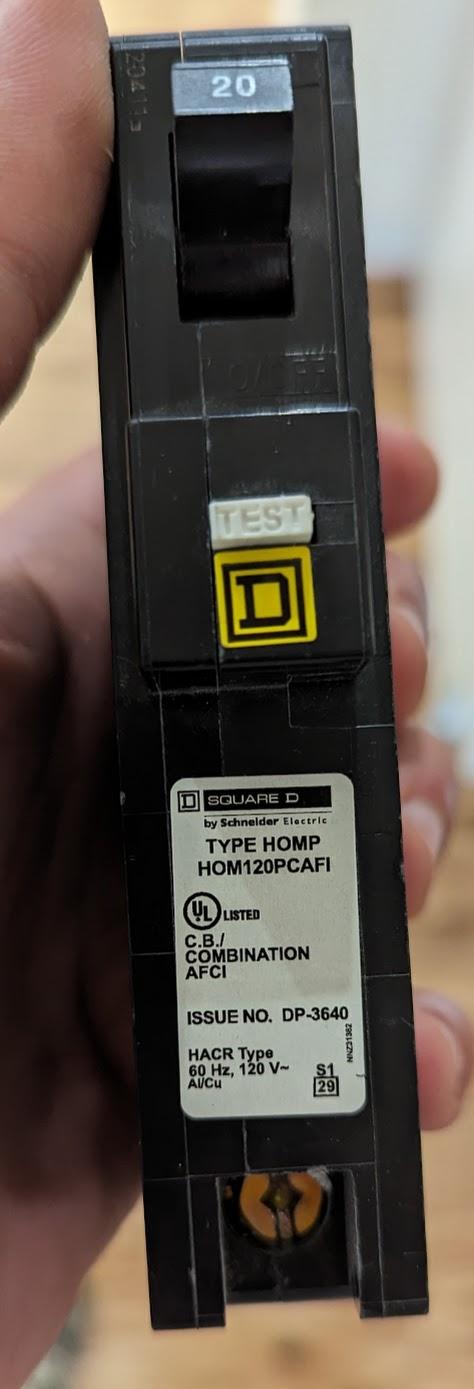
enter image description here

I need to get these circuits inspected, since they were modified / re-routed (over 6') in a recent project with an associated permit. My state is on 2020 NEC and requires AFCI everywhere inside. AFCI breakers are the last thing blocking inspection.

Questions

Are Homeline AFCI breakers just known to nuisance trip often? I know Siemens had a class-action lawsuit against them for nuisance tripping at one point, but didn't think Square D had that too.

Are all my appliances just crappy and arcing all the time, and need to be replaced?

Are there any other options I haven't considered for getting this inspected?

Machavity
  • 26,498
  • 8
  • 44
  • 100
peter
  • 1,662
  • 12
  • 30

5 Answers5

22

3 different units, you haven't used AFCIs before, and any appliance does it, but it does not trip when nothing's plugged in:

Did you neglect to connect the circuit's Neutral wire to the matching breaker as is required for GFCI & AFCI breakers? Did you make sure it was the correct Neutral wire for the Hot?

Image removed for draconian attribution idiocy.

If your panel is not PON (Plug On Neutral, which the CAFCI part number implies it should be) you also need the "B" pigtail from the breaker to neutral.

Or do you have MWBC (multi-wire branch circuit) for kitchen outlet circuits running on 12/3 which you are trying to connect to single-pole AFCI units? That won't work. You need a double-pole unit to cover a MWBC (with the circuit neutral connected to it.)

Ecnerwal
  • 235,314
  • 11
  • 293
  • 637
16

There are 2 huge problems with AFCIs that blindside people new to them (and GFCIs as well).

Neutral to the breaker

If you're new to AFCIs, circuit neutral needs to go to the breaker, NOT the neutral bar. This is particularly nasty with Square D, because as you can plainly see, there is only one screw on the breaker. There actually is a second screw for the neutral, and it's hidden.

The concept is, the breaker must see all the wires in the circuit except safety ground so it can compare currents. That'll be important later.

Also note that per NEC 110.3, you are always required to follow instructions and labeling, which means "read them" :) Always; not just when you're stuck.

Neutral must be monogamous

That is, the neutral must only serve loads also served by its partner hot(s). In kitchens, the #1 place people get in trouble with this is "shared neutral" circuits with /3 cable with red and black hot sharing a neutral. It's a cheap way to save some wire, because you get two circuits' worth of power on 4 wires instead of 6. This is more formally called a Multi-Wire Branch Circuit or MWBC meaning it is 1 circuit with 2 hot wires. It IS NOT two circuits. Get that straight.

So remember the part where the breaker must see all the wires in the circuit (but ground)? If you're running MWBC/shared neutral, you must use a special AFCI breaker that takes two hots and 1 neutral. That is called a 2-pole AFCI. Something like a HOM220CAFIC.

"Neutral must only serve loads powered by the partner hot(s)" is a hard-and-fast rule in ALL electrical wiring, and has been since World War II. We often see installations where, let's say someone has a switch loop to a switch, and a receptacle near it that's on another circuit. So to run their smart switch they just poach neutral off the nearby receptacle - that neutral is now "sleeping around". Neutral is not "common". Historically, nobody stopped you from doing that so it would be easy to cultivate a bad habit. It was always illegal and unsafe. However, AFCIs and GFCIs "keep you honest" on this rule.

Note that it's more than just "neutral on the same circuit", it is "neutral in the same cable". NEC 300.3. If you put a clamp ammeter on any cable with loads running, it should show 0 amps, because all current going out on 1 wire in the cable should come back on another wire in that same cable. Thus the magnetic fields cancel each other out, and the clamp meter reads zero.

Harper - Reinstate Monica
  • 313,471
  • 28
  • 298
  • 772
4

This is a comment under the accepted (and correct) answer

Also for context, it's a plug-on neutral panel (as you noted). In hindsight, this probably contributed to misunderstanding it as "I don't need to worry about neutrals for AFCI breakers here". But I guess that's only for the pigtail, not the branch circuit neutral.

This really needs its own addendum answer because the industry is changing how these breakers work and it can be confusing.

In older panels, the neutral bus was simple a bar somewhere in the panel to connect all your neutrals to. This meant you often had the neutral somewhere far away and you had to fish wires around the box. Pigtails are for these older panels, but they work with any panel because you have a wire to run between the breaker and the neutral bus.

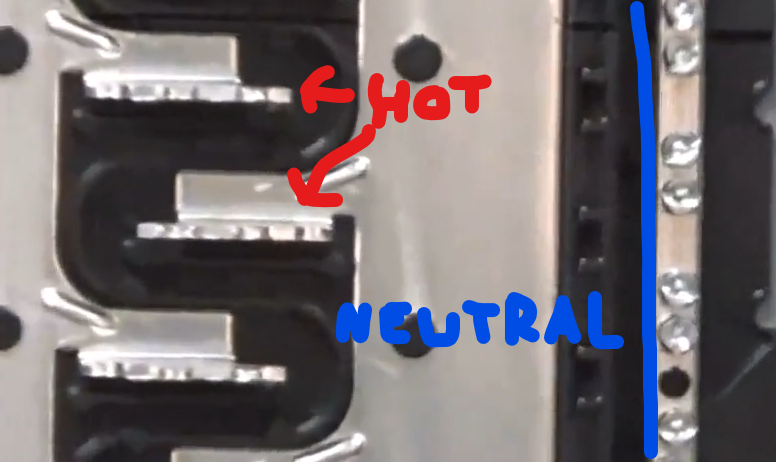
Every manufacturer is starting to make their own workarounds to the growing need for breakers to have a neutral connection (CAFCI, AFCI, GFCI, etc.), and most are calling it "plug-on neutral". What's different here is

  1. The neutral bar distributed behind the hot rails for your breakers (Square D shown)

    Distributed neutral

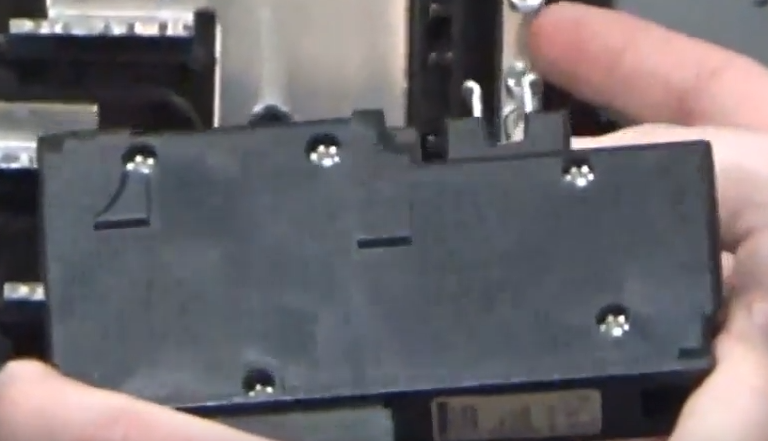
  2. The "plug-on neutral" breakers have an extra clip to pick up the neutral bar

    Plug-on neutral clip

Images above from this video

These panels still support a pigtail breaker, but the purpose of the clip is to remove the need for a pigtail. You connect the hot and neutral to both types of breaker. The clip is what provides the connection to the neutral bar.

Machavity
  • 26,498
  • 8
  • 44
  • 100
2

My hunch is that your appliances have nothing to do with this. Rather, you have bad wires.

GFCI is not the same as AFCI. They serve very different functions and operate quite differently.

GFCI is for life safety and is conceptually incredibly simple - check to see if hot and neutral have the same current. That's it. Self-testing, indicator lights, etc. are all icing on the cake. But the core is: Compare the current. That can be done with very basic components, which is why it has been available for decades, with gradual increase in required locations as the cost has gone down.

AFCI is for fire safety. It is conceptually, and practically, quite complex. You don't need a microprocessor to figure out GFCI. You can - and modern GFCI (whether breaker or receptacle) uses a microprocessor for self-test and other features, but you don't need it. But AFCI is a much more complex thing, that pretty much requires a microprocessor to analyze the power flow to determine if it is doing "bad things" that would indicate a likely arcing situation that could lead to a fire.

As a result, GFCI is required primarily in wet places - kitchen, bathroom, laundry, outdoors, though recently expanded to include other areas. AFCI, on the other hand, started in the other areas - bedrooms, then living rooms, etc.

Another important difference is that GFCI is primarily a user (wet hands) and device (hot leaking to metal case, or wet stuff touching the user) problem, though it can (with immediate trip every time you use the circuit with any appliance) be due to a wiring problem. On the other hand, with the exception of some motor, compressor, etc. issues (which can affect refrigerators, among things), AFCI is mostly about wires, not about appliances. Which points to an AFCI tripping on every appliance being a wiring problem and not an appliance problem.

There is some overlap now, and it will likely increase over time, depending on NEC version. So you may be required to include AFCI for new circuits in your kitchen. If these are existing circuits, I would recommend installing GFCI (either receptacle or breaker) if you do not already have it (the life safety advantage in a kitchen has been obvious for decades) but not to install AFCI unless required by your jurisdiction.

If you do not already have GFCI (i.e., GFCI/receptacle) then you could install GFCI/receptacle (usually the cheaper method) and get the important safety protection. You could, instead, return that AFCI/breaker and get a comparable GFCI/breaker. If that breaker works fine (I bet it will) then you know that you do not have any ground issues and that your problem with the AFCI is actually arc faults.

That leaves open the question of: Assuming you have arc faults, what should you do about them? If they are real, and not just nuisance trips (e.g., due to heavy machinery somewhere causing noisy power problems in nearby circuits) then replacing those circuits may be a good idea, depending on the age of the wires and the effort required.

manassehkatz-Moving 2 Codidact
  • 139,495
  • 14
  • 149
  • 386
2

I don't know of any earned reputation that SqD AFCI breakers have for nuisance trips - in fact I have installed more than 20 of the SqD CAFCI breakers in various panels and can't think of one that has nuisance tripped.

I suggest performing these tests:

  1. Take your toaster and air fryer into the bedroom and plug them in (assuming your bedroom(s) are on a different circuit which is also AFCI-protected). Hell, pretend you're in college and make some bedroom toast. Does either appliance trip the AFCI in there? If yes, you can probably start blaming the appliances themselves (things wear out). If not, then it doesn't necessarily mean the cause is the AFCI breakers themselves, but something on the kitchen circuits. That leads you to number 2.

  2. Replace the receptacles on the kitchen small appliance circuits. In my experience, receptacles with dirty or worn internal terminals can cause arcing, even during normal use if they are worn enough (i.e. not while actively plugging/unplugging). For extra peace-of-mind, buy spec-grade receptacles with screw-clamp cable connections. Don't use the back-stab or wire-wrap the screws. They're only a couple of bucks more, but they are faster to connect and more reliable to use.

ThisOneGoesToEleven
  • 7,612
  • 3
  • 13
  • 50