3

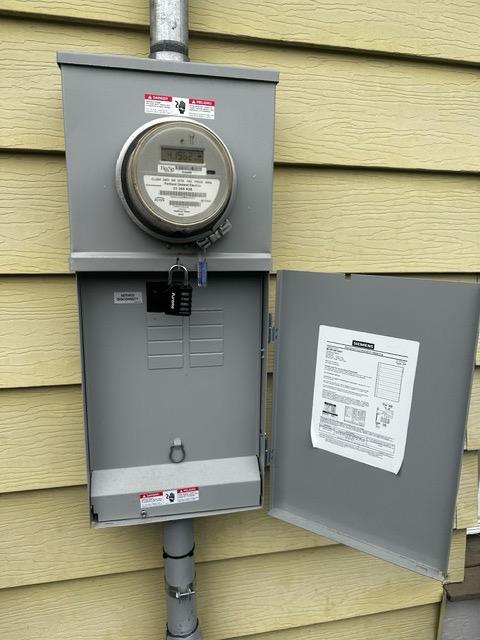
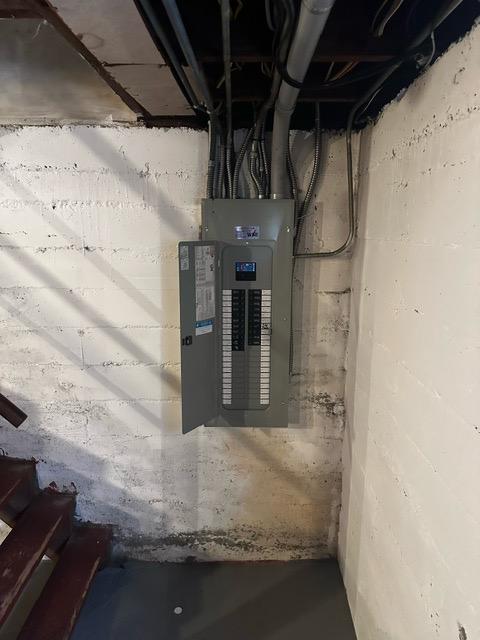
I am looking to add a 60 amp breaker like this one to my main service disconnect so I can install an electric car charger right next to it. My panel for the rest of the house is a lot farther away and in the basement so this would save a lot of money.

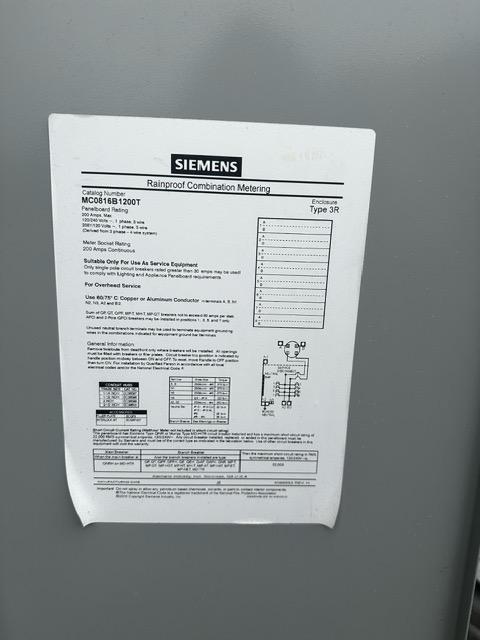
I found some similar questions like this one and looked at the resources they linked. It seems like it should be allowed but wanted to confirm for my specific panel. The wording “Suitable Only For Use As Service Equipment / Only single pole circuit breakers rated greater than 30 amps may be used to comply with Lighting and Appliance Panelboard requirements.” on the panel is throwing me off. Not sure if that means additional breakers should not be added.

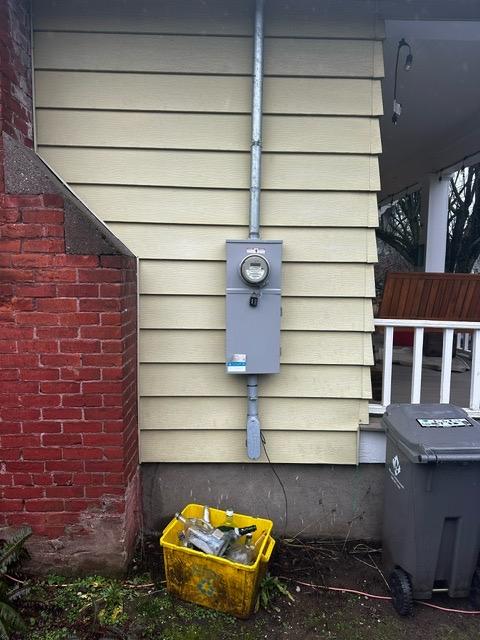
Attached are some photos of my panels! I’m also located in Portland Oregon.
enter image description here enter image description here enter image description here enter image description here

nobody
  • 7,701
  • 3
  • 36
  • 47

3 Answers3

5

This thing you're looking at is a garden variety "trailer/ranch panel". It has your meter, your main breaker, 8 breaker spaces past your main breaker, and "thru lugs" to go onward to what you thought was your main panel lol, but is actually a subpanel.

This is the perfect setup for what you want to do.

For all practical purposes, the 8 breaker spaces are part of the indoor panel, as far as the Load Calculation is concerned. There are complications if you want to do solar, and we have tricks for that, but for EV charging it's exactly the same as if it's plugged into your regular indoor panel.

Don't overload the panel.

Since you are going 60A, you are talking a hardwired charge station that typically can be set to any ampacity / breaker from 15A to 60A. You can do that if you don't have panel capacity for 60A. Your other option is to use a Load Management/EVEMS system, which is a ~$300 power meter that gets added to certain specific wall units - Wallbox, Emporia, Tesla, or Elmac. It allows max charge rate and auto-adjusts current downward as necessary to prevent panel overload.

Note that despite what you may have heard, #6 Romex/NM/UF is not 60 amp wire!!! Most charge stations take a maximum #6 wire, but if you want to use full capacity, you must use higher quality wire such as MC cable, SER cable, or individual THHN wires in conduit. I recommend EMT conduit - hard to initially learn but super easy to adjust, correct and reuse. PVC is a nightmare for novices because it is solvent welded - that won't ever come apart!

Harper - Reinstate Monica
  • 313,471
  • 28
  • 298
  • 772
3

It seems you will be allowed 20 or 30 amp double pole(240v) breakers(from comment).

This is usually plenty for EVs for most people.

If you do heavy driving all day you might want a 60 amp breaker.

A load calculation should be done to see how much extra amps you have available for your house.

crip659
  • 32,986
  • 2
  • 39
  • 85
2

Not an electrician, but thought I add my research to this.

The wording:

“Suitable Only For Use As Service Equipment Only single pole circuit breakers rated greater than 30 amps may be used to comply with Lighting and Appliance Panelboard requirements.”

comes from prior to 2008. NEC in 2008 removed the mention of "Lighting and Appliance Panelboard" and "Power Panelboard". Prior to 2008, a panel fit into those two categories and there were limitations placed on Lighting and Appliance Panelboard. One of these limitations is the above wording in question.

(If you do any online search regarding the Lighting and Appliance Panelboards, everything is prior 2008. The OP's Siemens meter combo spec sheet is also dated 2002, so it used to be the case!)

So, what does this mean? There is no Lighting and Appliance Panelboard requirements post 2008 because there is no such thing as a Lighting and Appliance Panelboard.

You are free to add single pole 10, 15, 20 amp breakers to the panel, granted the load calculations and such breakers are approved by the manufacturer, which in this case they are (Siemens listed).

KRB
  • 21
  • 1