20

I removed the plates from outlets to paint walls and noticed that some of my electric boxes have ground wires connected to outlets while others do not have a green wire at all. Is this ok?

I know that neutral wire is connected to ground in the main box. I also understand the need to ground metal-encased appliances. What I don't understand is why there have to be two separate wires (white and green) that connect to a common terminal at the main box?

user443854
  • 1,303
  • 12
  • 25
  • 34

4 Answers4

23

The grounding conductor in an electrical system provides a safe path for fault currents to travel along. It's there to prevent electrocution.

No Grounding Conductor

Let's say we have a toaster.
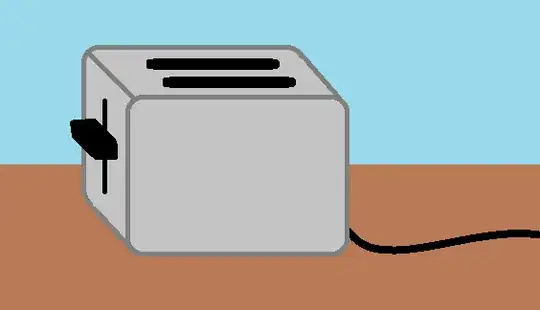
Toaster

Inside the toaster are two conductors, a black ungrounded (hot) conductor, and a white grounded (neutral) conductor.
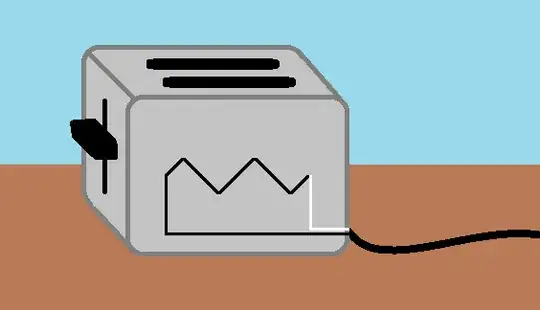
Toaster with wires

To heat the toaster, current flows into the heating element through the ungrounded (hot) conductor, through the heating element, out of the heating element and back to the source through the grounded (neutral) conductor.

Now let's say there is a short between the ungrounded (hot) conductor, and the metal frame of the toaster.
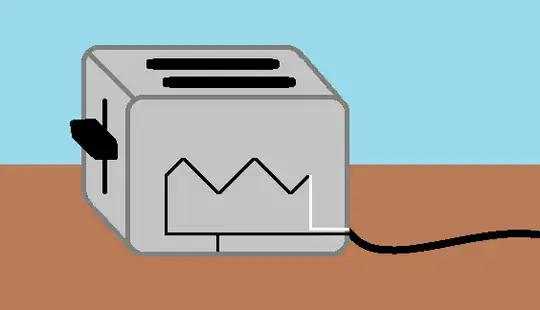
Toaster with short

Since the frame is metal; and conducts electricity, it is now electrified.
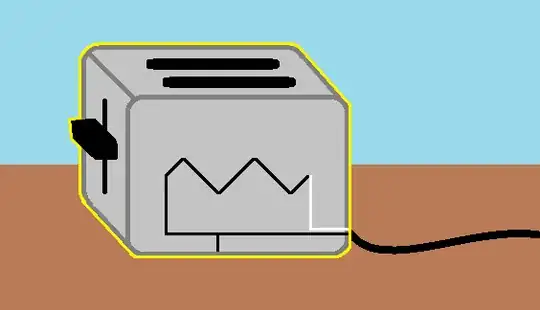
Toaster with short electrified

If you then touch the toaster; and you're sufficiently grounded, current will flow through you to the ground. This could lead to a nasty shock, or potentially death.
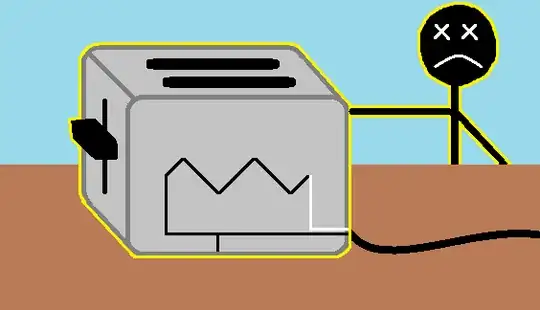
Death

With Grounding Conductor

Now let's see what happens when we have a toaster with a grounding conductor, that is properly bonded to the non current carrying metal parts of the toaster.
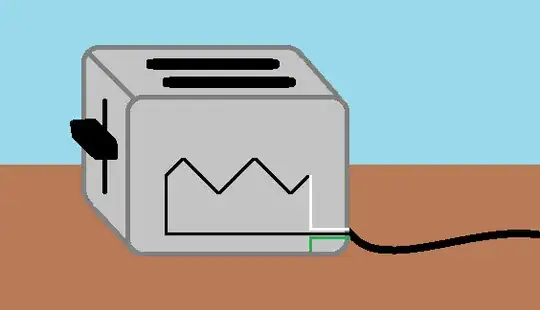
Toaster with bonded ground

There's a short in the toaster again.
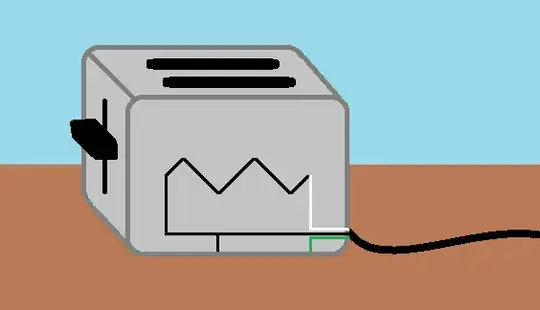
Toaster with short and bonded ground

However, since we have a grounding conductor this time, the current flows through the toaster into the grounding conductor and back to the source.
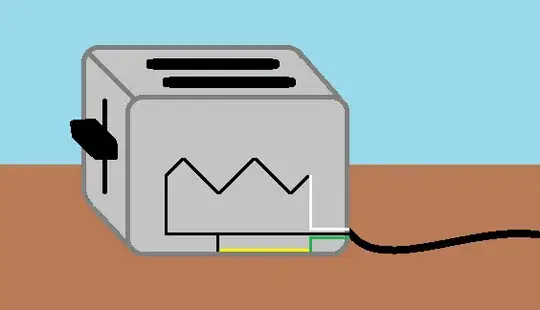
Grounding conductor in use

This creates a very low resistance path back to the source, so the current in the circuit increases rapidly (I=E/R). The increased current causes the circuit's overcurrent protection to kick in, and the breaker trips.

But the neutral is grounded?

The grounded (neutral) conductor is indeed grounded at the service entrance, however, after that point the grounded (neutral) conductor is a current carrying conductor. It's used to carry current back to the source, and so potentially always has current flowing on it. If this conductor was connected to the toaster's non current carrying metal parts, it would allow current to flow on the metal parts of the toaster.

If there was a break in the neutral conductor further down the circuit. Current could flow through the ungrounded (hot) conductor into the toaster, through the heating element, out of the heating element and down the grounded (neutral) conductor, through the toaster's metal parts, through you, and into the ground. Which could lead to a shock, injury, and/or death.


tl;dr

The grounding conductor provides shock hazard protection, and should always be properly connected. If there is no grounding conductor available, a ground-fault circuit interrupting (GFCI) device may be able to be used to provide this protection (see NEC 406.4(D)(2)(b)). This conductor should only carry current during a fault situation.

The grounded (neutral) conductor is a current carrying conductor, used to carry current back to the source. This conductor carries current during normal operation.

Tester101
  • 133,087
  • 80
  • 327
  • 617
14

To answer your first question, no it's not permitted to have a 3 prong receptacle without the ground wire being attached. See some of the other questions explain how you should fix this situation. I believe the short answer is that it should be a 2 prong receptacle (which will be difficult to find and only to be used in grandfathered situations) or you could use a GFCI with a "no equipment ground" label.

If you use your neutral as a ground, then a neutral fault (a break in the neutral connection somewhere in the circuit) will result in the exterior of every device on the far side of that fault being an electrocution risk. You are also at risk of a shock if you ever form a better path to ground than the neutral wire.

BMitch
  • 43,263
  • 15
  • 98
  • 204
11

The accepted answer states "it's not permitted to have a 3 prong receptacle without the ground wire being attached." This is incorrect.

406.4(d)2(b)
A non-grounding type receptacle(s) shall be permitted to be replaced with a ground fault circuit interrupter type of receptacle(s). These receptacles shall be marked "No Equipment Ground". An Equipment grounding conductor shall not be connected from the ground fault circuit interrupter type receptacle to any outlet supplied from the ground fault circuit interrupter receptacle

406.4(D)(2)(C)
A non-grounding type receptacle(s) shall be permitted to be replaced with a grounding type receptacle(s) where supplied through a ground-fault circuit interrupter. Grounding-type receptacles supplied through the ground fault circuit interrupter shall be marked "GFCI Protected" and "No Equipment Ground". An equipment grounding conductor shall not be connected between the grounding type receptacles.

Thus, having a three-prong recepticle with no ground is allowed, as long as it's GFCI-protected (either by being a GFCI, or being on the load-side of a GFCI) and has a "No Equipment Ground" sticker.

5

Also note (probably won't apply to you because of how new your home is): there are these things known as 'self-grounding outlets'. Self-grounding outlets are three-prong outlets that automatically ground to the outlet metal box they are attached to via the mounting screws on the outlet assembly, or via a green pigtail wire from the outlet assembly that is screwed to the metal outlet box. These obtain their ground via a conduit (a metal outer shielding that the wires were run inside) that runs to the main electrical box, which is then grounded to earth-ground somewhere.

This does not work if you have romex wiring with three wires (black,white,green).

J. Polfer
  • 151
  • 4