13

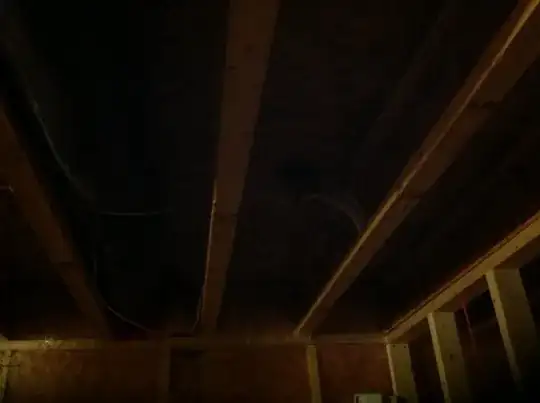
I was planning on installing drywall on my basement ceiling and realized that I have nothing to screw the drywall on after the last joist. On one corner of the room there is 12 inches from the last joist to the wall and on another side I have about 6 inches that the drywall would be floating on.

If I just screw it to the joists and let it float in those spaces will it be an issue? What can I do?

enter image description here

Niall C.
  • 20,909
  • 19
  • 95
  • 135
user18234
  • 131
  • 1
  • 1
  • 3

2 Answers2

10

The overkill direction (which is actually appropriate for some circumstances, such as a ceiling that needs to hold up a lot of insulation, as for an attic above) is to run 1x3 strapping opposite to the joists. An advantage in the application I mention is that this strapping can be on 12 inch spacing, so the drywall can be attached with a screw every foot, even if the roof trusses are on 2 foot centers.

In general, it is actually advantageous to leave the edges of the ceiling to float for the last foot or so, so long as you drywall the ceiling first and the walls after, butting them up to the ceiling before screwing them in place - the wall drywall then ends up supporting the edges of the ceiling drywall, but the whole is slightly less prone to crack in the case of small building movements as there's a little give from the floating edge. Here's a reference (they also suggest using corner clips.) Scoot down to photograph 4, and you won't be surprised to find that they mention the other point of view as being commonly held. As for it being "a developing point of view" only in building would something code approved for 30 or more years (per the above reference) be "developing..." An additional reference. And another. Search on drywall floating corner cracks for more references. And one in my comment on @bib's answer from the Gypsum Association; they might just know a thing or two about hanging drywall.

Ecnerwal
  • 235,314
  • 11
  • 293
  • 637
3

No, it would not be okay. Drywall needs to be attached at its edges.

The standard approach is to build a pont to attach the edge of the drywall. Generally, you screw a dummy joist at the edge of the wall. It is hard to see what is above the top plate of the right wall, but that is where an attachment beam needs to be installed. If there is no joist to tie to, you could screw several braces on top of the plate to serve as attachment points. You then screw the dummy joist to those. This beam is not structural, just a fairly solid point to anchor the edge of the drywall.

Without this attachment, the natural shifting of the building/walls will likely result in cracks in the corners.

Supplemental Note: I looked at the references for the contrary opinion offered by @Ecnerwal and find them interesting. But everything I have ever heard from builders is to the contrary. Also I believe that most building department inspectors expect to see support (in addition to the edge of the horizontal drywall sheet). However the floating edge may be a developing point of view.
bib
  • 33,975
  • 10
  • 68
  • 102