41

Related: When should you use metal studs?

I'm planning on finishing my basement. (assuming all water issues are resolved) I'll be putting up a water barrier (tar paper) on all exterior walls, Framing a stud wall, insulating, installing a vapour barrier, and dry-walling over top.

There will also be a fire-wall built around the furnace (obviously I'll use steel here).

For the exterior walls, should I use steel or wood studs?

If you can't answer, at least give me points to consider.

UPDATE I plan to start this project in February. I've just had entrenching and exterior waterproofing done on the foundation. Parge, Aquablock, Delta board and new weepers put in. Does this affect the vapour barrier situation? (obviously this is cold-side waterproofing.)

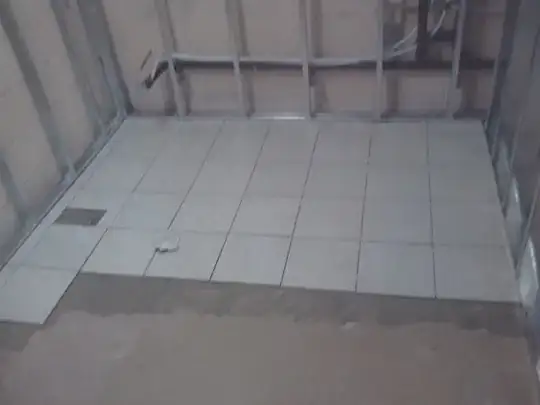
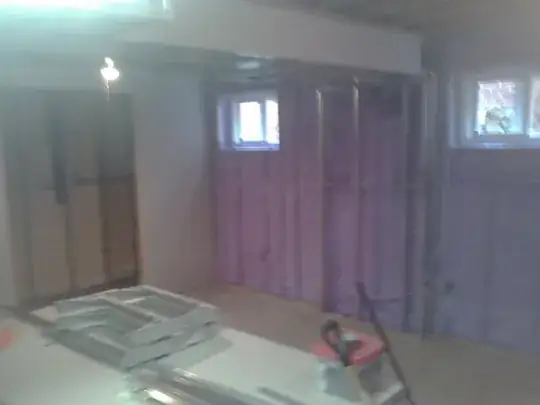
Much later update: Went with steel studs and spray foam. The contractor sistered some of the studs with 2x4's to provide mount points for shelves and a wall mount TV should we decide to go that path. Here's some in progress photos. For some final photos, check: http://diy.blogoverflow.com/2012/09/installing-laminateengineered-wood-floating-floors/

enter image description here

enter image description here

Chris Cudmore
  • 14,169
  • 7
  • 61
  • 91

9 Answers9

52

I did a lot of research when finishing our basement. I eventually went with a wall model recommended by building sciences corporation that, from outside in, is:

  • existing exterior wall (concrete, concrete block, etc)
  • foam board insulation (XPS or EPS, I went with EPS)
  • stud wall
  • sheet rock (I went with a paperless product called Densarmor

This is a system that Fine Homebuilding magazine also recommends and is considered valid by the US Department of Energy. I know this because our local building codes were still using the antiquated 'fiberglass + plastic' model and I had to do a ton of research to educate the local code enforcers before they'd approve this.

I went with metal studs for the following reasons:

  • they're all perfectly straight
  • I can carry 20 of them at a time (makes it REALLY easy to haul into a basement)
  • easy to build in-place (no need to frame then tilt-up walls)
  • cut with tin-snips in a matter of seconds
  • mold can't grow on it
  • can be installed without screws (can be crimped in place)
  • at the time, were the same cost
  • wiring channels are built-in
  • you can use thinner studs (it's impossible to find straight 2x2's in wood around here)

There are a few cons, though:

  • you can't easily nail into them for attaching baseboard
  • you still need to frame out your doors with wood for the added strength
  • you can't mount cabinets to the wall with metal studs

As for baseboard, I decided to use the new synthetic foam pre-finished trim. It looks pretty good, is super light, easy to work with and...it's not wood. So I thought it was another great product for a basement. Because it's so light, it was really easy to toe-nail it in to the sheetrock with an pneumatic trimmer.

As for mounting cabinets and such, on the walls where I knew I wanted to do this, I added 2x2's inside the metal studs for support.

The only corrosion issue that I'd be worried about is rust, and that should only be an issue if you still have a moisture issue in your basement. It'd also take a really long time for a stud to rust through and be any sort of problem.

Some tips:

  • be sure to separate the floor plate from the concrete. I used 1/4 XPS for that and then power-actuated hammered them into the concrete. This thermal break will prevent moisture coming in through the concrete to condense on the metal
  • don't screw them in. I did and while it's not that big of a deal, they make crimpers just for this purpose. Invest in the crimpers as it'll make things go really fast.
  • be sure to buy plastic grommets for the electrical channels. You don't want your electrical cables rubbing up against the bare steel edges.
  • wear really good gloves

As for your plan:

barrier (tar paper) on all exterior walls, Framing a stud wall, insulating, installing a vapour barrier, and dry-walling over top

...I STRONGLY recommend against that.

for starters, your plan involves two vapor barriers...that is a really bad idea. That will only trap moisture inside the walls. The modern recommendation (at least in colder climates) is to not use any vapor barrier in an old basement. Instead, use foam board for the insulation. Foam board is permeable, and the idea is that if water ever got on one side or the other, it could eventually dry to the other.

The other issue is that you want the insulation on the OUTSIDE of the stud wall. The foundation wall will be the coldest surface and is where moisture would condense. You want all of your framing on the inside of the conditioned space.

The proper way to put a water barrier in a basement is on the OUTSIDE of the foundation. Ideally, you'd have a water barrier and insulation on the outside of the concrete. But that's obviously really hard to retrofit.
DA01
  • 24,586
  • 30
  • 82
  • 153
12

I'm basically paraphrasing Mike Holmes on this one:

Steel studs are generally intended for commercial use, not residential. My understanding is that they don't have the load carrying capacity of wood, and they're also subject to corrosion.

Technically you CAN use them, but he wouldn't. If you're concerned about moisture, I'd think about using PT 2x4's instead or putting sill guards behind the studs.

The Evil Greebo
  • 25,971
  • 16
  • 91
  • 125
6

I have been using metal studs in basement renovations for years. They stand up to corrosion and when you use spray foam insulation they are almost like rock (even before drywall).

Many people have the misconception that metal studs are flimsy. Studs are available in a variety of different gauges and are "cold rolled" to maintain strength. These heavy gauge studs are intended for use on structural walls.

dale
  • 61
  • 1
  • 1
4

I would use metal studs. Mike Homes is not always correct. If there is any moisture coming from the exterior wall I would rather have a galvanized metel stud that would rust rather than a wood stud that would rot, have mildew and never really dry out if the moisture problem was solved. Most things we would hang on a wall in the basement would be ok with metal studs. If you were hanging heavy articles 1/2" or 3/4" plywood backer board between the meatal stud flanges with drywall over top is very strong. The metal stud wall with with drywall on top as an assembly is strong enough. Remember the wall is not load bearing and really there to hold up the drywall,install electrical, and wood trim. I have finished basements with both and would use metal studs wherever I could.

roger
  • 41
  • 1
3
  1. Put 2 inches of extruded polystyrene board on the wall with glue. Hold it up using those plastic pressure holder devices with Tapcon anchors punched through the middle if you're into over-engineering. Seal the seams with tuck tape. This is now a water-proof barrier.
  2. Frame the wall with wood studs, about an inch out from the wall (room for wires here). The bottom plate should be insulated against moisture transfer with glued-on pink sill gasket. Use tapcon anchors to secure the frame to the floor.
    Do not use metal studs. Basements are wet, no matter what. Metal studs will rust -- even with mild amounts of condensation-based moisture. It takes a bit more water than that to rot wood.
  3. Insulate between the frame and cover it with plain old drywall. You already have a dry/warm-side vapor barrier in the sealed polystyrene board so there's no need for a VB here.
    Why regular drywall? Because it's cheap to replace if you ever have trouble. Use roxul mineral wool insulation; it's better for fire.
Niall C.
  • 20,909
  • 19
  • 95
  • 135
james
  • 31
  • 1
1

You may want to check the IRC R 318 on the positioning of the vapor barrier and consider what you are using for insulation. The code calls for the vapor barrier to be installed on the warm-in-winter side of the insulation--exceptions do exist ( see code). If you are using EPS you should know that it is porous and only closed cell rigid foam provides a vapor barrier. It is important to consider how your vapor barrier will be contiguous with the perimeter Joist insulation. A reasonable way to provide the R1o insulation factor at the joist is by using closed cell foam cut a 1/4 inch less than the opening and use canned spray foam like Great Stuff to seal the edges--this is crucial to stopping rot at these areas caused by condensation. Depending on way the basement block was capped you may need to top off the blocks as they can be a major factor in vapor production wicking up the moisture from the ground and this travels by convection up to the perimeter plate and joist area which are generally cold. Water condense on them and you have a major problem after awhile. I have seen many hundreds of homes with this problem. Also if you are using treated lumber, be sure to use the proper fasteners. If your walls are damp consider damp-proffing them with something like Drylok. Also most concrete in homes is porous at only 3500 psi -- you need a higher cement content or vapor barrier under your floor if you don't expect your floors to wick up moisture by capillary action. Hold your finished door jambs up off the floor. hold your base board up a bit, too. Unless you treat the problem under basement walls it will eventually come back to haunt you.

JHJ
  • 11
  • 1
1

Nothing beats a steel stud. Fire Proof, rot, mold mildew resistant and strength. In a basement, underground steel all the way. Steel can be cheaper, and is straight as an arrow. It is lighter, but residential grade steel studs are very flimsy and can have that office tinny feel. The higher gauge studs are more sturdy, but are more expensive, heavier, and can not be purchased at a big box store.

An experienced framer can blast out a steel framed basement with ease, but it can be and a pain in the arese if you have not worked with steel studs. Steel's advantages by far weigh out wood studs but it takes a little time and patience to learn how to work with them. If you layout the studs properly its a real time saver on electrical as well the wires, or conduit line right up. You will still need wood studs for shelves or a sink vanity, steel just wont hold the horizontal weight. Steel studs can be cut with a metal porta band or saw sall. Steel studs are more practice and my choice but again there are lots of cuts and angles in a basement which require time and skill. Remember you will need a vapor barrier and that goes on the foundation side. Good Luck!

Craig
  • 11
  • 2
0

Your best bet is to talk to your local building department. They can and often do contradict the national building codes, and they have the final say. Draw up your plans and bring them in for review and approval from the building department. They will also usually be happy to give you pointers on what works best in your area. Bring a list of all of your questions for them too, but read up on the codes your local Building department uses. They are much more helpful if they see that you did your homework before asking questions. They will also often supply you with a packet that outlines many of the things that people tend to do wrong. Anyone here giving a one size fits all answer is probably giving you an answer that is right in some aeas and wrong in others.

0

Steel studs are not load bearing in basement finishing. They are cut within creating mountains of sawdust a bonus on refit work. Add wood cripples where you might want to mount Cabinets or shelves only to provide flexibility for fastening location and shear resistance. Metal studs are not only for commercial use. They are light enough to allow one person work especially on overhead bulkheads. Use a crimper. Ensure you don’t leave screws or loose objects in or on the tracks, as these can cause annoying rattles and vibration from music sources in the room. Always use a vapour barrier in the basement to avoid moisture uptake by the insulation from room activities. Metal studs won’t corrode that quickly and if there is that much moisture that corrosion is a concern, there are other problems with moisture ingress. Like a boat, water management needs to be on the outside. A waterproof continuous membrane and a plastic dimpled barrier to create an air gap. Ideally XPS insulation. This allows the concrete wall to remain uniformly warm. During the heating season. The concrete foundation absorbs heat and like a flywheel radiates that heat back into the room if there is a power outage.