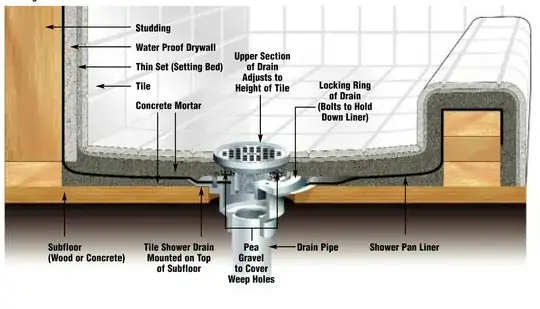
All of that should be torn out and replaced with backerboard, which is then coated in a waterproofing membrane, to be tiled over and sealed.
Or it can be replaced with the same modern type of dry-pack mortar bed, of which I'm not a fan and neither are you anymore I bet. That's why I opt for precast shower pans whenever possible (they also come with a lip).
"We're just going to go over the old stuff," are words I never want to hear. There's no way to verify the substrate unless you just put it in, or at least get down to it to inspect it. This is your opportunity to do so, to insure your install lasts the next 30 years no problem.
(I wrote the above without realizing this install must be on a slab, but then why is there a 2x4 in the floor? And why would you dry-pack over a slab?)
Re: damaging the foundation, you probably will to some extant but hopefully it will just chip in some places which is easily leveled back off with some patching. If cracks do develop in the slab then you might be looking at having to re-pour that whole section.
Chip at it from an angle with a hammer and chisel or the equivalent power tool, don't just start whacking it with a sledge hammer.
This is a rental, it's not choose your own adventure bath time. Get a manufactured shower pan and slap it in there; no self-built or on-site custom shower pans (as you've learned, they like to leak). Purchased pans are like mini bathtubs; they only leak if you install them wrong.

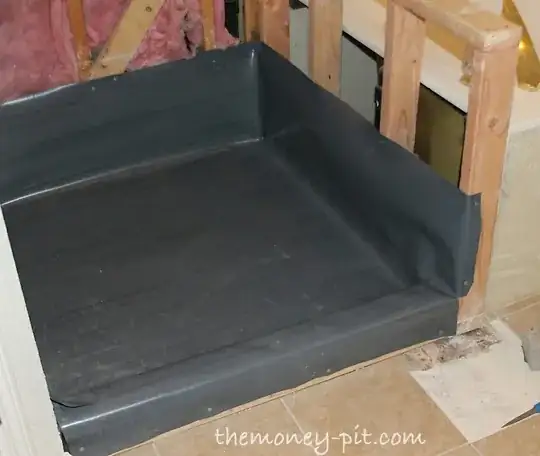
 So I have recently had a tenant move out and have found water damage around the basement shower floor. Looks like black mold so I started ripping it out. Now I am at the point where I have found what looks like a undersized water barrier but not sure if I need to bust out the concrete or just remove the perimeter and pour over the entire thing... if I do need to remove the shower sub-floor what the best way to do so with out damaging the foundation. Also notice how it looks wet, yet it hasn't been used on 25 days. There was a tiled corner chair I have since removed, thats what was in the corner.