9

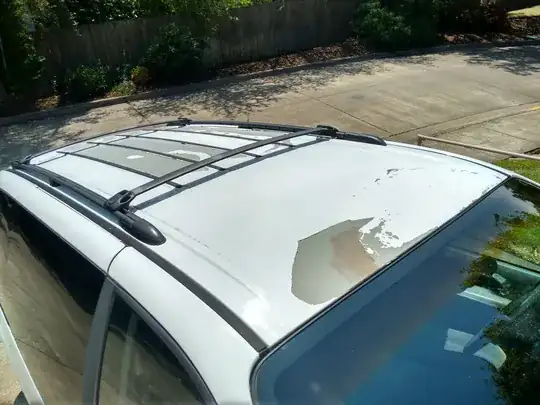
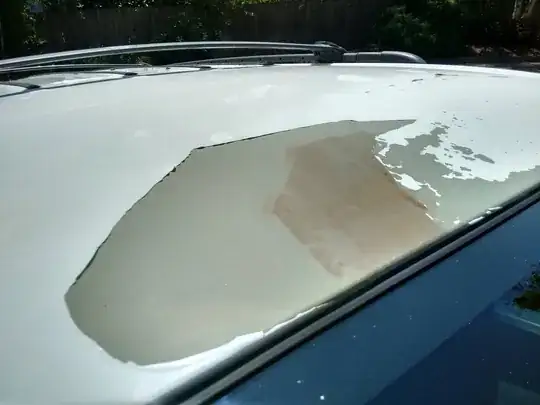
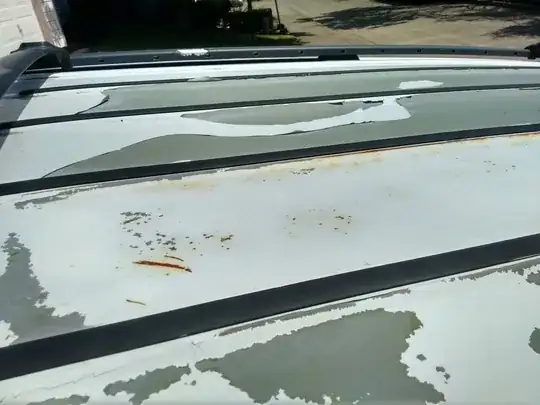
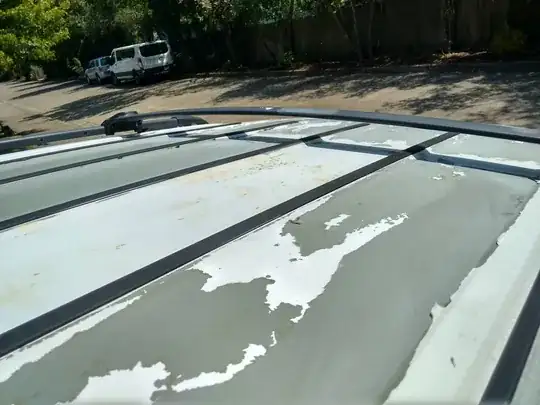
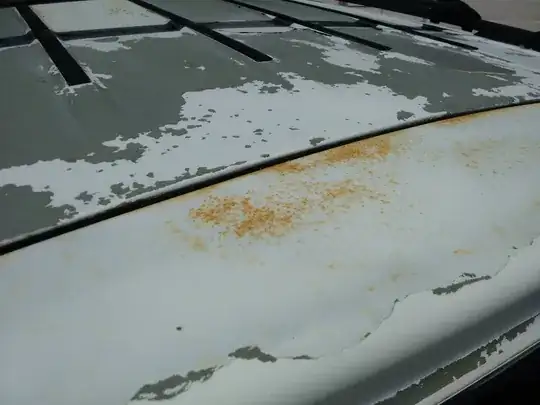
I've got a 97 Dodge Grand Caravan that's generally in pretty good shape, but the roof has started peeling badly, and a few spots have accumulated some rust.

This is an old car with limited value, so I'm not interested in putting a lot of money into cosmetics at this point... but I would still like to keep it looking somewhat decent, and (mainly) prevent the roof from rusting through. I'm looking for help/advice here, because I'm a software guy with embarrassingly little know-how when it comes to cars (or really, doing anything with my hands :( ).

After putzing around on the internet I'm thinking to peel the paint away as best I can, spray the rusty spots with a rust converter (like this one), then spray the whole roof down with a basic enamel spray paint (like this one).

Does that sound like a halfway reasonable idea? If so, any tips on how not to botch the operation? If not... what should I do?

P.S. If I don't care about the aesthetics at all, would it be "enough" to spray the rust with the rust converter and leave it at that? Or do I need more protection provided by enamel / something else to prevent the rust from coming back immediately?

Pictures (open in new tab for original large size):
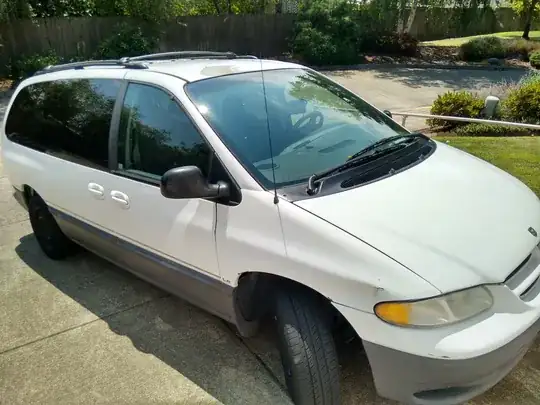
http://i.imgur.com/5OFCW5u.jpg http://i.imgur.com/kdBX6RN.jpg https://i.sstatic.net/WeT7h.jpg https://i.sstatic.net/im3WC.jpg https://i.sstatic.net/ItmJY.jpg https://i.sstatic.net/Az2oO.jpg

Jordan Magnuson
  • 245
  • 1
  • 3
  • 6

3 Answers3

5

If I were you, I'd just do it right and be done with it. Don't feel bad about the peeling paint as all of the Dodge/Chrysler products of the era did the same thing (GM had a phase of this as well ... I would bet Ford had its problems in this area to boot). The problem was (from my understanding) when manufacturers were required to go to water based paint to reduce volatile organic compounds (VOCs). The primer at that time wasn't up to the task of keeping paint adhered to the surface of the vehicle and so, after a few years of baking in the sun, it lets loose and vehicles start looking like yours.

With that said, I would just sand down the rust areas, use some sealer/primer, then follow with rattle cans of your color of paint. You can go to most any place which does automotive paints and get paint made for your color of vehicle put into rattle cans. This is a very common occurrence. The rust which is on your vehicle now is just minor surface rust. It shouldn't take too much elbow grease to get it completely removed from the vehicle.

As for rust converter. If you do decide to go that route, realize that it usually goes on thick. It will not want to lay very flat on the vehicle, so your aesthetics portion will go out the window. It will do a great job of converting the rust, but the finish will suck. Secondly, it takes a beating from UV light, which will make it degrade over time. If you are going this route, you need to cover it with the final color in order for it to survive as well as at least make it look like some semblance of normal.

Pᴀᴜʟsᴛᴇʀ2
  • 165,084
  • 32
  • 259
  • 508
3

Paulster2 has covered the painting angle, so I would like to take a look at other alternatives.

The only way to get the exact original look, with the same finish as on the other car panels is through a professional paint job. If doing a DIY job, this is just about impossible to get - so let's go wild and aim for something totally different.

One option are the new(ish) products that combine rust converter/protector with car enamel in a single product. Rustoleum is a brand often found in the States, or Hammerite in the UK. These are rather thick liquids, so can actually often be applied manually with a brush - brush traces are there, but next to invisible unless you are looking for them. You will need to work on a sanded and cleaned surface, in a dust-free ambient for best results. Try to keep the temperature relatively high (20C / 70F), but out of direct sunlight while it is drying. Two layers. Simple colors such as black or red work best (and also combine well with white).

My second suggestion is vinyl. Many sign-making shops do this, e.g. for company vehicles. Even the German police use this system to cover the green parts of their cars. When they sell the cars off, the vinyl can be peeled of and the vehicle sold with the original paint in place.

In this case also, a sanded and cleaned surface is needed to apply the plastic correctly. Any imperfections will show up quite clearly. Dark colors are best to obtain maximum coverage.

One advantage of this system is that it can be reversed at any time. The other is that you are not limited to plain colors, any motive can also be used. Europe is rife with small Mini cars with the roof covered in the British Union Jack flag - tastes may vary, but just about anything is possible nowadays.

German Police car

Source: Wikipedia, uploaded by user mpd01605

ALAN WARD
  • 1,302
  • 6
  • 10
2

Sand, find Rustoleum paint to match your van. Check to see if Rustoleum makes car paint first. Make sure it is gloss. I do know they make a top coat for cars.

I have 0 funds and I have a 1979 Chevy Sport van that I did that with. Looks very good. Go to youtube and look at the videos that show people doing their cars with Rustoleum.

tlhIngan
  • 12,200
  • 8
  • 38
  • 71
Stephanie
  • 21
  • 1