23

I am running Cat-6 and Coax in new construction. I am looking for advice/best practices on how to organize and secure the cables during the runs.

I will be running 2 Cat-6 and 1 Coax to a single-gang box in nearly each major room. These runs will converge at certain points as they are run into the basement.

Let's take these scenarios:

  • I have 3-wires running along a stud or joist (1 coax and 2 cat-6)
    • Would you just use a staple(s)? Why or Why not?
    • Should I use a cable stacker like this?

Cable Stacker

  • Let's say I have 6-12 wires.
    • Cable stackers?
    • I saw these things called "Cable Caddys" (below) which look nice, but cost almost $1 a piece, which got me thinking that PVC cable clamps would work just as well, for much cheaper, but I'm thinking the stackers would work better.

enter image description here

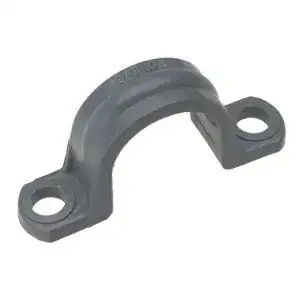
  • As all the wires (20-30) enter the basement and run along a joist, I realize I can use a raceway, but don't really want to spend the extra money. Is there anything wrong with using a large PVC clamp, like below?

enter image description here

Tester101
  • 133,087
  • 80
  • 327
  • 617
Steve
  • 815
  • 4
  • 11
  • 21

4 Answers4

15

It's not real critical. When wiring phone centers we used metal raceways (or a thrown-together wood one) in the ceiling, but for my house I used pipe clamps like the one you posted at about 4' spacing. I like to add a wrap of double-sided velcro around bundles going to the same box, also about every 4'. Near the demarcation point I might use a few screw-in hooks like those used to hang bicycles if there are a lot of cables going out in one direction.

Don't fasten the cables to anything too securely. That way you can use the old cables to pull a new one if it becomes necessary.

One important detail: do not use zip ties. They can constrict over time and damage the cables they're wrapped around. (They're also tougher to pull new cables through than velcro loops.)

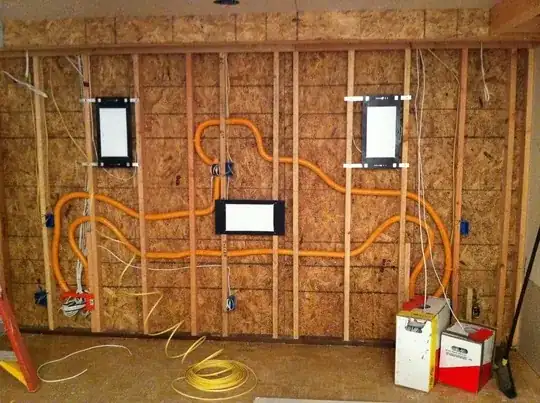
You didn't ask about routing them, but I guess it's relevant to explain the assumptions my recommendations are based on. I always do horizontal runs in the floor/ceiling and then run vertically within the bay where the junction box is located. (Rather than meandering through the wall as shown in one of pumpkin's photos.) This means less holes to drill and usually less resistance when pulling the cables. I also leave an empty bay (two studs) between mains and network cables, so I don't need to worry about securing the drops (recommended distance is at least 1' apart when running parallel to mains).

If you wanted to make pulling new cables even easier without doing a full PVC conduit setup, you can just install PVC fittings such as 90° elbows where the cables pass through the top plate or sole plate. That's were all the friction is going to come from when pulling, so some nice smooth PVC lining the holes can smooth things out nicely. (This of course assumes you'll use one of the existing cables to pull the new ones. Obviously you won't be able to run a fish tape without the sections of PVC connecting the fittings.) The fittings would also ensure that you don't go under the cable's minimum bend radius of 1 inch.

One other thing that I'll mention just in case is heat. Large, tightly-wrapped bundles of cable (think 50+ cables) that are being heavily utilized have the potential to trap heat in the center which can eventually degrade the insulation and cause shorts. Unless you're running a grid computing cluster at your house that's not likely to be a problem though. A more likely scenario for the average home owner is the use of Power over Ethernet, which will generate more heat. If you're planning to use PoE I'd limit bundles to 7 or 8 cables, just for good measure, even though I think the odds of a problem are still very low.

Brad Mace
  • 2,505
  • 11
  • 36
  • 48
7

If you are at construction level I would most certainly advise you use PVC conduit to run multimedia cables. In Europe I have noticed that nobody bothers too much about that in home construction because it is an extra cost. In Africa we used them everywhere because they are a time saver! Why do I suggest using them?

  • If you clip these cables using the clips you mentioned, cable tie them or bind them somehow then they are there to stay and trying to repair / remove or add them later means ripping the drywall off.
  • Houses are built to last 100+ years. People are going to want to add new technology that will require new wires. Fibre optic? People are not going to rip drywall off so they will have to run it on top somewhere, drill new holes and that is iffy.
  • Maintenance. Many times someone moves into a new house only to discover that the wiring has issues. Maybe someone forgot to connect one junction, or the incorrect gauge was used. It's also not that uncommon for multimedia cables to have a fault in the middle of the CAT5e--with PVC tubes just run a new section and viola, sorted.

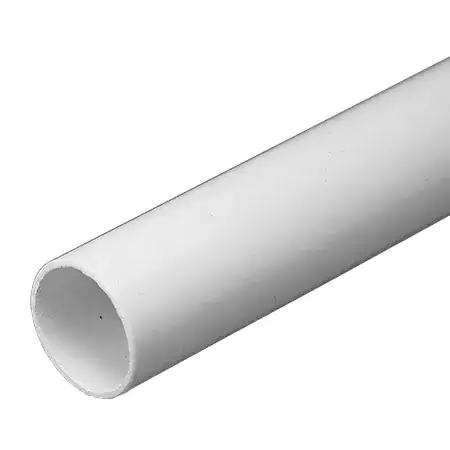
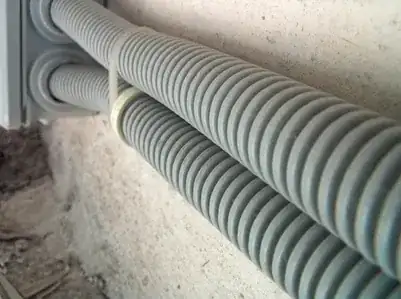
There are many types of PVC conduit. The hard plastic is typically used for high voltage cables but you can use the bendy type for multimedia cables. Be advised not to run multimedia with high voltage as this will cause interference.

Hard PVC conduit

enter image description here

Flexible Conduit

enter image description here

How it should be used

enter image description here

How it should NOT be used

enter image description here

People will have various needs and you cannot predict all of them. At least you can provide an easy clean way to allow maintenance. I wish my house had this done. Instead, I have to pull a floor board, drill through beams, and install ugly surface conduit--just so I can have HD TV downstairs from my Multimedia Centre which is upstairs only 2.8 meters away.

enter image description here

Homes are becoming more sophisticated with home automation, alarm systems, etc. Might as well be ready for upgrades.

Brad Mace
  • 2,505
  • 11
  • 36
  • 48
Piotr Kula
  • 5,959
  • 22
  • 32
6

It really doesn't matter. The stacker is nice if you're in an office that will be doing new cable pulls routinely, but I think most of the time...in most houses, once the cables are in, they're rarely going to be more added--especially as more and more things are going wireless.

I've just used zip ties when aesthetics weren't a major necessity.

Nailable Cable Ties

Chris Cudmore
  • 14,169
  • 7
  • 61
  • 91
DA01
  • 24,586
  • 30
  • 82
  • 153
3

Use Flame Test Rated Cable and Insulated Wire Staples

In the case where you have wood-frame construction and

  • a high-density of plumbing, electrical, gas, forced air, and low voltage wiring, or
  • you are fanning out to individual devices (e.g. Pre-wired 5.1 speakers, network drops in each room, motion sensors, door contacts),

I recommend using purpose-built insulated wire staples, flame-test rated cable and open-backed boxes.

Running the low voltage cable bare takes much less time than running and fishing through conduit, and you can always put the drop exactly where you want it. Contrast the ease of running just cable versus conduit when you encounter a lentil or a furred-out concrete wall, for example.

In the case where you have multiple cables in one chase, you can stack a few and staple them together. The staples are cheap and quick to fire, so you can always run the cables side-by-side.

Getting Flame Test Rated Cable

The flame-test rating of your cable is important to meet building and electrical code requirements (and also so you don't burn your house down). If you shop where licensed electrical contractors shop, the cable will most likely have an appropriate flame test rating for your code requirements. My last project required FT2 or FT4 throughout. Most "consumer grade" cabling will not have an appropriate flame test rating for use inside your walls. So buying some long HDMI and network cables from monoprice.com probably won't meet code requirements if you run it bare.

You will probably also find that the cost-per-foot for cable purchased from an electrical wholesaler is much lower than consumer sources.

If in Doubt Run A Couple of CAT6 Cables

CAT6 is an excellent fallback for places where you are not sure exactly what will be needed. It is already the accepted way of overcoming the range, cost-per-foot, and flame-test ratings limitations of HDMI -- a CAT6/HDMI balun set is now only about $60. There are Baluns already available to convert almost any signal to/from CAT6.

Background

I just finished a down-to-studs permitted-and-inspected renovation of a luxury 1400 sq ft suite. The design called for 78 low voltage drops throughout which worked out to about 2 miles of cable. I used the strategy above for that renovation, all 78 drops were roughed-in to a utility room in about 20 man-hours.

alx9r
  • 1,363
  • 2
  • 9
  • 22