43

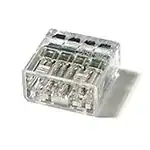
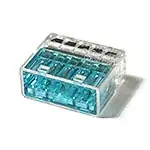
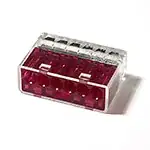
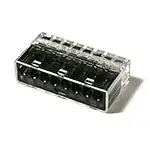
Just came across a neat product at the local hardware store, but I wonder if they are up to code and safe to use. They are a wire nut that allows you to simply push the wires in, instead of twisting on a traditional wire nut.

They cost slightly more, and you have to keep a wider variety of connectors on hand since they vary by the number of wires that can be connected.

they accept 12-22 AWG solid and 12-22 AWG stranded wire, and are rated at 600 VAC. They come in a variety of sizes from 2 - 8 'ports', so they should be up to any job.

Has anybody ever used these, and are they code compliant in the United States? Is there any danger of the wires slipping out over time?
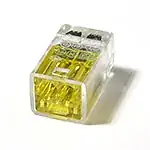
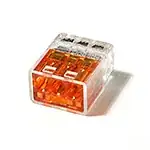
2-port connector 3-port connector 4-port connector 5-port connector 6-port connector 8-port connector

electricalbasics.com

Found some standards information:
(Ideal Industries IN-SURE(TM) PUSH-IN CONNECTORS)

UL 486C, UL 467 GROUNDING
CSA C22.2 #188
IEC 998-2-2
CE CERTIFIED
RoHS COMPLIANT
UL 94V-2 FLAME RATING
US PATENT 7,507,106
US & FOREIGN PATENTS PENDING

UPDATE:

I finally got my hands on some of these things, and I'll tell you what. If you can pull the wires out through normal means once they're locked in, you deserve some type of prize. I did find a way to pull the wires out, but I doubt they'll ever see enough movement while in use to allow the wires to slip out. If you spin the wires back and forth while you pull, they will eventually work their way out (this is the official way to remove wires according to an IDEAL spokesperson). Doing this chews the wire up pretty bad, leaving a bunch of nicks along the length of the wire.

They say not to reuse them, and I can see why. Removing the wire can leave fairly deep gouges in the wire. If you ever have to remove them, you'll likely have to trim the wire back and restrip it. However, Even after torturing them (including taking them apart), they still held the wire when it was reinserted.

So as long as your wiring is not subjected to constant twisting and pulling, you should have no problems with wires pulling out of these things.

UPDATE:

I think I finally found the relevant section in the code that would apply to these devices.

National Electrical Code 2014

Article 110 - Requirements for Electrical Installations

I. General

110.14 Electrical Connections.

(B) Splices. Conductors shall be spliced or joined with splicing devices identified for the use or by brazing, welding, or soldering with a fusible metal or alloy. Soldered splices shall first be spliced or joined so as to be mechanically and electrically secure without solder and then be soldered. All splices and joints and the free ends of conductors shall be covered with an insulation equivalent to that of the conductors or with an identified insulating device.

Wire connectors or splicing means installed on conductors for direct burial shall be listed for such use.

I would say these devices fit both criteria. They are identified for the use, and they provide insulation equivalent to the conductors.

Tester101
  • 133,087
  • 80
  • 327
  • 617

7 Answers7

13

I will not speak to the code issue as other already have. But, I did use them when building my new home a few years ago and, for me, they passed inspection.

While the package does say they can be used for stranded wire, I did not find that they worked that easily with stranded wire (I was using some computer controlled switches with pigtails instead of screws). But, they did work. I just had to twist the strands fairly tight first.

As far as coming loose? Not the ones I was using. If memory serves me correctly, I think there is a little hole that you can push the spring up with to release the wire because it is so tight.

Jim
  • 877
  • 1
  • 9
  • 18
5

In the UK they are allowed, see https://www.wagobox.com/

However they must always be in some sort of box and the correct connect must be used.

Walker
  • 6,275
  • 22
  • 66
  • 87
1

I was exited to try these Wago connectors as I don't really like wire nuts. But the wire rotates in the connector pretty easy: I did not feel comfortable using them. I feel that any contact that can rotate or move will eventually generate a problem.

Others may feel differently: I won't use them again.

Bryce
  • 11,057
  • 18
  • 77
  • 120
1

I know there are some types of butt connectors that are suitable for in-wall splicing of NM wires, but I don't know if the particular types you are looking at would be acceptable. A quick Google search suggests you would need to look at NEC 2002 articles 545, 550, 551 and 334-40B.

Also, look at the answer on this site:

Is there a way to simply splice in an additional length of 12/2 NM-B cable?

richardtallent
  • 1,938
  • 18
  • 22
0

I haven't found anything in the 2014 NEC that would make push-in connectors illegal to use as long as the manufacturer's instructions are followed and the ones used are UL listed for the application. But as always the NEC is a minimum standard that gives the AHJ (authority having jurisdiction) the ability to make requirements over and above the guidelines in the NEC.

Niall C.
  • 20,909
  • 19
  • 95
  • 135
user24125
  • 233
  • 1
  • 5
0

In my professional experience with push in connectors tbe verdict is always the same... give it 5 to 10 years and the pressure plate holding the wire in loses it strength and lets the wires come loose. Next comes a bad connection at best. My advice would be to throw the butt connectors in the trash and use a wingnut instead

-1

The instructions for the push in connectors I have seen disallow their use with aluminum wire. This makes sense because push in (stab in connections) have always been against code for aluminum wire.

I have done rework in a house where the make up was done using these type of connectors. It seems to make for a neat installation. I did not see any failures. This house is about 15 years old. I would like to know if anyone has seen problems with feed through loads using them.

Craig Tullis
  • 6,034
  • 1
  • 19
  • 29
user24125
  • 233
  • 1
  • 5